
No Trees Cut Down: Cork Flooring Advantages for Vegan Accessory Buyers
Cork is a plant-based, renewable material that gives vegan handbags and wallets a lightweight, water-resistant, low-impact alternative to leather and plastic-based faux leathers. It’s naturally antimicrobial, biodegradable when paired with a natural fabric backing, and sourced without felling a single tree. The one caveat: sourcing and backing choices swing the environmental outcome enormously, so what’s glued to the back of your cork sheet matters as much as the cork itself.
TL;DR:
- Cork’s cellular structure and natural compounds like suberin enable it to repel liquids, resist bacteria, and bounce back from impacts, making it highly durable for everyday use.
- Genuine cork accessories are fully biodegradable if backed by natural fabrics such as organic cotton or canvas; synthetic-backed cork items may persist for decades.
- Sourcing certifications like FSC and PETA-Approved Vegan ensure that cork products are environmentally responsible and free of animal-derived materials.
- Cork’s eco-friendly harvesting process involves stripping bark every nine years without felling trees, supporting biodiversity and habitat conservation.
- Compared to PU leather, cork offers better breathability, water resistance, and end-of-life biodegradability, though it may require more careful shopping to avoid plastic-backed products.
Table of Contents
- The advantages of cork as a material for vegan accessories
- Why cork behaves this way: the material science behind the benefits
- Sustainability credentials worth checking before you buy
- How long cork accessories actually last (and how to look after them)
- What to check before you buy a cork bag or wallet
- What happens to cork accessories at the end of their life
- Cork versus PU and synthetic vegan leathers
- Author perspective: why our store champions cork accessories
- Where to see cork accessories done properly
- Sources
- FAQ
The advantages of cork as a material for vegan accessories
Cork’s list of practical advantages reads almost too well for a material that comes off tree bark. It’s genuinely lightweight, water-resistant, hypoallergenic, and it has a texture no synthetic has managed to fake convincingly. That last point matters more than it sounds. When you’re carrying a bag every day, from your morning commute to a weekend market, the small stuff (weight on your shoulder, how it survives a coffee spill, whether it irritates your skin) adds up fast.
Here’s what stands out for handbags, wallets and backpacks specifically:
- Lightweight construction: cork’s cellular structure is mostly trapped air, so a cork tote weighs noticeably less than an equivalent leather one, which matters on a long travel day.
- Natural water and stain resistance: cork repels liquids without any chemical treatment, so a splash of rain or a dropped drink wipes off rather than soaking in.
- Hypoallergenic and antimicrobial surface: cork naturally resists bacteria and mould growth, which is why it’s a sensible pick for anyone with sensitive skin or a nagging worry about bag hygiene.
- One-of-a-kind grain: no two cork sheets look identical, so a cork wallet has a natural, marbled texture that varies slightly piece to piece.
Pro Tip: If you want a bag that looks brand new after a decade, avoid dyed cork finishes. Natural, undyed cork tends to age better and shows scuffs far less than tinted versions.
Why cork behaves this way: the material science behind the benefits
Cork’s performance isn’t a happy accident. It comes down to cellular structure and a natural compound called suberin, which coats cork cells and makes them almost impermeable to liquid and gas. That’s the same reason a wine cork keeps a bottle sealed for years. The Natural Cork Council describes cork as 100% natural, elastic, impermeable, fire-resistant and an excellent insulator, properties that translate directly into a bag that bounces back from a squash in your rucksack rather than creasing permanently.
That same cellular structure gives cork thermal and acoustic insulation, which sounds like flooring trivia until you realise it’s why cork stays comfortable to hold in cold weather rather than turning icy like metal hardware or stiff PU.
Not all cork sheets perform equally. Cork grade matters: finer, more uniform bark tends to produce a smoother, more supple sheet, while coarser reproduction cork (regrown bark from later harvests) can be slightly less flexible. Fabric backing changes things further. A cork sheet laminated onto organic cotton behaves and ages differently to one backed with polyester or PVC, which brings us to sourcing and certification.
Sustainability credentials worth checking before you buy
Cork’s environmental case starts at harvest. Workers strip bark from the cork oak’s trunk by hand, and the tree survives, regrows its bark and gets harvested again roughly every nine years. No tree is cut down. That single fact underpins most of cork’s sustainability story, and it’s backed by a peer-reviewed review of cork oak ecology, which documents how these long-lived agroforestry systems support biodiversity and rural incomes across the western Mediterranean.
There’s a landscape-level payoff too. Cork oak woodlands are among the richest habitats in the region, home to species from Iberian lynx to black storks, and that same review links sustained demand for cork products to the continued conservation of these habitats. When demand drops, so does the incentive to keep the land as cork forest rather than converting it to something less biodiverse.
Cork also scores well on processing. Making cork fabric involves no tanning, no chromium, and none of the toxic wastewater associated with leather production, according to SustainableJungle’s breakdown of cork fabric. Amorim, one of the industry’s largest producers, reports indoor air quality certifications and circular economy practices across its cork product lines, including recycling waste cork into industrial sheet material rather than sending it to landfill.
When you’re checking labels, look for:
- FSC certification on the cork sourcing, confirming the forest itself is managed responsibly.
- PETA-Approved Vegan status on the finished product, which confirms no animal-derived material or trims were used.
- Backing material disclosure: organic cotton or canvas backing biodegrades; PVC or heavy plastic laminate doesn’t.
Watch for vague listings that say “cork” but describe a heavy, glossy, plastic-feeling finish. That’s usually a thick PU or vinyl sealant doing most of the work, with a thin cork veneer on top for marketing.
How long cork accessories actually last (and how to look after them)
Cork resists scratching and creasing far better than most people expect, largely because its cellular structure absorbs impact rather than folding sharply like leather or cracking like cheap PU. Drop it, knock it against a doorframe, sit a laptop on top of it in your bag, cork tends to spring back rather than dent permanently.
Looking after a cork bag is genuinely simple:
- Wipe with a damp cloth and mild soap for everyday marks; avoid soaking cork or scrubbing hard.
- Keep it out of direct sun and heat sources, since prolonged exposure can dry cork out and cause cracking over time, a point echoed in Foley + Corinna’s cork care guidance.
- Let it air dry naturally if it gets wet rather than using a radiator or hairdryer.
- Store it upright where possible, rather than flattened under heavier items, to help it hold its shape.
If a strap or lining wears out before the cork itself does, that’s usually a backing or hardware issue, not a cork failure, and it’s often worth repairing or upcycling the piece rather than replacing it outright. Cork’s natural durability usually outlasts the stitching around it.
What to check before you buy a cork bag or wallet
Shopping for cork accessories online means reading between the lines of a product description, because “cork” on a label can mean very different things depending on what’s underneath it.
Run through this before adding anything to your basket:
- Sourcing claims: does the listing mention FSC-certified cork oak forests, or is sourcing left vague?
- Vegan certification: PETA-Approved Vegan status confirms the finished item, not just the cork itself, is animal-free.
- Backing fabric: organic cotton or natural canvas backing supports biodegradability far better than synthetic laminate.
- Construction and returns policy: solid stitching, a clear warranty, and an honest returns window are signs of a brand standing behind its material claims.
- Price sense-check: cork accessories priced suspiciously low relative to genuine cork goods often use a thin cork veneer over heavy plastic, not the other way round.
Pro Tip: If a listing says “cork-look” or “cork-effect” rather than “cork,” that’s usually a red flag. Genuine cork sellers tend to be specific about sourcing because it’s their strongest selling point.
For a deeper label-reading walkthrough, this quality checklist covers the finer details worth knowing before you commit to a purchase.
What happens to cork accessories at the end of their life
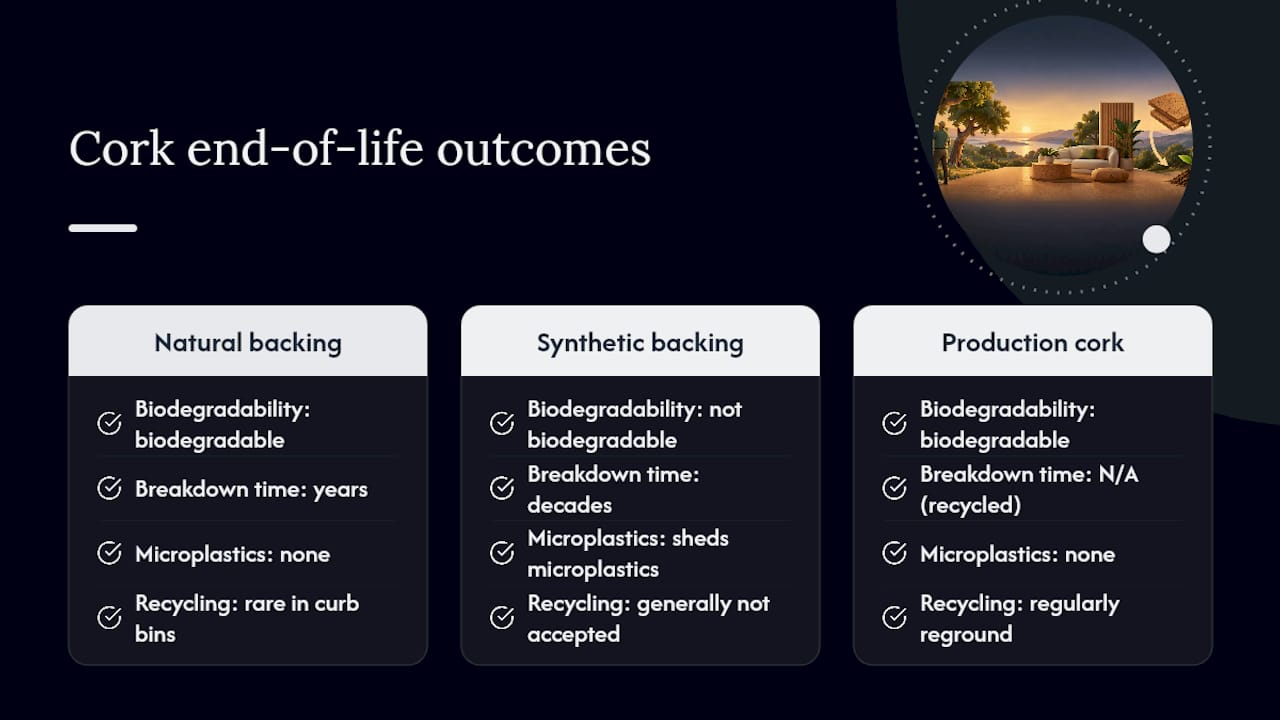
Cork’s end-of-life story is one of its strongest selling points, but it comes with an asterisk. Pure cork, on its own, is fully biodegradable and will break down naturally over time, the same way bark does in a forest. The complication is that almost no cork accessory is pure cork. It’s laminated onto a fabric backing for strength and flexibility, and that backing decides whether the whole item composts or ends up as long-lived waste.
An organic cotton or natural fibre backing means the finished bag or wallet can biodegrade largely intact once it reaches the end of its useful life. A polyester or PVC backing means you’re left with a material that behaves more like a plastic item wrapped in a compostable shell, taking decades longer to break down and shedding microplastics along the way.
Recycling adds another layer. Waste cork from stopper and flooring production regularly gets reground and reformed into sheet material for other industries, a circular process the Natural Cork Council documents as standard practice across the sector. That doesn’t automatically apply to a worn-out handbag, though. Most local recycling schemes don’t have a bin for “mixed cork and cotton composite,” so the more realistic route for an ageing cork bag is repair, resale, or a DIY upcycling project that turns worn panels into smaller accessories, coasters, or pouches rather than the general waste bin.
Cork versus PU and synthetic vegan leathers
Both cork and PU leather solve the same problem (an animal-free alternative to leather) but they get there very differently, and the difference shows in both performance and impact.
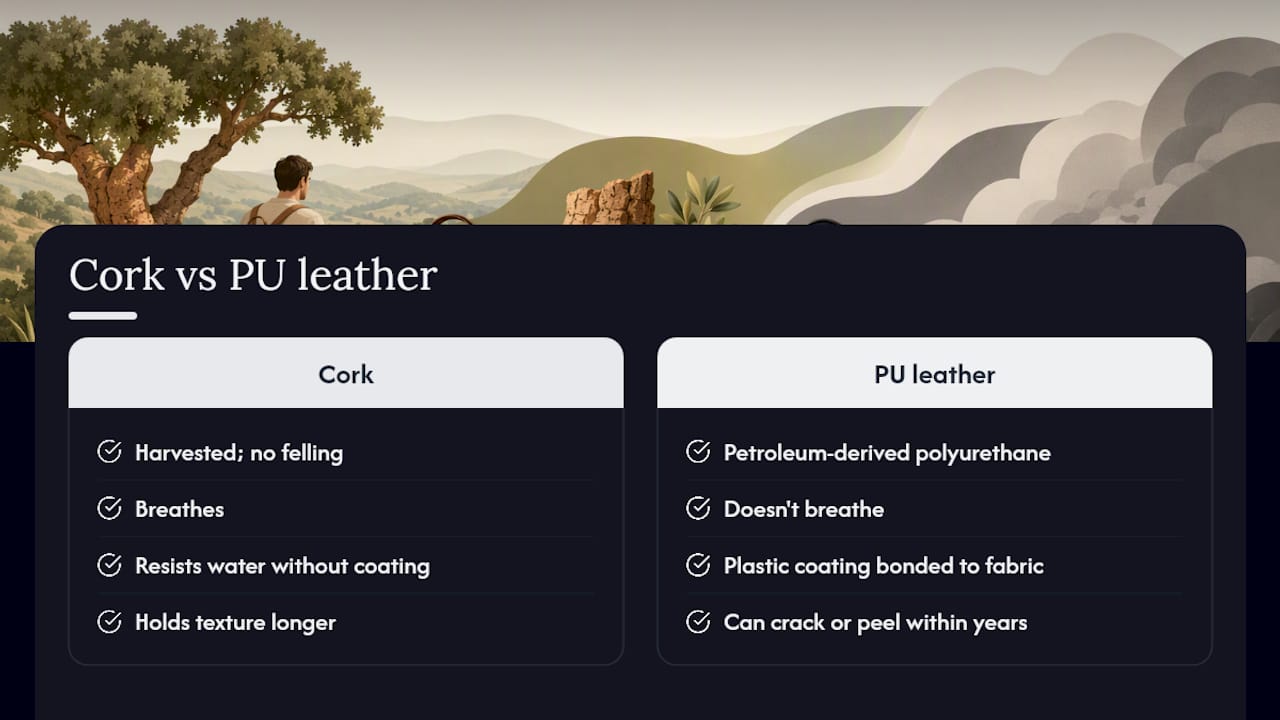
PU leather is typically a plastic coating bonded to a fabric base, made from petroleum-derived polyurethane. It can mimic leather’s look convincingly and it’s usually cheaper to produce at scale, but it doesn’t breathe, it can crack or peel within a few years of regular use, and it’s essentially non-biodegradable, since the plastic coating persists long after the fabric backing has worn out.
Cork, by contrast, breathes, resists water without a chemical coating, and holds its texture and flexibility for years longer under normal wear. On the environmental side, PU production depends on petrochemicals and involves chemical processing with meaningful emissions, while cork harvesting requires no felling, no tanning, and, per SustainableJungle’s analysis, avoids the toxic wastewater tied to conventional leather tanning.
Where PU sometimes wins is upfront cost and colour consistency, since it’s easier to dye uniformly than natural cork. If budget is the only factor, that’s a fair trade-off to weigh. But on durability, breathability, and genuine biodegradability (provided the backing is natural), cork comes out ahead on the criteria that actually affect how long an accessory lasts and what happens to it afterwards.
Author perspective: why our store champions cork accessories
Cork earns its place in a vegan wardrobe through material honesty. At Thecorkstore, curating a collection means checking sourcing and backing on every product, not just the marketing copy, and being upfront about what’s on each product page. Trust in a material this good shouldn’t need convincing, only clear information. Always check the specific returns and care guidance listed on the product page before you buy, since details can vary slightly between styles.
— Aaron
Where to see cork accessories done properly
Reading about cork’s advantages is one thing; holding a cork wallet and feeling how light and supple it actually is settles the argument far faster. A catalogue of cork accessories typically emphasizes natural cork paired with honest sourcing, not a thin veneer over plastic.
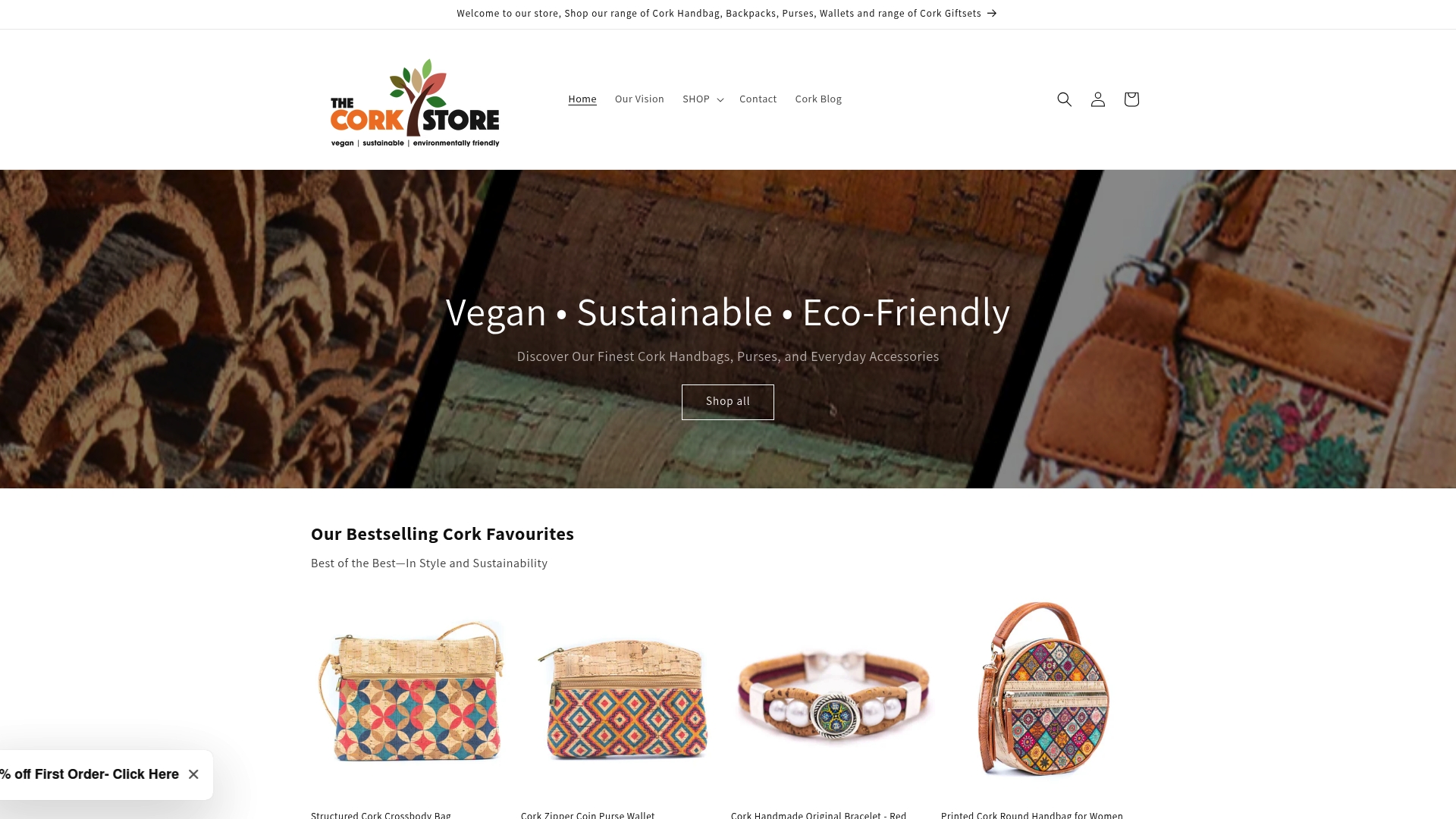
If you’re starting small, the Women’s Cork Purses and Wallets collection is a low-risk way to try the material before committing to a full-size handbag. Every listing states its vegan credentials plainly, and returns and care guidance sit on each product page so you know exactly what you’re buying before it arrives. Browse the full collection at Thecorkstore and see which piece fits the way you actually carry your everyday essentials.
Sources
- Natural Cork Council – Sustainability
- Amorim – Sustainable by nature (2026 report)
- What Is Cork Fabric? Is Cork Leather Sustainable? – SustainableJungle
- Scientific review on cork oak (Quercus suber) and cork production – ScienceDirect (2013)
FAQ
Is cork actually vegan?
Yes, cork comes entirely from tree bark, making it plant-based by default. Many cork accessory brands also carry PETA-Approved Vegan certification, which confirms no animal-derived material or trims were used in the finished product.
Does cork scratch or mark easily?
Cork resists scratching better than most people expect, thanks to its cellular structure absorbing impact rather than creasing sharply. It can still show wear over years of heavy use, but it tends to age gracefully rather than crack.
Is cork better for the environment than PU leather?
Cork generally comes out ahead, since harvesting requires no felling and no tanning chemicals, while PU relies on petrochemical processing. The main variable is backing fabric: cork paired with natural fibre backing biodegrades far better than PU, which stays as long-lived plastic waste.
How do I clean a cork bag?
Wipe it with a damp cloth and mild soap, then let it air dry away from direct heat or sunlight. Avoid soaking cork or leaving it in a hot car, since prolonged heat exposure can dry it out and cause cracking.
Does Thecorkstore sell fully vegan cork accessories?
Some collections focus specifically on vegan, cork-based handbags, wallets, backpacks and accessories, with material and sourcing details sometimes listed on product pages. Current pricing and available styles are shown directly on the product pages.