

Circular economy in fashion: a practical guide for brands
The circular economy in fashion is a systems-level redesign of how clothes and accessories are made, used, and recovered, built on three design-driven principles: eliminate waste and pollution; keep products and materials in use at their highest value; and regenerate nature. Practically, that means brands must adopt circular design from the first sketch, scale business models built around resale, rental, repair, and remaking, and invest in the collection, sorting, and recycling infrastructure that keeps materials flowing. Consumers, in turn, need to choose durable items, repair before discarding, and use take-back schemes when a product reaches end of life.
The scale of the problem makes urgency unavoidable. According to the Ellen MacArthur Foundation, the equivalent of a rubbish truckload of clothes is burned or landfilled every second. Three actions cut across everything else:
- Redesign products for durability, repairability, and safe material recovery from the outset.
- Build or join circular business models so that revenue grows without proportionally increasing virgin material consumption.
- Fund and connect collection, sorting, and recycling infrastructure so that garments actually re-enter the system rather than leaking to landfill.
Key takeaways
The circular economy in fashion requires changing business models and measurement frameworks, not just materials, to genuinely decouple revenue from virgin production and reduce the industry’s material waste.
| Point | Details |
|---|---|
| Three design-driven principles | Eliminate waste and pollution; keep products and materials in use; regenerate nature — applied from the first design decision. |
| Scale of the problem | The global textile industry consumes approximately 3.25 billion tonnes of materials annually and recirculates only around 0.3%. |
| Priority business models | Resale, rental, repair, and remaking decouple revenue from production; The Fashion ReModel shows these can scale faster than linear channels. |
| Measure with CTI | WBCSD’s Circular Transition Indicators give brands a consistent framework to assess circular performance and prepare for regulatory disclosure. |
| Thecorkstore | Cork accessories offer a practical, consumer-facing example of durable, renewable, and traceable circular-friendly design. |
Table of Contents
- What is circular economy in fashion, and why does the industry need it?
- How circular models differ from linear ones across the full product lifecycle
- What circular design principles and material choices actually look like
- How resale, rental, repair, and remaking work as circular business models
- What collection, sorting, and recycling infrastructure currently looks like
- How circularity is measured and what UK policy levers exist
- What are the real barriers to scaling circular fashion?
- A practical action checklist for UK brands and consumers
- Why changing business models matters more than changing materials
- Cork accessories as a practical example of circular-friendly design
- Sources
What is circular economy in fashion, and why does the industry need it?
The dominant model in fashion is linear: extract raw materials, manufacture, sell, discard. The Ellen MacArthur Foundation’s vision for circular fashion frames the alternative as a system where products are designed to be used more and made to be made again, where business models keep garments at their highest value for as long as possible, and where the biological and technical materials that make up clothing are recovered and cycled back rather than destroyed.
The three design-driven principles translate into concrete lifecycle requirements. Eliminating waste and pollution means removing hazardous substances from dyes and finishes, cutting overproduction, and designing out single-use packaging. Keeping products and materials in use means prioritising durability, enabling repair, and building the reverse logistics to collect and sort garments at end of use. Regenerating nature means preferring renewable, safely biodegradable inputs and farming practices that restore rather than deplete soil and water.
The numbers behind the linear model’s failure are stark. WBCSD’s Circular Transition Indicators sector guidance for fashion reports that the global textile industry consumes approximately 3.25 billion tonnes of materials annually and recirculates only around 0.3% of them. A large share of materials still comes from virgin inputs, and significant volumes of unsold inventory are destroyed each season rather than recovered.
Several organisations are shaping the response. The Ellen MacArthur Foundation provides the dominant systems framework and convenes brands, policymakers, and investors around it. The World Business Council for Sustainable Development (WBCSD) developed the Circular Transition Indicators (CTI) to give firms a common measurement language. The Fashion ReModel is a multi-brand initiative where participating companies set confidential revenue ambitions for circular business models and track progress. WRAP leads UK-specific action through its Textiles Pact and practical guidance on circular business models. Circle Economy provides applied research and tools to help sectors map material flows and identify intervention points.
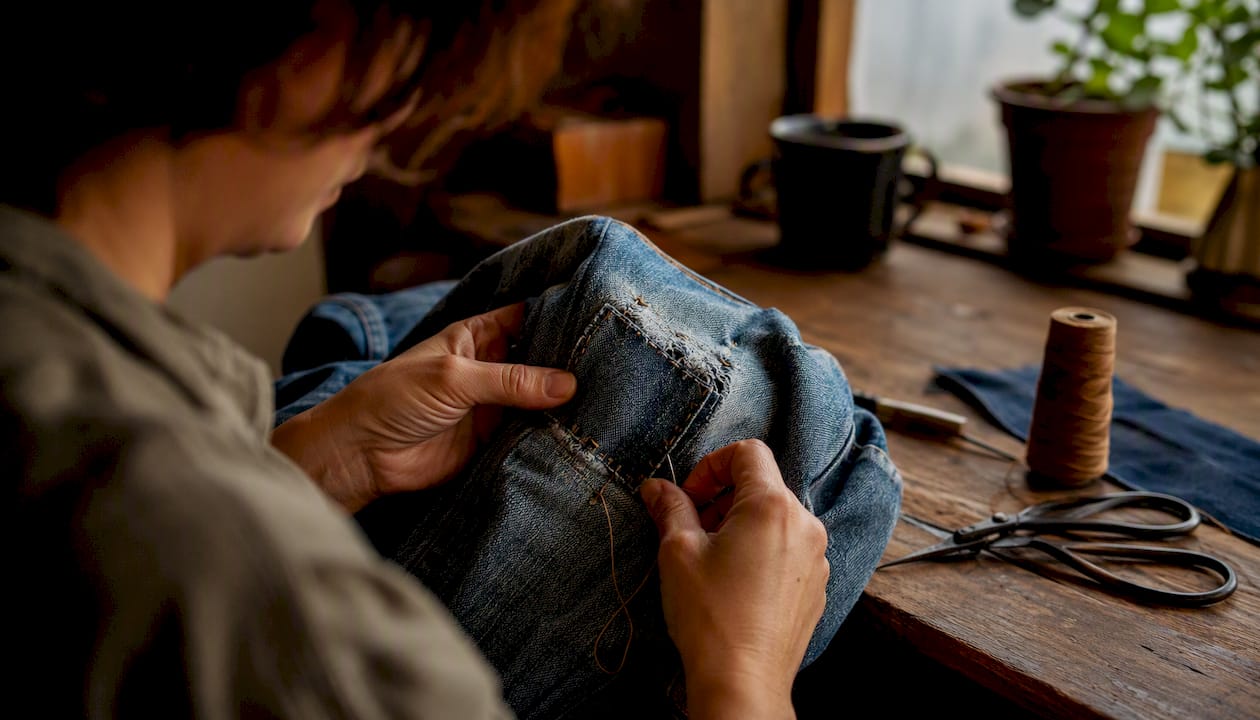
A jeans redesign illustrates how design-led change works in practice. A conventional pair of jeans typically uses a blend of cotton and elastane that cannot be mechanically recycled because the fibres cannot be separated. Redesigning the same product with a mono-material cotton construction, reinforced stress points, and a modular waistband that can be replaced rather than discarded extends useful life and makes fibre recovery viable at end of use. The design decision happens before a single thread is cut.
How circular models differ from linear ones across the full product lifecycle
Moving from a linear to a circular model is not a single switch. It requires auditing every stage of a product’s life and making deliberate changes at each one.
Design stage: Linear design optimises for cost and trend speed. Circular design adds criteria for physical durability (will this last five years of regular use?), repairability (can a consumer replace the zip without specialist tools?), disassembly (can the product be separated into recoverable materials?), and chemical safety (are all substances in the dye and finish compatible with recycling processes?)
Material choice: Linear sourcing prioritises price and availability. Circular sourcing prefers materials that are either safely recyclable at scale, renewable and biodegradable, or contain verified recycled content. The Textile Exchange Materials Market Report 2024 tracks the availability of recycled fibres and the market signals that inform sourcing trade-offs, including where recycled content is scaling and where supply remains constrained.
Manufacturing and inventory: Overproduction is one of the most damaging features of the linear model. Circular production targets demand more precisely, uses pre-order or made-to-order models where viable, and treats unsold stock as a failure of planning rather than a normal cost of doing business.
Distribution and use phase: Linear distribution ends at the point of sale. Circular distribution includes the infrastructure for rental returns, repair services, and resale authentication. Brands operating rental models, for instance, need reverse logistics built into their customer journey from day one.
End of life: The linear endpoint is landfill or incineration. The circular endpoint is either reuse (the product goes to a new user), remaking (components are recovered and used in a new product), or recycling (fibres are recovered and re-spun). Composting is appropriate only for products made entirely from safely biodegradable materials with no synthetic blends or hazardous finishes.
A practical audit checklist for a product team covers these questions in sequence: Does the design specify durability targets? Are all substances on an approved list compatible with recycling? Is the product mono-material or easily disassembled? Does the brand have a take-back or resale channel? Is there a recycling partner capable of processing this specific material blend?
What circular design principles and material choices actually look like
Circular design is not a style choice. It is a set of technical and strategic decisions made before production begins, and the Ellen MacArthur Foundation’s circular fashion vision is explicit that eliminating hazardous substances is a prerequisite for safe material circulation, not an optional extra.
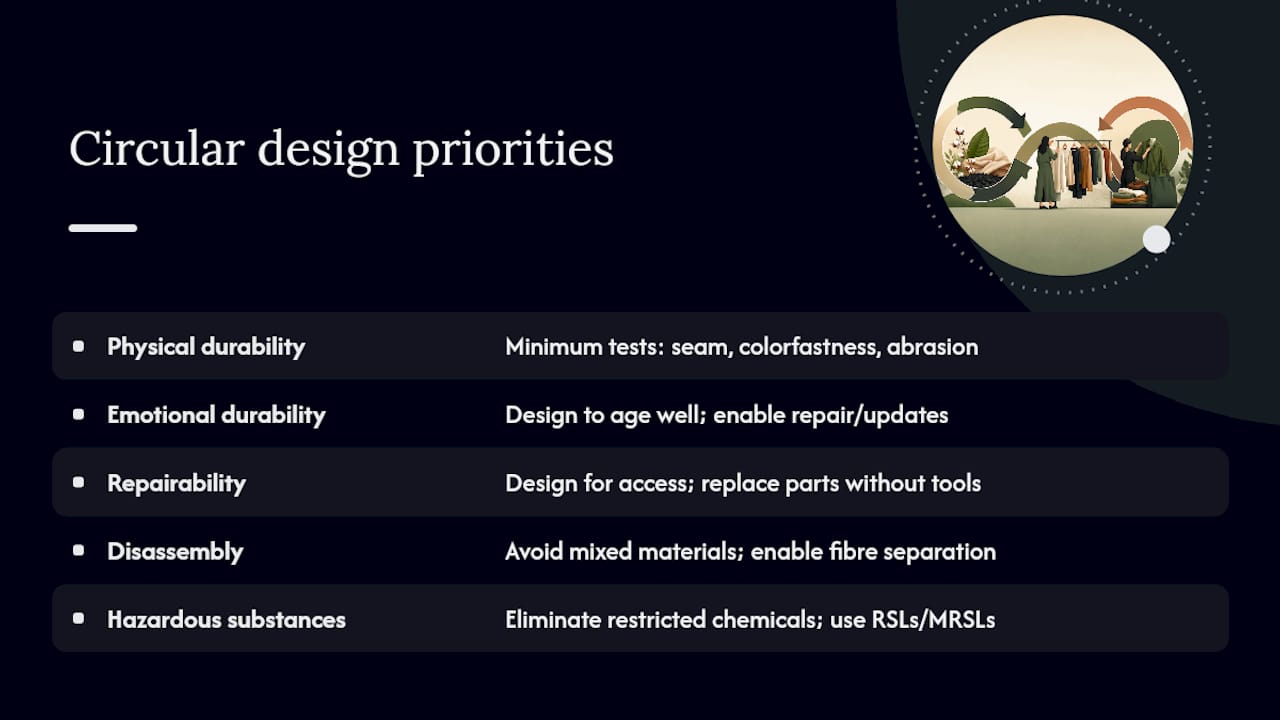
The five design priorities that matter most in practice are:
Physical durability means specifying materials and construction methods that extend useful life. Seam strength, colorfastness, and abrasion resistance all have testable standards. Brands that set minimum durability thresholds and test against them before production reduce returns, extend product life, and reduce the frequency with which a consumer needs to replace an item.
Emotional durability is less discussed but equally important. A product that is technically sound but aesthetically dated gets discarded before it wears out. Design that ages well, that carries a narrative the owner values, or that can be updated through repair or customisation tends to stay in use longer. This is where sustainable fashion innovation and material storytelling intersect with circular principles.
Repairability requires designing for access. Zips, buttons, and stress points should be replaceable without specialist tools or skills. Some brands now publish repair guides alongside product care instructions, which also builds customer loyalty.
Disassembly for recycling means avoiding mixed-material constructions where components cannot be separated. Glued soles, fused interlinings, and multi-fibre blends all create problems at the recycling stage. Post-consumer recycled fabrics depend on clean, consistent feedstocks, and contaminated blends reduce the quality of recovered fibre.
Hazardous substance elimination is non-negotiable for safe recycling. Many conventional dyes and finishing chemicals persist in recycled fibre and limit what the recovered material can be used for. Restricted substances lists (RSLs) and manufacturing restricted substances lists (MRSLs) provide the framework for managing this.
On materials, the Textile Exchange Materials Market Report 2024 shows that recycled content availability varies significantly by fibre type. Recycled polyester from post-consumer plastic bottles is relatively well-established; recycled cotton and recycled nylon from post-consumer garments remain constrained by sorting and processing infrastructure. Chemical recycling of blended textiles is advancing but not yet at commercial scale for most fibre types.
Digital product passports and traceability tools, including QR codes, RFID tags, and blockchain-based records, are increasingly used to carry material composition data, care instructions, and repair histories through the product’s life. This information is what enables a recycler to process a garment correctly at end of use.
Pro Tip: Design for emotional durability by choosing materials and aesthetics that improve with age rather than dating quickly. Natural materials like cork, leather alternatives, and undyed natural fibres often develop a patina that increases perceived value over time, reducing the pressure to replace.
How resale, rental, repair, and remaking work as circular business models
The economic argument for circular business models rests on a simple observation: a garment that is resold, rented, or repaired generates revenue without requiring new virgin material input. Ellen MacArthur Foundation’s circular business models report argues that these models are not peripheral experiments but the mechanism through which fashion decouples revenue from production volume.
Resale (recommerce) captures value from products after their first owner is done with them. Brands can operate resale directly (a branded recommerce platform or in-store take-back with resale) or partner with third-party platforms. Revenue comes from the margin on resold items. The operational requirements are authentication, quality grading, cleaning or refurbishment, and logistics for returns and redistribution. The customer journey typically involves a trade-in or drop-off, a valuation, and either a cash payment or store credit.
Rental keeps ownership with the brand and charges customers for access. This model works best for occasion wear, workwear, and high-value items where the cost-per-wear calculation favours access over ownership. Operationally, rental requires robust reverse logistics, cleaning between uses, quality inspection, and inventory management across multiple use cycles. The revenue model is subscription or per-rental fee.
Repair extends product life and can be offered as a paid service, a free loyalty benefit, or a self-repair kit. Brands that offer repair services keep customers engaged between purchases and reduce the rate at which products leave the system. Some brands have found that repair services generate data on failure points that feeds back into design improvements.
Remaking and upcycling recovers materials or components from end-of-life products and uses them in new ones. This closes the loop at the material level rather than the product level and is particularly relevant for brands that collect garments through take-back schemes.
The Fashion ReModel is the most structured evidence base for how these models perform at scale. Participating brands set confidential revenue ambitions for circular business models and report that they are scaling circular revenue faster than their other channels. The initiative demonstrates that circular models are not just viable but can outperform linear sales growth when designed and resourced properly.
One design risk deserves attention: the rebound effect. If a brand offers store credit for trade-ins and that credit is redeemed against new purchases, the circular service may stimulate more production rather than less. Measuring decoupling, whether circular revenue is growing while production volume stays flat or falls, is the only way to know whether a model is genuinely circular or just adding a recommerce layer on top of unchanged linear production.
Key operational requirements across all four models:
- Reverse logistics infrastructure (collection points, returns processing, redistribution)
- Quality grading and authentication systems
- Customer communication that makes the circular option as convenient as buying new
- KPIs that track circular revenue as a share of total revenue, not just absolute growth
What collection, sorting, and recycling infrastructure currently looks like
The gap between circular design ambitions and circular material flows is mostly an infrastructure problem. Garments can be designed for recyclability, but if there is no collection system, no sorting capability, and no recycling facility that can process the specific material blend, the design work is wasted.
Collection happens through retailer take-back schemes, municipal textile banks, charity collection, and door-to-door collection services. Retailer take-back is growing, driven partly by consumer expectations and partly by anticipation of Extended Producer Responsibility (EPR) regulation. The quality and volume of material collected through take-back varies considerably depending on how the scheme is communicated and incentivised.
Sorting is the bottleneck. Most collected textiles are still sorted manually, which is slow, expensive, and inconsistent. Automated near-infrared (NIR) sorting technology can identify fibre composition at speed, but deployment at scale remains limited. The quality of sorted material directly determines what recycling process it can enter and what quality of recovered fibre results.
Recycling technologies differ significantly in what they can process and what they produce:
| Technology | Suitable feedstock | Output quality | Current scale |
|---|---|---|---|
| Mechanical recycling | Single-fibre or simple blends, clean | Shorter, lower-strength fibre | Commercial, but limited to simpler feedstocks |
| Chemical recycling | Blended textiles, coloured, contaminated | Near-virgin quality fibre | Pilot to early commercial |
| Composting | biodegradable, no synthetics or hazardous finishes | Compost/biomass | Niche, feedstock-constrained |
| Reprocessing for man-made cellulosics | Cotton-rich blends, clean | Viscose/lyocell-grade pulp | Early commercial |
Mechanical recycling is the most established but produces shorter fibres that are typically downcycled into insulation, padding, or industrial rags rather than new garments. Chemical recycling can produce near-virgin quality fibre from blended or coloured feedstocks, which is why it attracts significant investment, but most processes are still at pilot or early commercial scale.
The WBCSD CTI guidance notes that with only around 0.3% of textile materials currently recirculated, the infrastructure gap is enormous. Closing it requires both private investment and policy support. Extended Producer Responsibility schemes, where producers pay into a fund that finances collection and sorting infrastructure, are the most direct policy lever. The EU’s policy framework for textiles sustainability includes EPR as a central mechanism, and UK policymakers are watching that framework closely as they develop domestic equivalents.
How circularity is measured and what UK policy levers exist
Measurement is where circular ambitions become accountable. Without a common framework, brands can make circularity claims that are not comparable, not verifiable, and not useful to investors or regulators.
The Circular Transition Indicators (CTI), developed by WBCSD, provide sector-specific guidance for fashion and textiles that allows firms to assess their circular performance against a consistent methodology. CTI measures the share of circular inputs (recycled or renewable materials), the share of products and materials kept in use at end of life, and the rate of waste and hazardous substance generation. The Global Circularity Protocol (GCP) builds on CTI to create a harmonised reporting standard that aligns with emerging disclosure requirements from investors and regulators.
Why does this matter practically? Firms that integrate CTI early gain several advantages:
- They can identify where their material flows are most linear and prioritise interventions.
- They build the data infrastructure needed to respond to regulatory disclosure requirements.
- They can demonstrate circular performance to investors who are increasingly treating circularity as a proxy for transition risk management.
UK policy context is evolving. WRAP’s Textiles Pact is the primary voluntary commitment framework for UK brands, setting targets for recycled content, recyclability, and collection. WRAP also publishes practical guidance on circular business models for fashion and textiles that brands can use to structure their transition. Extended Producer Responsibility for textiles is under active discussion in the UK; the EU’s implementation of EPR for textiles is providing a reference model that UK policymakers are drawing on.
Key policy levers that the evidence supports:
- EPR schemes that finance collection and sorting infrastructure through producer fees
- Tax incentives or VAT relief on repair services to make repair economically competitive with replacement
- Mandatory product information requirements (material composition, repairability scores) to enable consumer choice and recycler processing
- Public procurement standards that favour circular products and services
The EU’s regulatory momentum on textiles is significant for UK brands that sell into European markets, since compliance with EU requirements will effectively set a floor for circular performance regardless of domestic UK regulation.
What are the real barriers to scaling circular fashion?
The honest answer is that circular fashion is harder than it looks from the outside, and a recent Loughborough University study has raised questions about some of the economic and environmental claims made for circular interventions, underscoring the need for careful measurement rather than assumption.
The main barriers, in order of practical impact:
Overproduction incentives are structural. Fashion’s financial model rewards volume, and the KPIs most brands use, units sold, gross margin per unit, sell-through rate, all push towards producing more. Circular business models require different KPIs: circular revenue as a share of total revenue, average product lifespan, material recirculation rate.
Infrastructure gaps mean that even well-designed products often cannot be recycled at end of life because the sorting and processing capacity does not exist at the required scale or quality. This is particularly acute for blended textiles.
Traceability and chemical safety remain unsolved at scale. Without reliable material composition data, recyclers cannot process garments correctly, and hazardous substances in dyes and finishes contaminate recovered fibre streams.
Consumer behaviour is more nuanced than the “consumers want sustainability” narrative suggests. Convenience, price, and habit drive most purchasing decisions. Circular services that require extra steps, drop-off, booking a repair, waiting for a rental return, face real friction that brands must design around.
Rebound effects are a genuine risk. A peer-reviewed study published in Frontiers in Sustainability examines circular fashion dynamics and highlights that lifecycle and rebound effects can undermine the environmental benefits of circular models if they are not carefully designed and measured.
The Fashion ReModel addresses the revenue ambition problem directly by asking brands to set and track targets for circular revenue, not just circular initiatives. That shift from activity to outcome measurement is what separates brands that are genuinely transitioning from those that are adding a recommerce layer without changing their underlying production model.
Pro Tip: When designing a take-back or trade-in scheme, avoid issuing vouchers redeemable against new purchases as the default incentive. Instead, offer repair credits, rental credits, or cash, so the circular service does not inadvertently pull customers back into linear purchasing.
A practical action checklist for UK brands and consumers
For brands
-
Conduct a design audit. Review your current product range against circular design criteria: durability targets, restricted substances compliance, repairability, and disassembly potential. Identify the two or three products where circular redesign would have the greatest impact.
-
Establish a CTI baseline. Use the WBCSD CTI sector guidance to measure your current circular inputs, outputs, and waste rates. This baseline is the starting point for setting meaningful targets and for regulatory disclosure.
-
Pilot one circular business model. Choose resale, rental, repair, or remaking based on your product category and customer base. Design the pilot with clear revenue targets, not just participation metrics. WRAP’s guidance on circular business models provides a practical framework for structuring the pilot.
-
Partner with collection and recycling infrastructure. Identify a take-back partner or recycler that can handle your specific material blend. If your products are not currently recyclable at end of life, use that gap to inform your next design cycle.
-
Revise your KPIs. Add circular revenue share, average product lifespan, and material recirculation rate to your performance dashboard alongside conventional financial metrics. Without these, circular initiatives remain peripheral.
-
Sign up to the WRAP Textiles Pact. The Pact provides targets, peer benchmarking, and access to shared infrastructure projects that individual brands cannot fund alone.
-
Integrate traceability from the start. Add material composition data, care instructions, and repair histories to products using digital tags or QR codes. This data is what enables correct processing at end of life and supports future regulatory compliance.
For consumers
-
Choose durable items first. Before buying, check whether the product has a durability claim, a repair service, or a take-back scheme. Resources like how to spot sustainable materials can help you evaluate material quality quickly.
-
Repair before replacing. Most garment failures, broken zips, worn seams, missing buttons, are fixable at low cost. Many UK councils and community organisations run repair cafés. Some brands offer free or subsidised repair.
-
Buy recommerce and rental. Choosing a pre-owned or rented item keeps a product in use and reduces demand for new production. Secondhand apparel extends product life and reduces the material footprint of your wardrobe.
-
Use retailer take-back schemes. When a garment genuinely reaches end of life, use a retailer take-back or textile bank rather than general waste. Clean, dry textiles in good condition are more likely to be reused or recycled.
-
Prefer traceable materials. Look for products that carry material composition information and, where possible, certifications that verify recycled or sustainably sourced content. The Textile Exchange Materials Market Report 2024 tracks which certifications have credible third-party verification.
A small brand entering its first 12 months of circular transition might focus on steps 1, 2, 3, and 6: a design audit, a CTI baseline, one circular model pilot, and WRAP Pact membership. That combination builds measurement capability, generates early circular revenue, and connects the brand to the UK’s primary voluntary infrastructure network, without requiring capital investment in recycling technology.
Why changing business models matters more than changing materials
The conventional narrative around sustainable fashion focuses on materials: swap conventional cotton for organic, replace virgin polyester with recycled. Materials matter, but they are not the primary lever. A garment made from certified organic cotton that is worn twice and landfilled has a worse environmental outcome than a conventionally produced garment worn fifty times and then resold.
The evidence from The Fashion ReModel and the Ellen MacArthur Foundation’s systems framework points consistently to the same conclusion: the transition requires changing what generates revenue, not just what goes into the product. Brands that treat resale, rental, and repair as core revenue streams, that adapt their KPIs and distribution networks accordingly, are the ones that are actually decoupling growth from production volume.
The UK policy environment is moving in this direction. EPR discussions, WRAP’s Textiles Pact targets, and the EU regulatory framework that UK exporters must comply with are all creating pressure to measure and report circular performance. Brands that integrate CTI measurement now are not just ahead of regulation; they are building the data infrastructure that investors will increasingly require as circularity becomes a standard component of ESG disclosure.
There is also a strategic resilience argument. Brands dependent on virgin material inputs are exposed to commodity price volatility, supply chain disruption, and tightening environmental regulation on extraction. Brands with circular revenue streams and material recirculation capabilities are less exposed to all three. The economic case for circularity is not just about doing the right thing; it is about building a business that is less fragile.
What I find most underestimated in this conversation is the measurement gap. Many brands have circular initiatives. Very few have circular metrics. Without knowing what share of revenue comes from circular models, what the average lifespan of their products is, or what proportion of their materials are recirculated, it is impossible to know whether the initiatives are working or just adding cost. The Loughborough University research that challenges some circular fashion claims is a useful corrective: good intentions and good design are not substitutes for measurement.
Cork accessories as a practical example of circular-friendly design
If you are looking for accessories that embody circular design principles without the complexity of a brand transition programme, Thecorkstore offers a useful starting point. Cork is a naturally renewable material harvested without felling the tree, it is biodegradable at end of life, and it requires no animal products, making it a credible alternative to leather for bags, wallets, and backpacks. The products are designed for durability and carry the kind of material transparency that circular design guidance recommends.
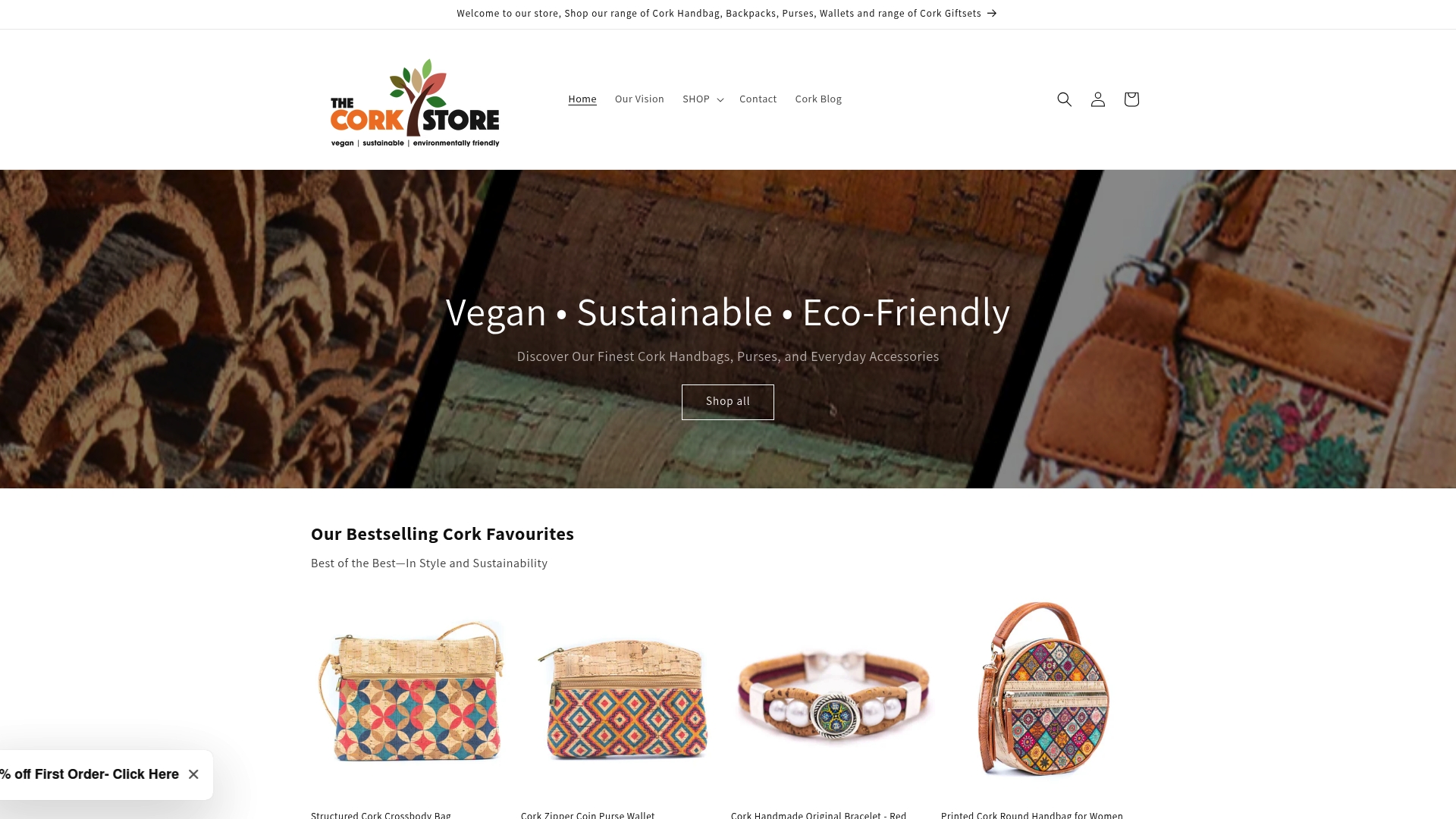
Thecorkstore’s blog also covers practical ways to reduce fashion waste and what a circular accessory actually means in product terms, which are useful resources whether you are a consumer making a purchasing decision or a brand looking for product-level examples to reference. Browse the full range and resources at Thecorkstore.
Sources
- Ellen MacArthur Foundation — network overview
- CTI sector guidance – Fashion and Textile v2.0 | WBCSD
- Vision of a circular economy for fashion — Ellen MacArthur Foundation (PDF)
- New study challenges circular fashion’s economic and environmental claims — Loughborough University news
- European Commission press release — policy levers for textiles
- Textile Exchange — Materials Market Report 2024