
2–5 Year Cork Bags: Spot Animal Trims and Backings for Eco Buyers
Cork fabric is a genuinely vegan, renewable material used by Thecorkstore and others for handbags, wallets and backpacks, harvested according to processes documented by APCOR and Amorim. The caveat: finished items sometimes carry non-vegan backings, adhesives or trims that undo that promise. Check the full materials list before you buy, and look for explicit vegan certification or a clear statement from the seller.
TL;DR:
- Cork bags typically last between two and five years, depending on backing thickness, stitching quality, and construction, making durability vary widely.
- Vegan certifications like PETA-Approved Vegan or the Vegan Trademark help verify the absence of animal-derived trims, adhesives, or linings in cork accessories.
- Most cork fabric is bonded to a textile backing, usually synthetic or cotton, which influences the feel, construction quality, and end-of-life disposal.
- The sustainability benefits of cork stem from the fact that trees are not felled, and bark regenerates every nine years, supporting carbon sequestration and biodiversity.
- Proper care involves light cleaning with a damp cloth and avoiding water or sun exposure, with small repairs manageable at home or by a specialist to extend product lifespan.
Table of Contents
- Why cork is a sustainable choice for vegan accessories
- What to check before you buy: a practical checklist
- Care, cleaning and small repairs for cork accessories
- Longevity and value: realistic lifespan and cost-per-year thinking
- How to verify vegan and sustainability claims
- Cork’s natural resistance, and why it matters for daily-carry accessories
- Weighing cork against other vegan leather alternatives
- The Cork Store’s perspective on curating vegan cork goods
- Shop curated vegan cork accessories at Thecorkstore
- Sources
- FAQ
Why cork is a sustainable choice for vegan accessories
Cork oak bark is stripped away without felling the tree, and the bark regenerates over a harvest cycle that typically repeats every nine years once a tree matures enough for its first strip. That regrowth cycle is why cork forests are credited with real carbon sequestration and biodiversity benefits, according to APCOR’s own account of the transformation process. No other natural leather alternative can claim quite the same “the tree stays standing” pitch, and it’s one reason cork keeps turning up in eco-fashion collections.
Beyond the ethics, cork has genuinely useful material traits. It’s light, naturally water resistant thanks to its cellular structure, and takes dye or printed patterns without losing its grain, which is why you’ll see everything from plain natural cork to bold printed surfaces on the same style of bag.
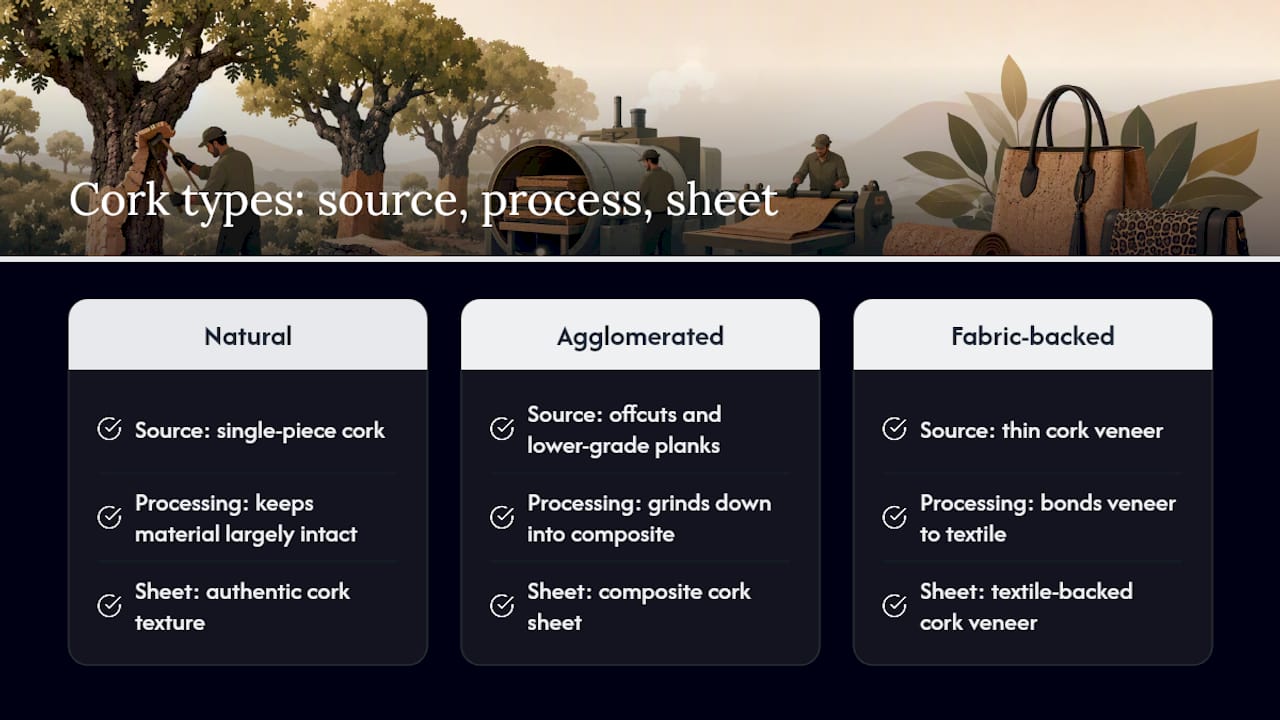
Manufacturing splits into three broad categories. Natural single-piece cork keeps the material largely intact, giving the most authentic texture. Agglomerated cork grinds down offcuts and lower-grade planks, often material that wasn’t suitable for wine stoppers, into a composite sheet, a use APCOR confirms is standard practice. Fabric-backed cork bonds a thin cork veneer to a textile base, which is what most accessory-grade “cork leather” actually is.
What to check before you buy: a practical checklist
Not every cork bag is built the same way, and the differences matter more than the marketing usually lets on. Before you commit to a purchase, run through this shortlist.
- Read the full materials list. Look past “cork” on the label and check for linings, trims and hardware; leather piping or wool linings can sneak animal material into an otherwise vegan bag, as Vegan Wiki notes.
- Look for certification. PETA-Approved Vegan status or a Vegan Trademark logo removes the guesswork; if neither is present, ask the seller directly.
- Ask about the backing fabric. Most cork sheets are bonded to cotton or a synthetic backing and sealed with a coating, which affects both feel and how the item behaves at the end of its life.
- Inspect the stitching. Saddle-stitched seams generally outlast machine-laminated edges, and clean edge finishing is a decent proxy for overall build quality.
- Match the bag to how you’ll use it. A daily-carry tote needs sturdier hardware and reinforced handles than an occasional-use clutch.
- Check for repair or warranty support. A seller who’ll reinforce a seam or replace a strap clasp is telling you something about how the item was built in the first place.
Pro Tip: If a listing doesn’t mention the backing material at all, that’s usually a sign nobody asked the manufacturer. Send a quick message before you buy rather than after.
Care, cleaning and small repairs for cork accessories
Cork accessories reward light-touch care. Wipe the surface with a damp cloth rather than reaching for household cleaners, and keep bags away from direct sun for long stretches or a soak in water, both of which can dull the surface and stress the backing.
For stains, work through these steps in order:
- Mix a small amount of mild soap with lukewarm water.
- Dab, don’t scrub, using a soft cloth on the affected area.
- Blot away excess moisture immediately with a dry cloth.
- Leave the bag to air-dry away from direct heat or sunlight.
Store bags upright or filled with tissue paper to hold their shape, in a dry spot away from radiators or damp cupboards, since prolonged pressure or humidity can flatten or warp the cork surface over time.
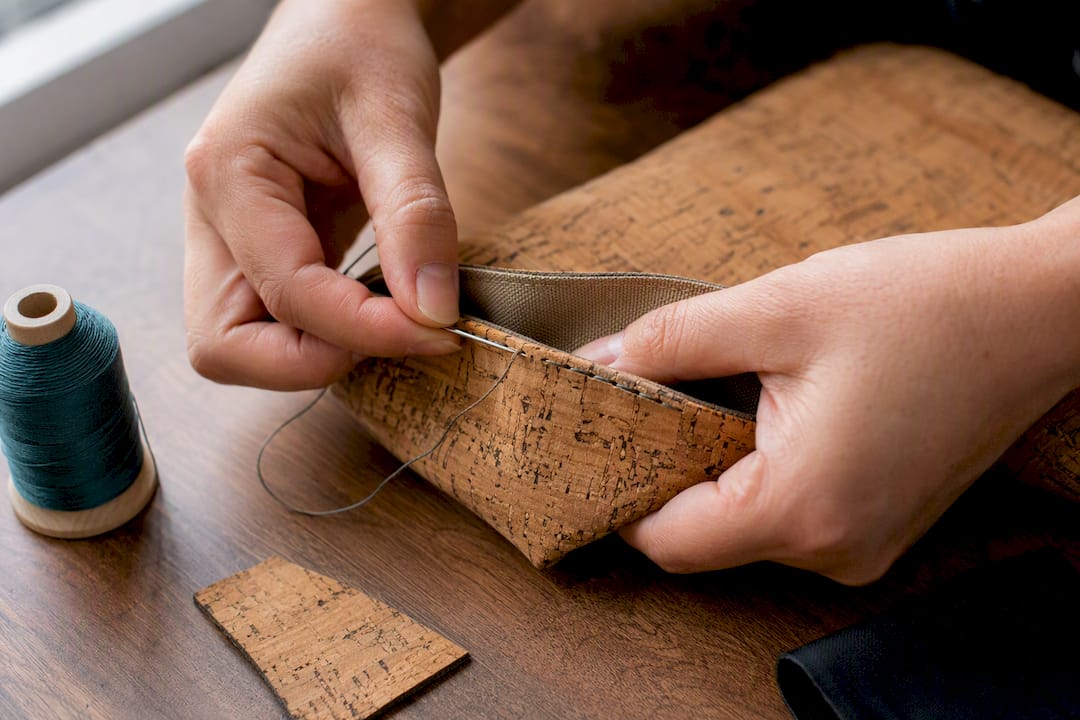
Small repairs are often manageable at home. A loose stitch can be reinforced with a needle and strong thread, and a lifting edge can sometimes be resealed carefully with a fabric-safe adhesive. For anything more structural, a repairer familiar with vegan materials will do a cleaner job than a DIY fix, and it’s worth checking Thecorkstore’s guide to upcycling cork products for ideas that extend a bag’s life rather than replace it.
Pro Tip: Keep a spare offcut of cork fabric, if your seller includes one, for testing any cleaning product before it touches the actual bag.
Longevity and value: realistic lifespan and cost-per-year thinking
Most cork accessories last somewhere between two and five years under normal use, according to user reports and product comparisons gathered by Markore. That’s shorter than what you’d expect from high-quality full-grain leather, but construction quality moves that range substantially.
Backing thickness, adhesive quality and stitching type are the real variables. A saddle-stitched bag with a robust backing will comfortably outlast a glued, thin-backed equivalent, even if both started at a similar price.
Run the numbers rather than guessing. A wallet that costs £40 and has a shorter lifespan costs more per year of use than a better constructed wallet costing more initially but lasting significantly longer. When you’re deciding between a cheap impulse buy and a pricier, better-constructed piece, that simple division is usually the tiebreaker: choose the repairable, well-built option whenever the item will see regular use, and save the disposable choice for something you’ll only carry occasionally.
How to verify vegan and sustainability claims
Genuine claims leave a paper trail. Certifications like PETA-Approved Vegan or the Vegan Trademark are the clearest signal, alongside FSC traceability statements that link back to how the cork was actually harvested. Brands that describe their process the way APCOR and Amorim do, naming harvest cycles, boiling and stabilisation steps, batch labelling, are giving you something you can actually check.
Before buying, it’s worth asking the seller a few direct questions:
- What is the backing material, and is it plastic-based or natural fibre?
- Are any adhesives or sealants animal-derived?
- Does the cork carry FSC or equivalent traceability documentation?
- Are trims, zips and hardware vegan?
Treat vague language as a red flag. “100% natural” with no supporting detail, an unspecified lining, or a materials list that simply says “cork” without mentioning the backing all suggest the brand hasn’t done the homework, or doesn’t want to show it.
Cork’s natural resistance, and why it matters for daily-carry accessories
Cork’s cell structure, the same one that makes it useful in flooring and insulation, gives it a natural resilience that translates well into bags and wallets. It resists light knocks and scuffing better than you’d expect from something so light, and it copes with the odd splash far better than untreated leather, since the material itself is naturally water resistant before any coating is even applied, as Foley + Corinna explains. That inherent toughness is part of why cork keeps expanding beyond stoppers and coasters into genuinely hard-wearing fashion pieces.
It isn’t indestructible. A cork bag left in direct sun for hours, or one that’s been genuinely soaked rather than lightly splashed, will still show wear faster than one that’s been looked after. But for the everyday knocks a handbag or backpack actually takes, cork holds up well against comparable synthetic vegan leathers, and its texture tends to age with a bit of character rather than cracking outright.
Weighing cork against other vegan leather alternatives
Cork isn’t the only vegan option on the market, and it’s worth knowing where it sits. Compared with PU-based vegan leathers, cork tends to breathe better and resists cracking over time, since it doesn’t rely on a plastic coating that can peel. Compared with newer plant-based leathers made from pineapple fibre or cactus, cork has the advantage of decades of established supply chains through the cork industry, largely built around wine stoppers, which makes traceability easier to verify.
The trade-off is texture and formality. Cork has a distinctive grain that some buyers love and others find too casual for certain occasions, whereas PU leather can mimic smooth traditional leather more closely. Cork also tends to sit at a mid-range price point, not always the cheapest vegan option, but usually cheaper than premium plant-based leathers. None of these alternatives is flawless, and the right choice comes down to whether you value breathability and traceable sourcing over an exact leather look-alike finish.
The Cork Store’s perspective on curating vegan cork goods
Thecorkstore’s editorial focus, led by Aaron, has always been on transparency over marketing gloss: naming materials clearly rather than hiding behind “vegan-friendly” language that skips the detail. Products get judged on whether the materials list is genuinely legible, whether construction looks repairable rather than disposable, and whether the backing type is disclosed rather than assumed.
The honest position is this: cork is a lower-impact material, not a zero-plastic one. Most cork fabric still needs a backing and a sealant to function as a bag, and pretending otherwise does buyers no favours. What Thecorkstore prioritises instead is disclosure, so shoppers can make that trade-off with open eyes rather than false promises.
— Aaron
Shop curated vegan cork accessories at Thecorkstore
Thecorkstore’s advantage isn’t just selling cork, it’s curating it: every handbag, wallet and backpack in the collection is chosen for a materials list you can actually read, not marketing copy that dodges the question.
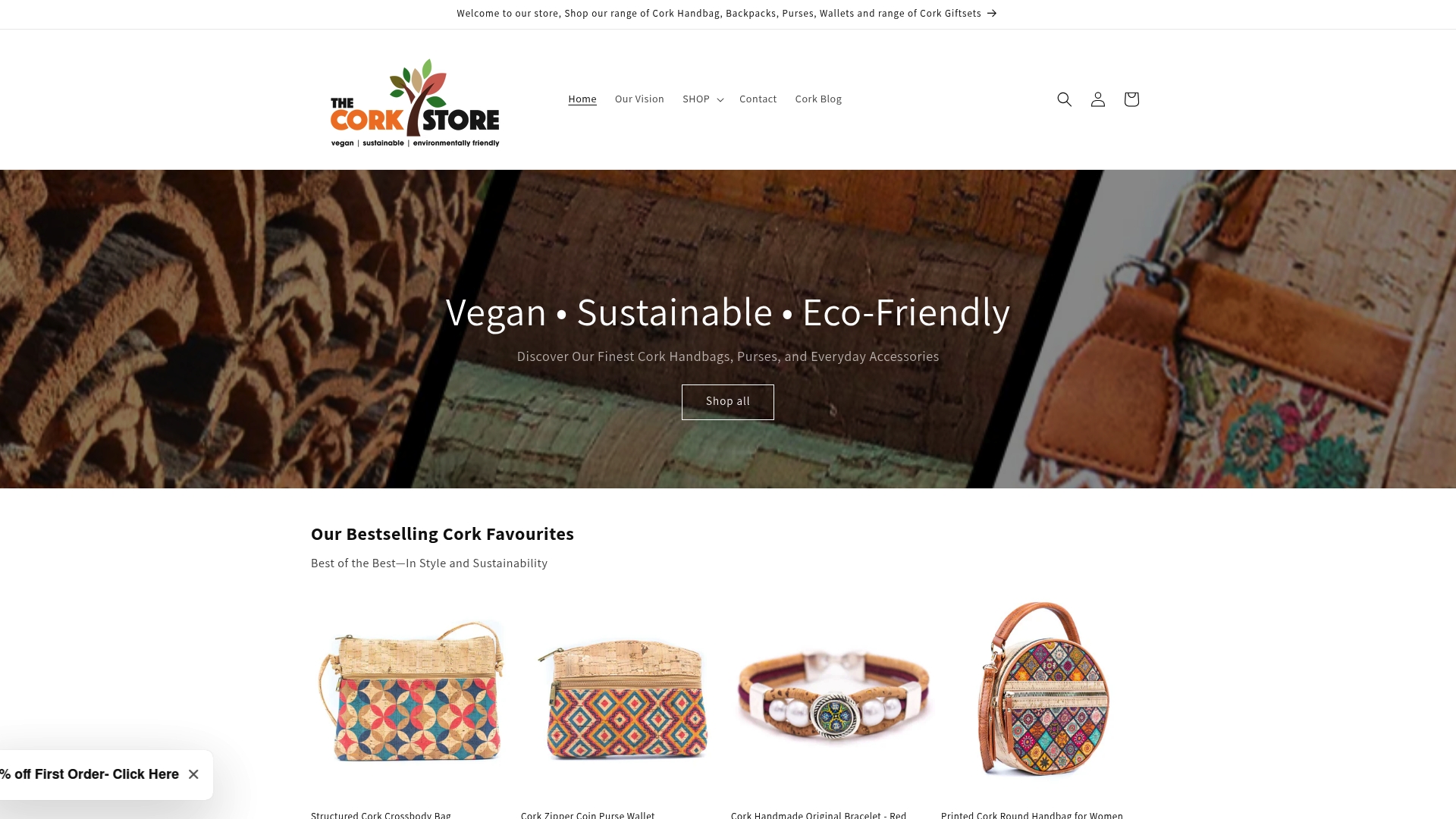
Browse the full range of women’s cork handbags, purses, and gift sets to see the spread of styles, from everyday crossbody bags to occasional-use wallets. If you’re after something light for daily carry, the women’s cork crossbody bags collection covers the practical end, while the natural cork printed crossbody bag shows how far cork’s printed surfaces can go stylistically. For something smaller, the cork zipper coin purse wallet and the Marine Cork Wallet both make sensible low-commitment first purchases. Looking for a gift instead? The women’s gift sets collection bundles pieces together at a fair spread of price points. Got a question about backing material or construction before you buy? Get in touch with Thecorkstore’s customer service team; they’ll answer it directly rather than pointing you back to a product description.
Sources
Claims about cork’s harvesting and processing draw on APCOR’s transformation process documentation and Amorim’s account of raw material and production, both primary sources within the cork industry. Vegan status and its caveats are covered in detail by Vegan Wiki’s entry on cork leather. For brand-specific detail on harvesting and sustainability, Thecorkstore’s own blog covers how cork harvesting works and cork’s broader environmental impact.
- Transformation Process — APCOR
- Cork: Raw material and production process — Amorim
- Is cork leather vegan? — Vegan Wiki
FAQ
Is cork fabric actually vegan?
Yes, cork itself is a plant-based material with no animal content, but finished accessories can include animal-derived trims, linings or adhesives unless the brand explicitly confirms otherwise.
How long do cork bags and wallets typically last?
Most cork accessories last between two and five years under normal use, with lifespan depending heavily on backing quality and stitching type.
Does cork fabric have a plastic backing?
Most cork fabric is bonded to a cotton or synthetic textile backing and finished with a sealant, which is why cork accessories are best described as lower-impact rather than entirely plastic-free.
What should I check before buying a cork handbag?
Check the full materials list for backing, trims and adhesives, look for vegan certification such as PETA-Approved Vegan, and ask the seller directly if anything is unclear.
Where can I buy verified vegan cork accessories?
Thecorkstore offers a curated range of vegan cork handbags, wallets and backpacks with clear materials descriptions for eco-conscious shoppers.