
Role of Cork in Ethical Fashion: Eco Elegance Unveiled
Finding stylish accessories without sacrificing ethics can feel like a real challenge for anyone who cares about cruelty-free fashion and sustainability. Cork delivers a rare mix of beauty, versatility, and eco-friendliness that stands out in the world of ethical materials. Harvested from European and North African cork oak trees, this innovative material is not only natural but also produced with minimal environmental impact. Discover how the unique structure and resilient properties of cork offer a truly sustainable alternative for modern vegan style.
Table of Contents
- Cork Material Defined And Common Misconceptions
- How Cork Is Harvested And Processed Sustainably
- Vegan Leather Alternatives: Cork Versus Traditional Options
- Cork’s Environmental And Social Impact In Fashion
- Challenges, Limitations, And Ethical Certification
Key Takeaways
| Point | Details |
|---|---|
| Cork as a Unique Material | Cork is a natural, highly renewable material harvested sustainably from cork oak trees, distinct from wood and synthetic alternatives. |
| Sustainable Harvesting Practices | The harvesting process is designed to protect the trees and the ecosystem, with minimal environmental impact and maximum efficiency. |
| Environmental and Social Benefits | Cork production supports biodiversity, local economies, and carbon sequestration, making it a strong contender for sustainable fashion. |
| Challenges and Solutions | The cork industry faces competition from synthetic materials and market volatility, necessitating the use of ethical certification standards to ensure sustainable practices. |
Cork Material Defined and Common Misconceptions
Cork is a remarkable natural material that defies conventional understanding. Originating from the bark of cork oak trees (Quercus suber), this extraordinary substance represents far more than a simple plant product. Cork’s complex cellular structure) reveals a fascinating world of microscopic hexagonal and pentagonal gas-filled chambers that contribute to its unique characteristics.
Understanding cork requires dispelling several widespread misconceptions. Many people incorrectly assume cork is simply another type of wood or a synthetic fabrication. In reality, cork is a specialised plant bark with extraordinary properties:
- Entirely natural biological material
- Harvested sustainably without harming trees
- Composed of suberin, a hydrophobic substance
- Possesses remarkable elasticity and resilience
The material’s impressive attributes stem from its distinctive molecular composition. Cork contains a mixture of suberin, lignin, and cellulose, creating a structure that is simultaneously lightweight, compressible, and incredibly durable. Its low density and remarkable elasticity make it an ideal material for numerous applications, particularly in ethical and sustainable fashion.
Cork represents nature’s engineering marvel: a renewable resource with unparalleled performance characteristics.
Key properties that distinguish cork include its ability to recover after compression, its natural fire-retardant qualities, and its impermeability. These characteristics emerge from its unique cellular structure, where each cell functions like a miniature gas-filled cushion. This design enables cork’s extraordinary material properties, making it far more sophisticated than traditional textiles.
To clarify how cork differs from common misconceptions and related materials, consider this comparison:
| Aspect | Cork Material | Wood | Synthetic Alternatives |
|---|---|---|---|
| Origin | Cork oak bark | Tree trunk/core | Petroleum-based compounds |
| Sustainability | Highly renewable, no harm | Varies, often destructive | Generally unsustainable |
| Structure | Gas-filled cells | Solid fibres | Uniform polymers |
| Environmental Impact | Promotes biodiversity | May cause deforestation | Often polluting |
Pro tip: When evaluating sustainable materials, examine cork’s multi-dimensional properties beyond simple surface characteristics.
How Cork Is Harvested and Processed Sustainably
Cork harvesting represents one of the most sustainable and environmentally conscious material production methods in the world. Sustainable cork harvesting is a delicate process that protects both the tree and the surrounding ecosystem, ensuring minimal environmental impact while producing a remarkable material.
The harvesting journey begins with cork oak trees that can live up to 200 years, with the first harvest occurring when the tree reaches approximately 25 years of age. The process is meticulously planned and executed:
- First harvest produces virgin cork
- Subsequent harvests yield more refined material
- Harvesting occurs every 9-12 years
- Completed manually by skilled workers
- Ensures no permanent damage to the tree
During the harvesting season, skilled workers carefully strip the bark using traditional hand tools, a technique that requires extraordinary precision. Each tree is marked and monitored to ensure sustainable practices. The stripped bark is then left to cure outdoors, allowing natural processes to enhance its quality.
Sustainable cork harvesting represents a perfect harmony between human intervention and natural regeneration.
After outdoor curing, the cork planks undergo a crucial processing stage. They are boiled to improve flexibility and sterilise the material, transforming raw bark into a versatile resource. Cork production processes involve careful sorting, cutting, and treatment to prepare the material for various applications in fashion and design.
Pro tip: When selecting sustainable materials, prioritise resources like cork that support ecological balance and local economies.
Vegan Leather Alternatives: Cork Versus Traditional Options
The search for sustainable and ethical fashion materials has led conscientious designers and consumers to explore innovative alternatives to traditional leather. Vegan leather alternatives represent a critical intersection between environmental responsibility and stylish design, with cork emerging as a standout solution.
When comparing cork to traditional leather, several key distinctions become apparent:
- Cruelty-free production
- Renewable and sustainable harvesting
- Biodegradable material
- Lower environmental impact
- Minimal chemical processing
Traditional leather production involves significant environmental and ethical challenges, including animal welfare concerns and extensive resource consumption. Cork, by contrast, offers a remarkable alternative that supports ecological preservation. The material is harvested from cork oak trees without causing permanent damage, with trees continuing to grow and sequester carbon throughout their 200-year lifecycle.
Sustainable fashion is not just about appearance, but about making conscious choices that respect both human and ecological systems.
The technical properties of cork leather make it remarkably competitive with traditional leather. It is lightweight, waterproof, and surprisingly durable, capable of withstanding extensive use while maintaining its aesthetic appeal. Sustainable leather alternatives demonstrate that ethical fashion need not compromise on quality or style.
Pro tip: When selecting accessories, prioritise materials that tell a positive environmental story while delivering exceptional performance.
Cork’s Environmental and Social Impact in Fashion
The fashion industry stands at a critical juncture where environmental responsibility and social impact are paramount. Cork’s sustainable contributions represent a transformative approach to addressing these complex challenges, offering a holistic solution that extends far beyond mere material production.
The environmental benefits of cork are multifaceted and profound:
- Supports extraordinary biodiversity
- Prevents desertification in Mediterranean regions
- Promotes carbon sequestration
- Enables sustainable rural economies
- Provides recyclable and biodegradable products
Cork oak forests serve as intricate ecosystems that support hundreds of plant and animal species. These remarkable landscapes not only protect against environmental degradation but also create economic opportunities for local communities. By harvesting cork, communities can generate sustainable livelihoods while maintaining ecological balance.
Sustainable fashion is an ecological dialogue, where every material choice represents a conversation with our planet’s future.
The social dimensions of cork production are equally compelling. Rural Mediterranean regions particularly benefit from this industry, which provides stable employment and preserves traditional ecological knowledge. Environmental impact of cork demonstrates how fashion can be a powerful vehicle for positive social and ecological transformation.
Pro tip: Consider the broader story behind your fashion choices, recognising that each sustainable material represents a complex network of environmental and social relationships.
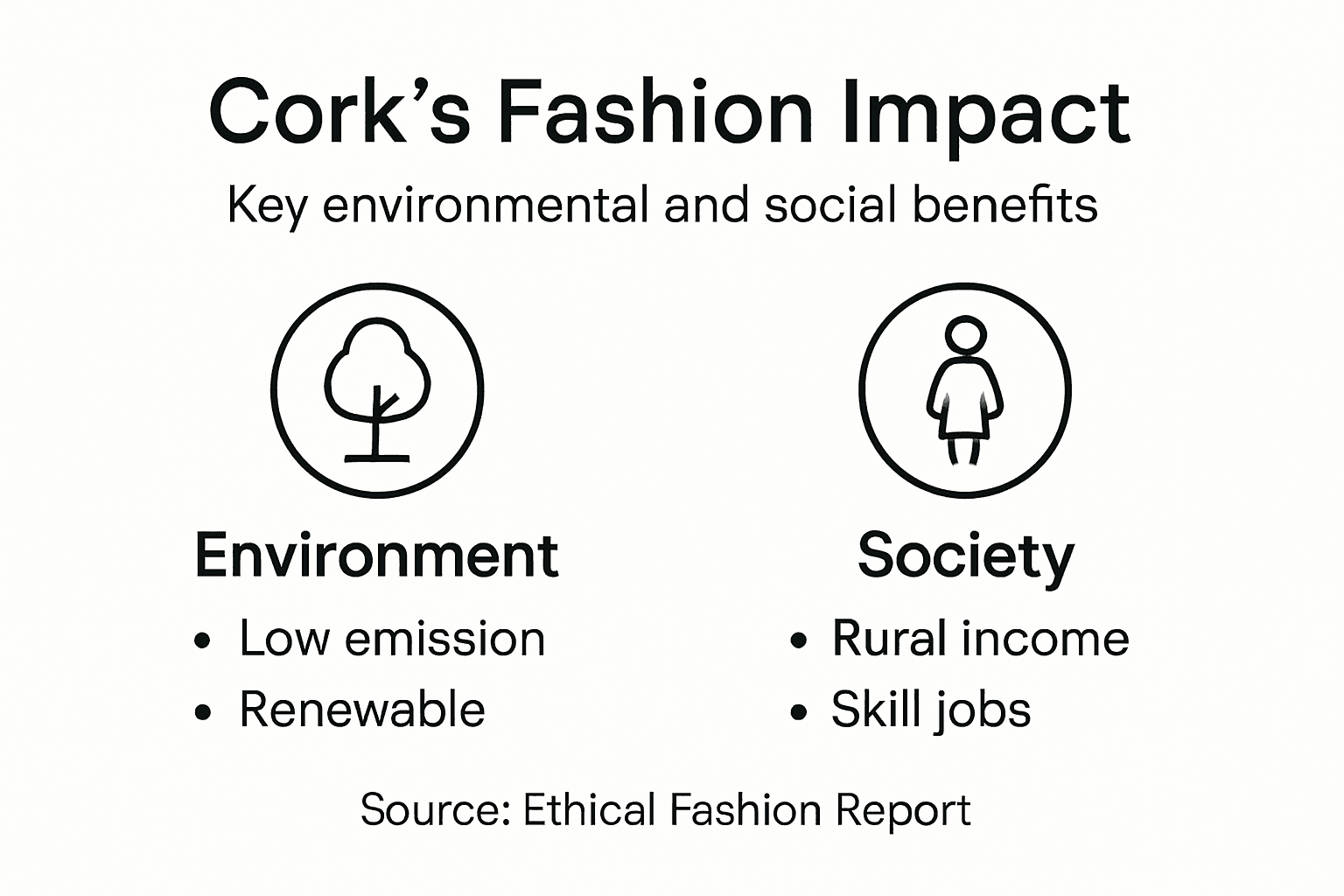
For an at-a-glance understanding of cork’s environmental and social benefits, see the summary below:
| Benefit Type | Cork’s Contribution | Impact Area |
|---|---|---|
| Biodiversity | Supports diverse species | Mediterranean forests |
| Rural Economy | Provides sustained livelihoods | Local communities |
| Environmental Care | Prevents desertification | Soil and landscape health |
| Carbon Management | Encourages sequestration | Global climate stability |
Challenges, Limitations, and Ethical Certification
The cork industry, despite its remarkable sustainability credentials, confronts several nuanced challenges that demand ongoing innovation and strategic adaptation. Cork sector challenges reveal a complex landscape of environmental, economic, and market-related obstacles that require sophisticated approaches.
Key challenges facing the cork industry include:
- Competition from synthetic alternatives
- Market volatility
- Limited geographic production regions
- High modernisation costs
- Complex forest management requirements
- Climate change vulnerability
Economic sustainability remains a critical concern for cork producers. Synthetic materials often present cheaper alternatives, creating significant market pressures. The Mediterranean cork oak forests, while ecologically crucial, are geographically concentrated, making the industry vulnerable to regional environmental shifts and economic fluctuations.
Ethical certification transforms challenges into opportunities for transparent, responsible production.
Certification schemes have emerged as a crucial mechanism for addressing these limitations. Ethical certification standards help validate sustainable practices, ensuring transparency in forest management, labour conditions, and environmental stewardship. These frameworks provide consumers with confidence in the ethical provenance of cork products.
Pro tip: When evaluating sustainable materials, look beyond surface-level claims and seek comprehensive certifications that demonstrate genuine ecological commitment.
Discover Ethical Elegance with Cork Accessories
The article highlights the challenges of finding truly sustainable and cruelty-free fashion materials while maintaining style and durability. If you care about embracing eco-conscious choices that honour cork’s unique renewable and biodegradable qualities, you will appreciate how cork accessories solve these pain points. Cork’s natural elasticity, water resistance, and lightness make it a superior alternative to traditional leather without harming animals or forests.
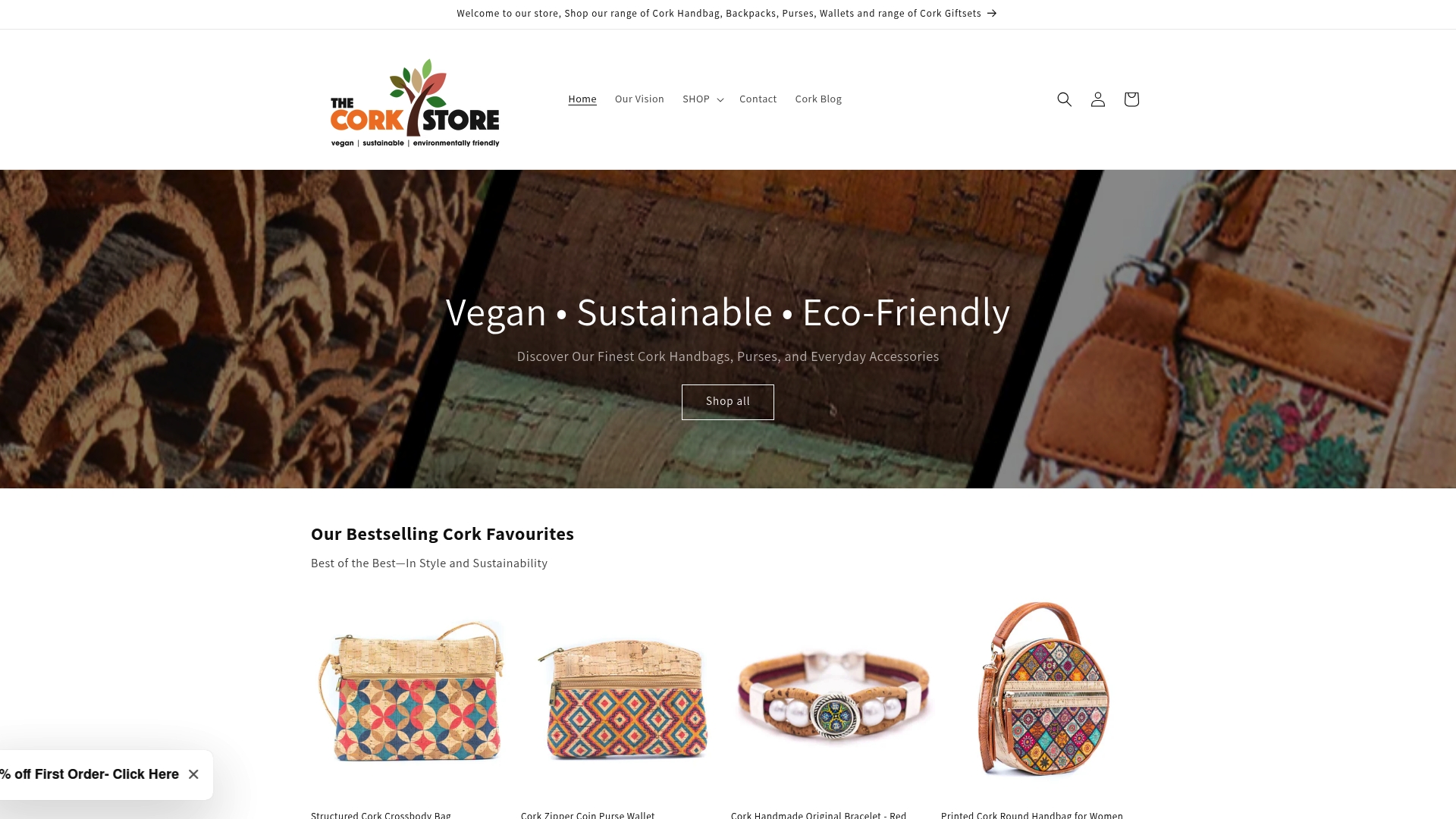
Explore our curated selection of vegan cork products at The Cork Store where style meets sustainability every day. From handbags to wallets, each piece embodies the ethical values and environmental benefits described in the article. Don’t wait to transform your wardrobe with accessories that support biodiversity and local communities. Start making a positive impact through fashion today by browsing our thoughtfully crafted range of eco-friendly cork accessories at our collection and learn more about cork’s remarkable qualities on our insightful blog. Seize the moment to choose elegance that respects the planet.
Frequently Asked Questions
What are the key properties of cork that make it suitable for ethical fashion?
Cork possesses remarkable elasticity, durability, and waterproof qualities, making it an ideal choice for sustainable and stylish fashion items. Its unique cellular structure allows it to recover after compression and offers natural fire-retardant properties.
How is cork harvested sustainably?
Cork is harvested by carefully stripping the bark from cork oak trees without causing permanent damage. This process is done manually by skilled workers every 9-12 years, allowing the trees to continue growing and contributing to carbon sequestration.
How does cork compare to traditional leather in terms of environmental impact?
Unlike traditional leather, which raises animal welfare concerns and involves significant resource consumption, cork is a cruelty-free, biodegradable, and renewable material. Its production supports biodiversity and sustainable rural economies without harming the environment.
What challenges does the cork industry face in the ethical fashion market?
The cork industry faces competition from synthetic alternatives, market volatility, and high modernisation costs. Ethical certification standards are essential in addressing these challenges by ensuring transparency in sustainable practices.
Recommended
- Understanding the Role of Cork in Sustainable Fashion – The Cork Store
- Role of Cork in Eco Fashion: Sustainable Style Unpacked – The Cork Store
- Sustainable Fashion 2025: Why Cork Leads the Eco Revolution – The Cork Store
- What Is Eco-Friendly Fashion? Complete Overview – The Cork Store
- Mindful Fashion: Τι Σημαίνει για τον Πλανήτη κι Εσένα - Judah Club