
PETA-Approved Vegan: what cork accessory buyers need to know
TL;DR:
- The PETA-Approved Vegan label certifies that a product contains no animal materials and hasn’t been tested on animals. It confirms animal welfare compliance but does not address environmental impact or sustainability claims. Buyers should verify specific product details and seek additional certifications for sustainability assurance.
The PETA-Approved Vegan label certifies one thing precisely: a product contains no animal-derived materials and has not been tested on animals. That is an animal-welfare assurance, not a sustainability or environmental guarantee. For UK shoppers buying cork handbags, wallets, or backpacks, the label tells you the product is cruelty-free at the material level — it says nothing about carbon footprint, chemical safety, or how the cork was harvested. Nearly 1,000 companies use the logo across clothing, accessories, and home goods, so you will encounter it often. The role of PETA-Approved Vegan in your buying decision is to confirm animal-welfare compliance — then you do the sustainability homework separately.
What the label covers for cork accessories:
- Cork outer material: typically free from animal inputs by nature, but the PETA logo confirms this formally
- Linings: often synthetic, but some products use suede, wool felt, or leather-backed fabric — check the product description explicitly
- Adhesives: most modern cork goods use synthetic glues, but animal-derived casein or hide glue can appear in lower-cost items
- Hardware and dyes: metal fittings and finishing dyes are not automatically vegan — ask the seller if the product page is silent on these
Pro Tip: Don’t rely on a brand-level PETA logo alone. Check that the logo appears on the specific product page you are buying, and ask the seller for a Statement of Assurance (SOA) if you want documented confirmation.
Table of Contents
- What does PETA-Approved Vegan actually certify?
- What does PETA approval mean for your cork bag or wallet?
- What PETA-Approved Vegan does not guarantee
- How can you verify a PETA-Approved Vegan claim?
- A buying checklist for sustainable vegan cork accessories
- Key takeaways
- Why the PETA label is more useful than most shoppers realise
- Thecorkstore’s cork collection: shop with confidence
- Further reading and verification links
What does PETA-Approved Vegan actually certify?
PETA created the label to close a labelling gap: ethical shoppers needed a quick visual signal to identify animal-free products without researching entire supply chains themselves. The certification verifies that a product or product line is free from leather, fur, wool, silk, feathers, and other animal-derived materials, and that it has not been tested on animals.
The process is document-based throughout. There are no routine factory audits; approvals rest on legal declarations and supplier self-disclosure.
| Step | What happens |
|---|---|
| Questionnaire | Brand completes PETA’s application form detailing materials and processes |
| Statements of Assurance | Brand and each relevant supplier sign legally binding SOAs |
| PETA review | PETA assesses the documentation submitted |
| Licence agreement | If approved, brand signs a licence agreement and pays an annual fee |
| Logo use | Brand may place the logo on products, tags, websites, and social media for certified items |
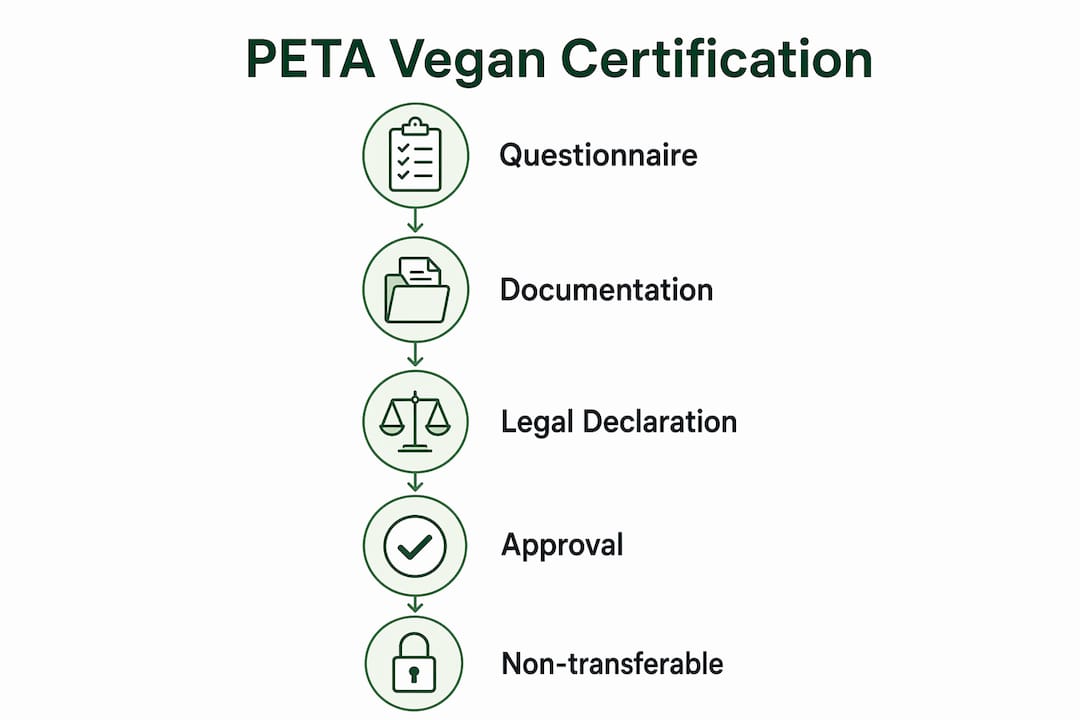
Because the logo is non-transferable, a supplier holding approval cannot pass that status to a retailer. The retailer must apply independently and provide its own SOAs. That detail matters when you are verifying a claim: the brand selling you the bag must hold its own certification, not just its manufacturer.
What does PETA approval mean for your cork bag or wallet?
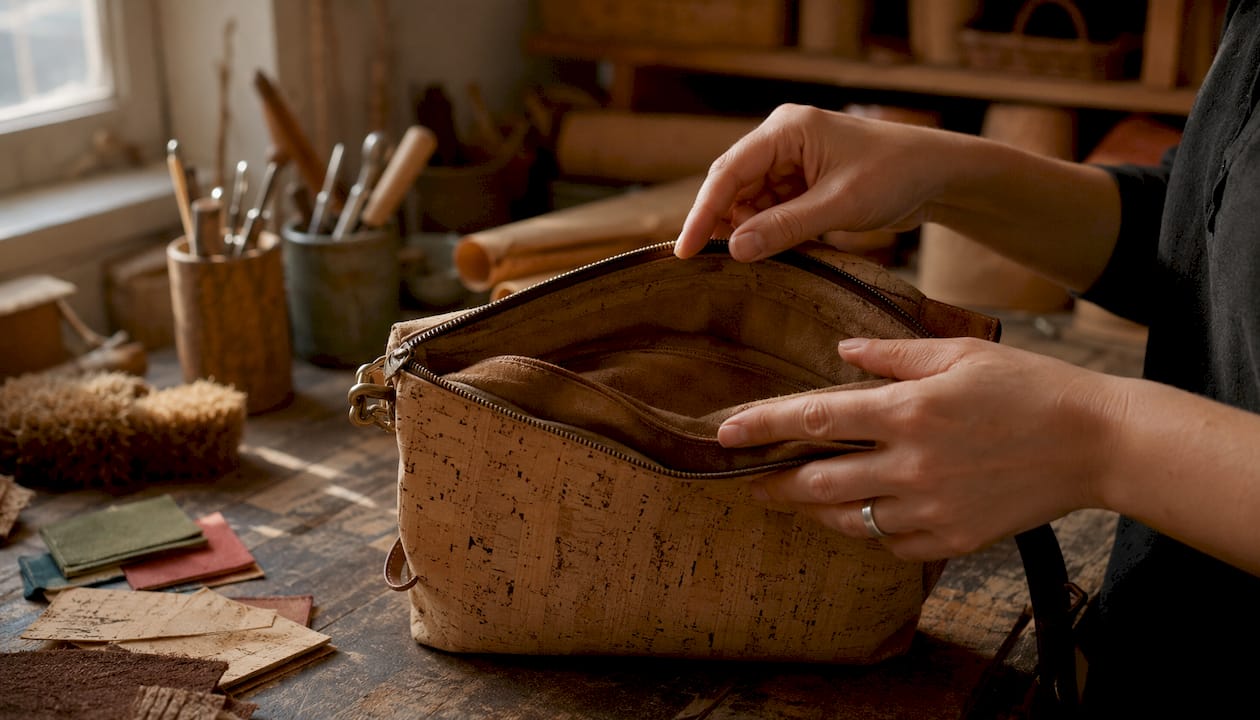
The label confirms no animal material in the certified product elements — but a cork accessory has several components, and each one needs checking. The outer cork fabric is naturally plant-derived, yet the lining, adhesive, dyes, and hardware are separate questions entirely.
A quick checklist for any product page:
- Outer material: confirmed cork or cork fabric (not cork-effect synthetic over leather backing)
- Lining: look for polyester, cotton, or recycled fabric — not suede, wool felt, or “leather-effect” descriptions
- Adhesive: synthetic resin preferred; ask if the listing is silent
- Dyes and finishes: water-based or synthetic dyes are standard in quality cork goods
- Hardware: brass, zinc alloy, or stainless steel are vegan; bone or horn toggles are not
- Product images: zoom in on interior shots — a suede lining is usually visible in close-up photography
Pro Tip: If a product photo shows a contrasting interior fabric and the description only says “lined,” that is a gap worth querying. A seller confident in their vegan credentials will answer quickly.
Because the logo can apply to a single product, a collection, or an entire brand, you cannot assume that every item from a PETA-listed company is covered. Check the specific product page, not just the brand’s homepage. Thecorkstore’s product descriptions and blog resources set out materials clearly, which makes this verification step straightforward for their range.
Numbered steps for reading a product page:
- Locate the PETA logo on that specific product page (not just the homepage)
- Read the full materials list, including lining and hardware
- Check product photos for interior close-ups
- If any component is unlisted, contact the seller before purchasing
- Ask for an SOA or supplier confirmation if you need documented proof
What PETA-Approved Vegan does not guarantee
PETA is an animal-welfare label. It does not measure environmental impact, carbon footprint, recyclability, or chemical safety. The FAQ states this plainly: the certification validates the absence of animal materials but does not function as a sustainability certification.
| What PETA covers | What PETA does not cover |
|---|---|
| Absence of leather, fur, wool, silk, feathers | Carbon footprint or CO₂ emissions |
| No animal testing | Cork harvesting or forest management practices |
| Animal-derived adhesives and dyes | Chemical safety of synthetic materials |
| Confirmation the brand applied and signed SOAs | Factory labour conditions |
For shoppers who care about sustainability as well as animal welfare, additional signals are worth seeking out. Cork itself is a low-impact material — harvested from living trees without felling them — but that claim needs backing beyond the PETA logo.
Sustainability signals to look for alongside PETA approval:
- FSC certification or cork origin statement: confirms responsible forest management for the cork source
- OEKO-TEX Standard 100: tests for harmful substances in textiles, including linings and dyes
- GRS (Global Recycled Standard): relevant if a product uses recycled synthetic linings or packaging
- Transparent supply chain disclosure: country of origin, named manufacturers, or published supplier lists
Pairing PETA approval with one or more of these signals gives a much fuller picture. For a deeper look at how sustainability credentials work alongside vegan labels, the UK eco-fashion guide from Thecorkstore covers this well. It is also worth understanding that post-consumer recycled fabric in linings or packaging can add a meaningful environmental credential on top of a cruelty-free claim.
How can you verify a PETA-Approved Vegan claim?
Always start with the product page, not the brand’s homepage. The logo may appear on product labels, tags, websites, and social media for certified items — so its absence from a specific listing is a signal worth noting even when the brand is generally PETA-listed.
Practical verification steps:
- Step 1: Check the product page for the PETA-Approved Vegan logo
- Step 2: Search PETA’s public approved-brand listings at petaapprovedvegan.peta.org to confirm the brand is registered
- Step 3: Request a Statement of Assurance or supplier confirmation from the seller — a legitimate brand will have this on file
- Step 4: Confirm the logo use covers the specific product, not just the brand or a different collection
- Step 5: If the seller cannot provide documentation, treat the claim as unverified marketing copy
One important caveat: because the approval process is document-based and PETA does not routinely audit factories, the certification reflects legal declarations rather than independently inspected production. That is not a reason to dismiss it — signed SOAs carry legal weight — but it is a reason to combine the logo check with your own product-page scrutiny.
A buying checklist for sustainable vegan cork accessories
Use this checklist to confirm both animal-welfare claims and relevant sustainability indicators before you buy.
- PETA-Approved Vegan logo visible on the specific product page
- Brand confirmed on PETA’s public approved listings
- Full materials list available (outer, lining, adhesive, dyes, hardware)
- No leather trims, suede linings, or wool felt in the product description
- Cork origin statement or FSC certification mentioned
- OEKO-TEX or equivalent for linings and dyes (sustainability priority)
- Hardware material specified (metal type, no bone or horn)
- Repairability information or spare parts available
- Packaging described as recycled or minimal
- Returns policy and country of origin clearly stated
Pro Tip: If cruelty-free is your only priority, items 1–4 are your minimum. If sustainability matters equally, work through items 5–10 as well — a cork bag that ticks all ten is genuinely rare and worth the extra research.
For shoppers building a wider ethical wardrobe, the vegan fashion starter guide from Thecorkstore covers how to prioritise these criteria across different product categories.
Key takeaways
The PETA-Approved Vegan label is a reliable animal-welfare signal for cork accessory buyers, but confirming sustainability requires additional certifications such as FSC, OEKO-TEX, or GRS alongside it.
| Point | Details |
|---|---|
| What PETA certifies | No animal-derived materials and no animal testing — animal welfare only, not environmental impact. |
| Logo is product-specific | Check the logo on the individual product page; brand-level approval does not cover every item automatically. |
| Verification steps | Cross-check PETA’s public listings and request a signed SOA from the seller for documented proof. |
| Sustainability gap | Pair PETA approval with FSC cork origin, OEKO-TEX for linings, or GRS for recycled content to cover environmental claims. |
| Thecorkstore | Thecorkstore’s product pages and blog resources provide clear materials lists to support PETA claim verification for their cork range. |
Why the PETA label is more useful than most shoppers realise
The conventional wisdom treats the PETA-Approved Vegan logo as a nice-to-have badge — a reassuring tick that confirms the obvious. Cork is a plant material, so surely the bag is vegan anyway? That reasoning misses the point. The label’s real value is not confirming the outer cork fabric; it is the documented commitment that every component — lining, adhesive, dye, hardware — has been declared animal-free through a signed legal process. Without that, you are trusting marketing copy.
Where the label genuinely falls short is the sustainability assumption it invites. Shoppers who see “PETA-Approved Vegan” and conclude the product is environmentally responsible are making a leap the certification does not support. A synthetic lining made from virgin polyester is vegan. It is not sustainable. The two claims need separate evidence, and conflating them is the most common mistake I see in ethical fashion buying.
The practical upshot: use the PETA logo as your floor, not your ceiling. It tells you the animal-welfare case is documented. Then ask the harder questions about cork origin, chemical safety, and what happens to the product at end of life. A brand that answers those questions confidently — with FSC statements, OEKO-TEX data, or a repair policy — has earned more than a logo.
Thecorkstore’s cork collection: shop with confidence
Cork accessories that genuinely tick every box on the checklist above are not easy to find. Thecorkstore’s range of cruelty-free cork bags, wallets, and gift sets is built around product transparency: clear materials lists, detailed product photography, and blog content that explains exactly what goes into each item.
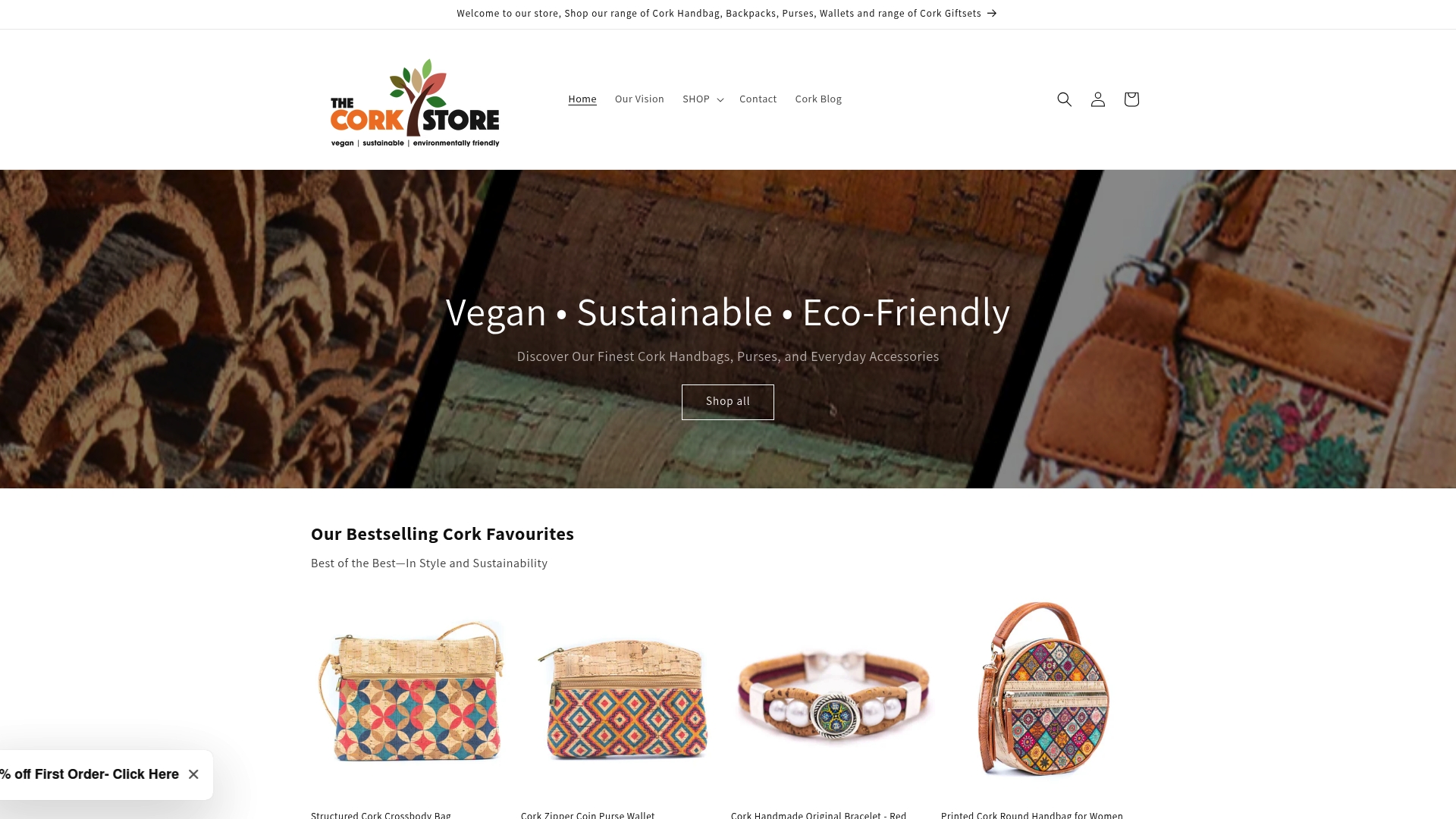
The All-Natural Cork Wallet Gift Set is a strong starting point — a ready-to-buy cruelty-free option with the product detail you need to verify the vegan claim yourself. For a broader browse, the vegan cork gift collection brings together multiple cruelty-free options in one place. Check each product page for the PETA logo placement and materials breakdown before you buy.
Further reading and verification links
Use these resources to verify claims and learn more about the PETA-Approved Vegan programme directly from primary sources.
- PETA-Approved Vegan apply page: the starting point for checking which brands hold approval and understanding the programme scope
- PETA-Approved Vegan FAQs: the most authoritative source on what the certification covers, the SOA process, and the document-based nature of approvals
- PETA UK lifestyle page: explains the label’s purpose and lists approved brands relevant to UK shoppers
- Thecorkstore vegan product guide: item-level explanation of what qualifies a product as vegan, useful for reading product pages critically
- Thecorkstore UK eco-fashion guide: covers sustainability certifications alongside vegan credentials for UK buyers
PETA’s public listings and a direct SOA request to the seller remain the two fastest verification routes available to UK shoppers. Both take under five minutes and give you documented rather than assumed confidence in your purchase.
This article is general information for shoppers and does not constitute legal or professional advice. Verify current certification status directly with PETA and the relevant seller before purchasing.
Recommended
- How to choose vegan accessories: sustainable cork guide 2026 – The Cork Store
- Why Go Vegan with Accessories: 64% Prefer Cork Alternatives – The Cork Store
- Vegan cork eco accessories: stylish and sustainable picks – The Cork Store
- Vegan gift guide: stylish, sustainable cork accessories – The Cork Store