
What is closed loop fashion? A clear guide for 2026
TL;DR:
- Closed loop fashion keeps garments and fibers in continuous use through recovery and regeneration. It prioritizes end-of-life recovery and infrastructure over raw material choices alone. Consumer actions like repairing and buying durable items support a more sustainable, circular system.
Closed loop fashion is defined as a production and consumption system that keeps garments and fibres in continuous use by recovering, regenerating, and reintegrating them into new clothing rather than discarding them. The industry term for this concept is circular fashion, and the two phrases describe the same core model. Built on four pillars — Reduce, Reuse, Repair, and Recycle — closed loop systems replace the traditional linear “take-make-waste” model that has dominated fashion for decades. Organisations such as Textile Exchange and frameworks like PCH Pure’s circularity guidance have helped define what genuine closed loop practice looks like. Understanding this system matters because it determines whether a garment truly disappears from landfill or simply carries a green label.
What is closed loop fashion and how does it differ from general sustainability?
Closed loop fashion and general sustainable fashion are not the same thing. Sustainable fashion often focuses on raw material sourcing: organic cotton, recycled polyester, or lower-impact dyes. Those choices reduce harm at the production stage, but they do not guarantee what happens to a garment at the end of its life.
Closed loop fashion specifically targets full lifecycle circularity. A garment designed for a closed loop system uses fibre-to-fibre recycling as its planned end state, not landfill or incineration. The Textile Exchange’s preferred production framework covers Tier 4 raw material production and aims at supply chain transformation across climate, nature, people, and animals. That scope goes well beyond choosing a better fabric.
Design for disassembly is the clearest marker of a genuine closed loop approach. A garment built for circularity uses mono-materials where possible, avoids mixed-fibre blends that cannot be separated, and includes clear end-of-life instructions. A “sustainable” garment made from organic cotton blended with elastane, with no take-back scheme, does not qualify as closed loop.
The difference also shows up in business models. Closed loop fashion requires resale programmes, rental options, or brand take-back schemes to function. Without those recovery routes, even the best-designed garment ends up in a charity shop bin bag or worse.
Pro Tip: When a brand claims to be “sustainable,” ask specifically whether they offer a take-back or repair scheme. If the answer is no, the product sits outside a closed loop system regardless of its materials.
- Sustainable fashion: reduces harm at production stage
- Closed loop fashion: plans for recovery and reintegration at end of life
- Key difference: design intent and post-consumer infrastructure, not just raw materials
What are the key components of a closed loop fashion system?
A functioning closed loop textile system requires four components to work together. No single element is sufficient on its own.
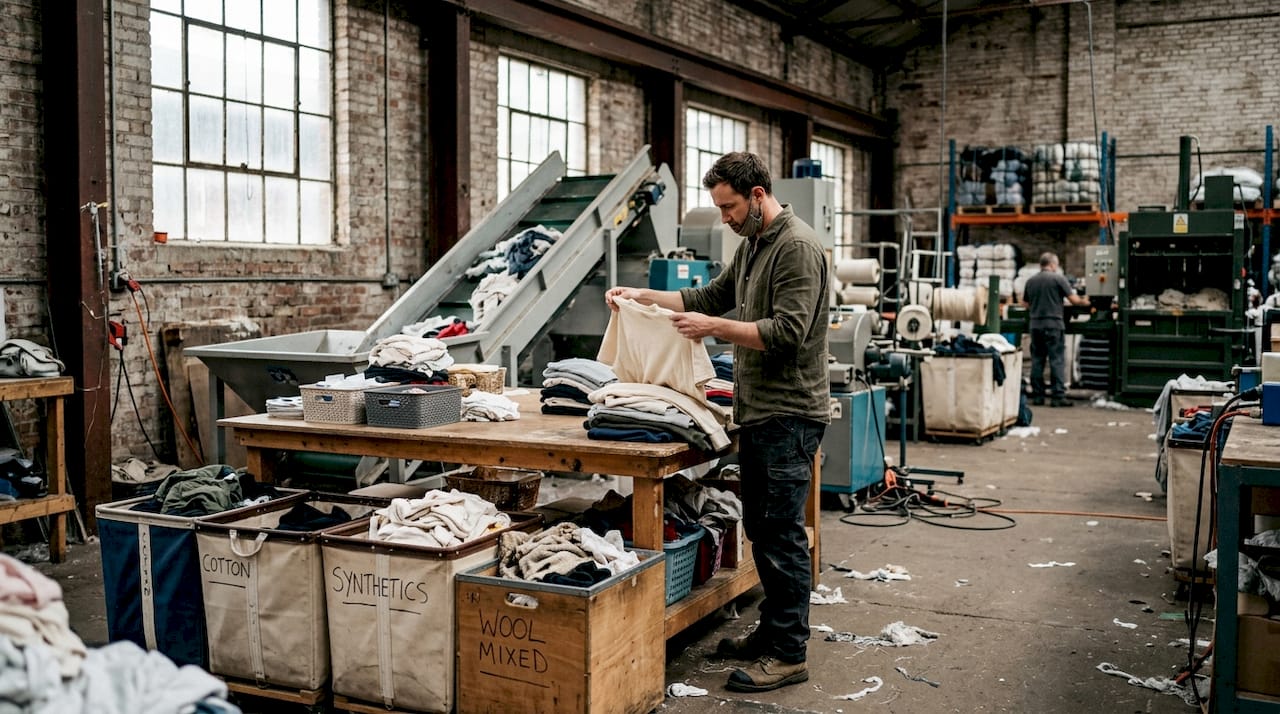
The four pillars in practice
Reduce means producing fewer garments and using fewer resources per item. This is the least visible pillar but the most impactful. Clothing production has doubled in recent decades, yet average wear per item dropped 40%. That statistic reveals the core problem: volume growth cancels out material improvements.
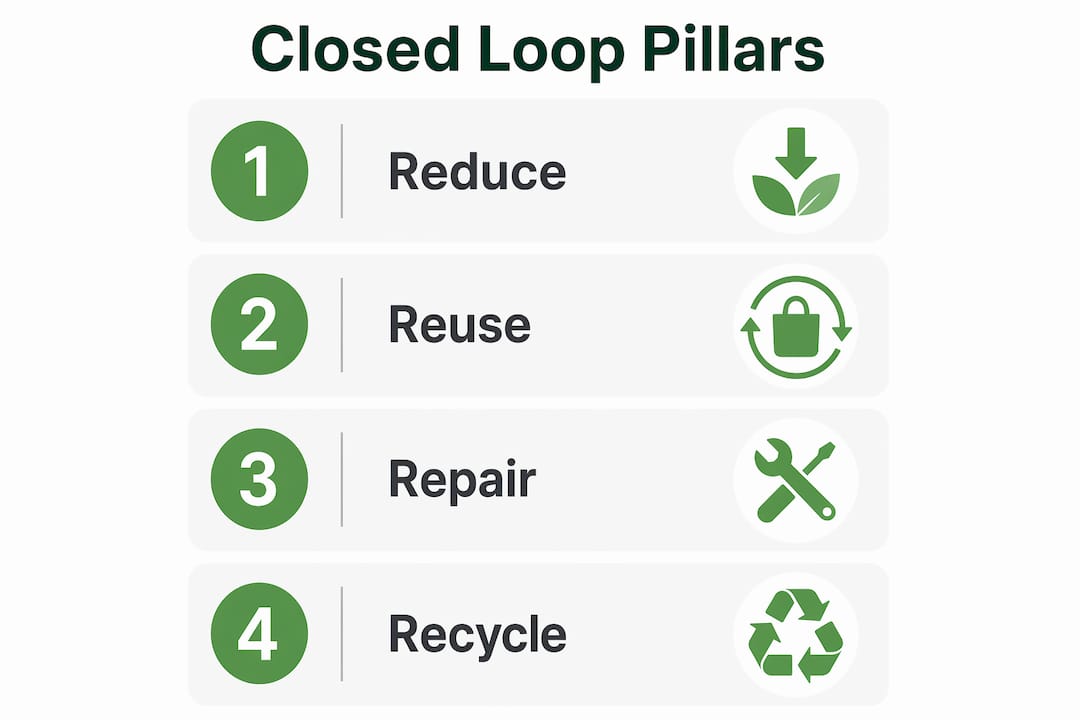
Reuse covers resale, rental, and second-hand markets. These models extend a garment’s active life without requiring any new resources. Rental platforms and peer-to-peer resale have grown significantly, but they still represent a small fraction of total fashion consumption.
Repair is the most accessible pillar for individual consumers. Extending a garment’s life through mending, alterations, or professional repair reduces its environmental cost per wear. Longevity is the primary lever consumers have to contribute to circularity right now, ahead of any infrastructure improvements.
Recycle is the most technically complex pillar. True closed loop recycling means fibre-to-fibre processing, where old garments become new textile fibres of equivalent quality. Most current recycling is still downcycling, where fibres degrade in quality and end up in insulation or industrial rags rather than new clothing.
Business models that support circularity
| Component | Closed loop approach | Traditional fashion approach |
|---|---|---|
| Design | Mono-materials, easy disassembly | Mixed fibres, glued components |
| Sales model | Resale, rental, take-back | Single purchase, no recovery |
| End of life | Fibre-to-fibre recycling | Landfill or incineration |
| Consumer role | Active participation required | Passive buyer |
Pro Tip: Choose garments made from a single fibre type, such as 100% wool or 100% cotton, with no elastane blends. These are far more likely to be compatible with actual recycling infrastructure when the time comes.
What challenges limit closed loop fashion today?
Most closed loop systems marketed to consumers are aspirational rather than operational. The gap between brand claims and real-world outcomes is significant, and understanding it protects you from greenwashing.
The most fundamental barrier is infrastructure. Closed loop systems depend on local recycling capacity, and that capacity varies enormously by region. A take-back scheme that works in one country may have no viable processing partner in another. Without a functioning collection and recycling system at the end of the chain, even a perfectly designed garment cannot complete the loop.
Downcycling is the second major limitation. Many brands lack the infrastructure to achieve genuine fibre-to-fibre recycling, so collected garments are processed into lower-grade materials. This is still better than landfill, but it is not a closed loop. The fibre quality degrades with each cycle, and eventually the material leaves the fashion system entirely.
Transparency is the third challenge. True circularity demands traceability about product design and end-of-life handling. Without it, sustainability claims become marketing rather than evidence. Fragmentation across governance, design, and production further limits real closed loop success, as coordination failures between these stages are common.
The practical barriers consumers face include:
- No local drop-off point for brand take-back schemes
- Garments made from blended fibres that recyclers cannot process
- No public information about where collected garments actually go
- Greenwashing claims that use circular language without circular systems
How can you actively participate in closed loop fashion?
Consumer participation is not optional in a closed loop system. The model only functions when people actively extend garment life, return items for recovery, and choose brands with verifiable practices.
- Buy less and wear more. Doubling the number of times you wear a garment halves its environmental impact per use. This single behaviour change delivers more measurable benefit than switching to a “sustainable” brand while maintaining the same purchase volume.
- Repair before replacing. A broken zip or worn seam is not a reason to discard a garment. Local tailors, cobblers, and repair cafés can extend a garment’s life by years. Ethical fashion also complements circular fashion by prioritising durability and safe manufacturing to reduce toxic and energy-intensive processes.
- Buy vintage or second-hand. Purchasing pre-owned clothing keeps garments in use without generating new production demand. This is the most direct form of reuse within a circular fashion concept.
- Choose brands with verifiable take-back schemes. Ask whether the brand publishes data on how many garments it collects and where they go. Vague claims about “recycling programmes” without published outcomes are a warning sign.
- Learn the terminology. Understanding the difference between downcycling and fibre-to-fibre recycling, or between a carbon-neutral claim and a closed loop claim, helps you make genuinely informed choices. Thecorkstore’s guide to sustainable fashion terminology is a practical starting point.
Pro Tip: Before buying from a brand claiming closed loop credentials, check whether they publish a material composition breakdown and a named recycling partner. If neither is listed publicly, the claim is unverified.
Knowing how to spot genuine sustainable fashion amid marketing noise is a skill worth building. The role of transparency in fashion is central to this: brands that publish supply chain data are far more likely to operate genuine closed loop systems than those that do not.
Key takeaways
Closed loop fashion requires integrated coordination across product design, business models, and recycling infrastructure to achieve genuine circularity at scale.
| Point | Details |
|---|---|
| Definition | Closed loop fashion keeps fibres in continuous use through reduce, reuse, repair, and recycle. |
| Key distinction | It differs from general sustainability by planning for end-of-life recovery, not just cleaner production. |
| Biggest barrier | Regional recycling infrastructure gaps mean most take-back schemes cannot complete the loop in practice. |
| Consumer lever | Extending garment life through repair and increased wear is the most effective action available today. |
| Greenwashing risk | Verify closed loop claims by checking for named recycling partners and published collection data. |
Closed loop fashion: where I think we actually stand
The honest position is that closed loop fashion is a genuinely important idea that the industry has not yet built the infrastructure to deliver at scale. I find the gap between brand language and operational reality frustrating, not because brands are necessarily dishonest, but because the systems required to close the loop simply do not exist in most markets yet.
What I have observed is that consumers who focus on durability and repair make a more measurable difference than those who chase the latest “circular” collection. A well-made cork accessory from Thecorkstore that lasts a decade outperforms a fast-fashion item with a take-back label that ends up downcycled after one season. The material choice matters, but longevity matters more.
The synergy between ethical fashion and circular fashion is real and underappreciated. Brands that prioritise safe manufacturing, fair labour, and durable construction are already doing the groundwork that makes circularity possible. The ethical fashion trends shaping 2025 and beyond point consistently toward transparency and durability as the foundations of any credible closed loop claim.
My view is that consumers should hold brands to a higher standard of evidence, not a higher standard of vocabulary. Ask for data, not declarations.
— Aaron
Sustainable choices that go the distance
Closed loop fashion starts with buying products designed to last. Thecorkstore specialises in vegan cork accessories, including handbags, backpacks, wallets, and purses, crafted from one of the most naturally renewable materials available.
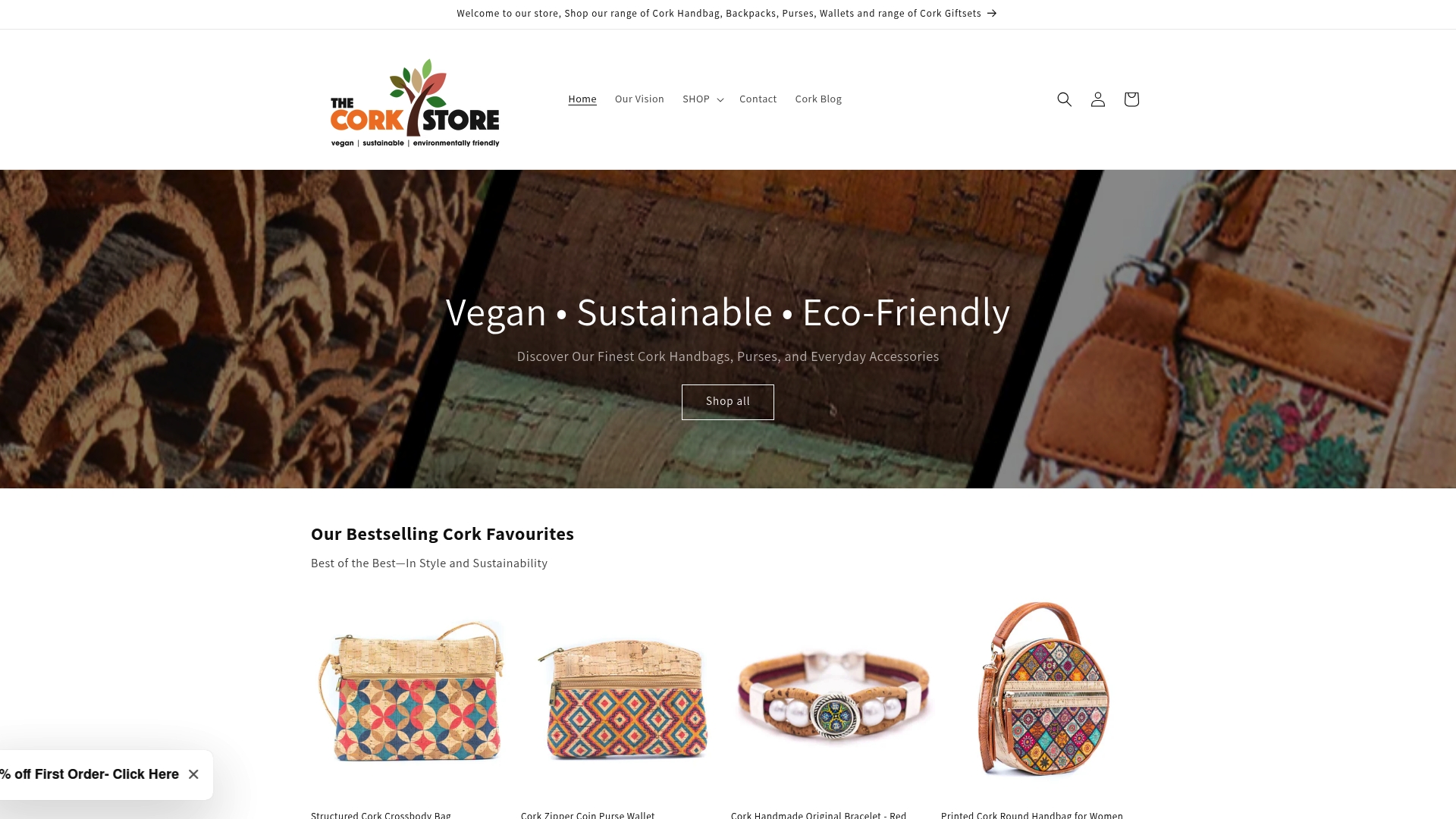
Cork is harvested without felling the tree, regenerates naturally, and produces accessories that are built to endure rather than be discarded. Every purchase from Thecorkstore reflects the reduce and reuse pillars of circular fashion in a practical, everyday form. Explore the full range of sustainable cork accessories and find pieces that align with a genuinely circular wardrobe.
FAQ
What is the difference between closed loop and circular fashion?
Closed loop fashion and circular fashion describe the same system. Both terms refer to keeping garments and fibres in continuous use through design, recovery, and reintegration rather than disposal.
Does buying second-hand count as closed loop fashion?
Buying second-hand supports the reuse pillar of closed loop fashion. It extends a garment’s active life without new production, making it one of the most direct circular actions a consumer can take.
How do I know if a brand’s recycling claim is genuine?
A genuine closed loop claim includes a named recycling partner, published collection data, and clear information about where garments go after return. Vague claims without this evidence are unverified.
What is fibre-to-fibre recycling?
Fibre-to-fibre recycling processes old garments into new textile fibres of equivalent quality. It differs from downcycling, where fibres degrade and leave the fashion system entirely.
Can cork accessories fit into a closed loop wardrobe?
Cork is a natural, renewable material harvested without destroying the source tree. Accessories made from cork are durable by design, which directly supports the reduce and reuse pillars of a closed loop textile system.