

Impact of accessories on environment: what you need to know
TL;DR:
- Accessories significantly impact the environment through resource consumption, chemical pollution, and waste generation throughout their lifecycle. Choosing durable, certified, and natural materials like cork can greatly reduce personal and industry ecological impacts. Consumer actions such as buying less, repairing, and choosing secondhand are essential to lowering overall accessories’ environmental footprints.
Fashion accessories are a leading contributor to the environmental crisis in the global clothing industry, responsible for significant greenhouse gas emissions, water consumption, chemical pollution, and waste generation throughout their entire lifecycle. The global apparel and accessories industry contributes 8–10% of global greenhouse gas emissions and uses approximately 930 million cubic metres of water annually. That scale makes the ecological footprint of accessories far larger than most consumers realise. Understanding the full picture is the first step towards making genuinely better choices.
What is the impact of accessories on environment across their lifecycle?
The environmental effects of fashion accessories begin long before a product reaches a shop shelf. Every stage, from raw material extraction to manufacturing, transport, use, and disposal, generates emissions, consumes resources, and produces waste.
Resource consumption in production
Textile and accessory production is extraordinarily water-intensive. Textile production uses 1,700 litres of water per person per day globally, supporting 10% of carbon emissions and 20% of wastewater worldwide. To put that in context, producing a single leather handbag requires water for both the livestock and the tanning process, before a single stitch is sewn.
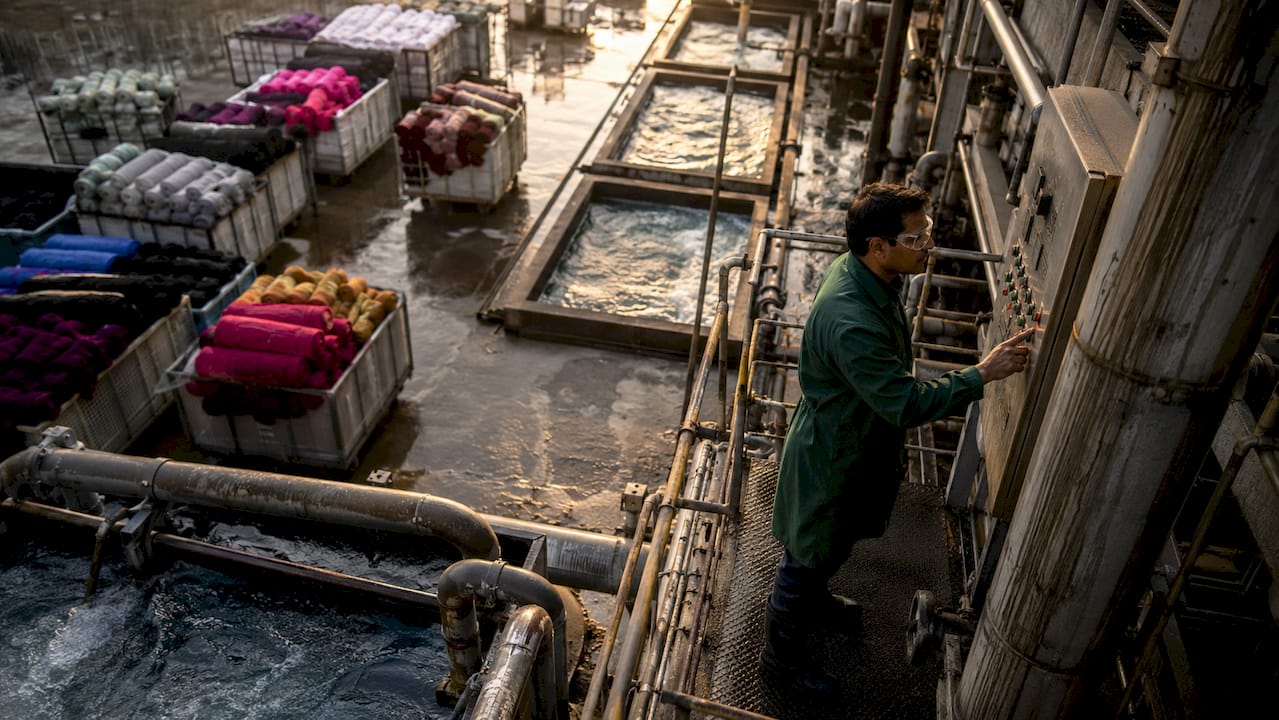
The fashion industry is also the second-largest global water consumer, heavily impacting resource use and pollution in accessory production regions. Communities near textile factories in South and South-East Asia bear the worst of this burden, often losing access to clean water.
Chemical pollution and hazardous substances
Fast fashion accessories frequently contain hazardous chemicals, including phthalates and PFAS, which pollute waterways and pose direct health risks to consumers. These substances cause cancer, reproductive disorders, and immune system damage. They reach people through skin contact with accessories worn daily, such as belts, bags, and jewellery, as well as through contaminated water supplies downstream of factories.
Waste generation and recycling rates
The accessories waste impact is substantial at the production stage alone. The European Union generates around 5.8 million tonnes of textile waste annually, with cutting and production phases contributing 2.8 million tonnes of that total. Clothing waste in the EU increased by 40% between 2005 and 2015, and recycling rates for plastic waste remain at just 9%. Accessories, including bags, belts, and jewellery, contribute to this waste stream but are rarely separated for recycling.
Microplastic pollution
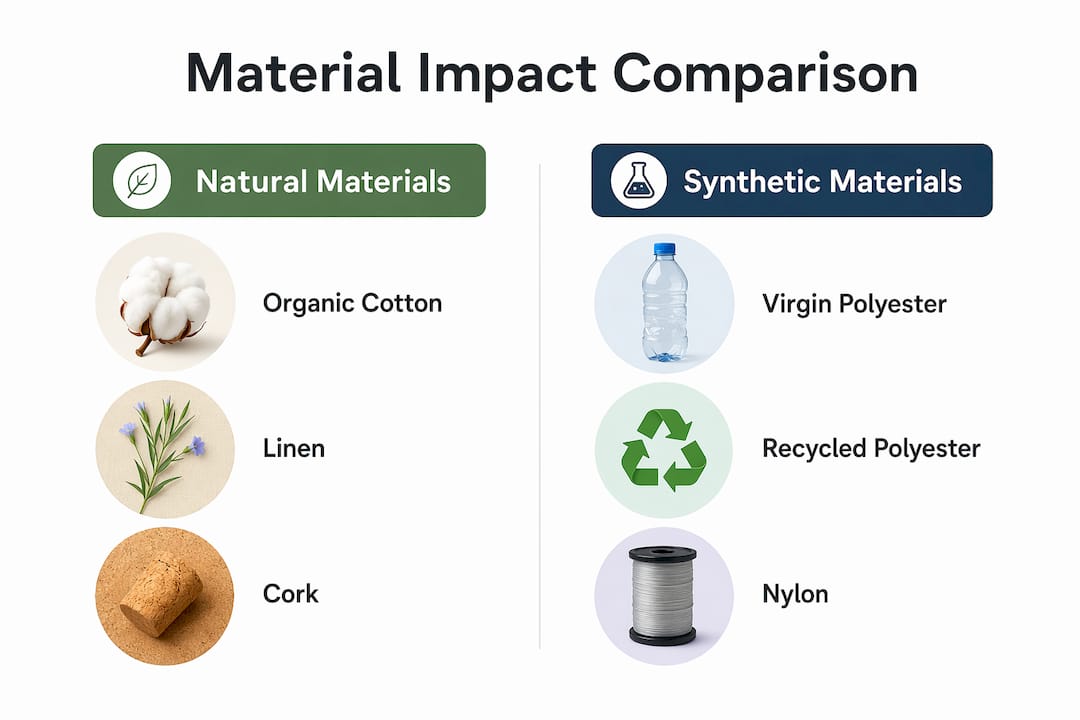
Synthetic accessories shed microplastics during washing and wear. Recycled polyester releases roughly 1,900 microplastic fibres per wash, contaminating oceans and drinking water despite its relatively low production energy footprint. These particles evade wastewater treatment systems and accumulate in marine ecosystems, entering the food chain.
Pro Tip: Check care labels before buying. Accessories made from synthetic materials like polyester or nylon shed microplastics with every wash. A microplastic filter bag, such as a Guppyfriend, can reduce shedding significantly.
How do different accessory materials impact the environment?
Material choice is the single biggest driver of an accessory’s environmental footprint. No material is perfect, but the differences between them are significant.
Natural and recycled materials
Natural fibres such as organic cotton, linen, and cork carry lower chemical processing burdens than synthetics. Cork is particularly notable: it is harvested by stripping bark from living cork oak trees, which then regenerate. The trees continue to absorb CO₂ throughout their lives. Recycled metals, such as reclaimed silver or gold used in jewellery, reduce the need for destructive mining and lower the impact of jewellery on environment considerably compared to virgin metal extraction.
Synthetic and recycled synthetic materials
Recycled polyester is widely marketed as an eco-friendly option because it uses less energy to produce than virgin polyester. The trade-off is real, though. Microplastics from recycled polyester undermine the benefits of lower production energy and require informed consumer choices backed by full lifecycle transparency. A bag labelled “made from recycled bottles” may still shed thousands of plastic fibres into waterways with every use.
The problem with green labels
Many accessories carry vague sustainability claims without verified lifecycle data. Certifications such as the Global Organic Textile Standard (GOTS), OEKO-TEX Standard 100, and the Leather Working Group provide independently verified benchmarks. Without these, a “natural” or “eco” label is marketing, not evidence. Consumers seeking eco-friendly accessory options should look for these specific third-party standards rather than relying on brand claims alone.
Pro Tip: When assessing a material’s sustainability, ask three questions: Where does it come from? How is it processed? What happens to it at end of life? A material that scores well on all three is genuinely sustainable.
| Material | Key environmental benefit | Key environmental concern |
|---|---|---|
| Cork | Renewable, biodegradable, carbon-absorbing | Limited global supply |
| Recycled polyester | Lower production energy than virgin polyester | Microplastic shedding per wash |
| Organic cotton | No synthetic pesticides | High water consumption |
| Recycled metals | Reduces mining demand | Energy-intensive reprocessing |
| Conventional leather | Durable and long-lasting | High water use, chemical tanning |
What role does consumer behaviour play in accessories’ environmental burden?
Consumer purchasing patterns drive the accessories waste impact as much as production methods do. The rise of fast fashion has created a culture of disposable accessories, where novelty items are bought cheaply, worn briefly, and discarded quickly.
The most effective way to reduce your personal climate impact from fashion is to shop less and reuse what you already own. The “shop your own wardrobe” strategy, which means rediscovering and restyling existing pieces before buying new ones, cuts demand at the source. It costs nothing and produces no emissions.
The gap between intention and action is well documented. Consumers often fail to align sustainable purchasing intentions with actual behaviour, showing a “value-action gap” in accessory buying. Better transparency and lifecycle certification are needed to close this gap and support genuinely sustainable decisions.
Several practical approaches can extend the life of accessories and reduce overall demand:
- Buy fewer, better quality items. A well-made leather or cork bag used for ten years has a fraction of the footprint of ten cheap bags used for one year each.
- Repair before replacing. Many accessories, including bags, belts, and shoes, can be resoled, restitched, or refurbished by skilled cobblers and leather workers.
- Buy secondhand. Pre-owned accessories carry no new production footprint. Platforms for secondhand fashion have grown significantly in the UK market.
- Consider rental for occasion wear. Jewellery and statement bags worn once for an event are ideal candidates for rental rather than purchase.
- Choose modular designs. Accessories with replaceable straps, interchangeable components, or repairable hardware last longer and generate less waste.
How can consumers make sustainable accessory choices?
Making genuinely sustainable accessory choices requires looking beyond price and aesthetics to consider durability, material transparency, and end-of-life options.
-
Prioritise durability and repairability. A product designed to last and be repaired will always outperform a cheaper item on lifecycle emissions. Circular accessory design that uses mono-materials and designs for disassembly improves repairability, recycling rates, and product lifespan significantly.
-
Look for verified certifications. GOTS, OEKO-TEX Standard 100, and the Leather Working Group certification all require independent auditing. They are not guarantees of perfection, but they set a verifiable baseline. Learning how to spot sustainable materials is a skill that pays off with every purchase.
-
Choose circular and modular designs. Modular design accessories carry higher initial carbon footprints due to extra hardware, but their longer product lifespans reduce overall emissions by replacing parts rather than entire items. A bag with a replaceable strap is a fundamentally different environmental proposition from one that cannot be repaired.
-
Maintain what you own. Conditioning leather, cleaning cork, and storing accessories properly extends their usable life by years. The most sustainable accessory is always the one you already own and keep in good condition.
-
Choose natural and plant-based materials. Cork, organic linen, and natural rubber carry lower chemical processing burdens than most synthetics. Cork accessories, in particular, are biodegradable, vegan, and produced without harming the tree. Thecorkstore offers a range of cork accessory options that meet these criteria across bags, wallets, and purses.
Pro Tip: Before buying any new accessory, check whether the brand publishes a materials breakdown and a repair or take-back programme. Brands that do are far more likely to have genuinely considered their environmental impact.
Key takeaways
The impact of accessories on environment spans every stage of their lifecycle, from resource-intensive production to chemical pollution, microplastic shedding, and low recycling rates. Choosing durable, certified, and naturally sourced accessories is the most effective way to reduce that burden.
| Point | Details |
|---|---|
| Production is resource-intensive | The accessories industry uses vast quantities of water and generates significant greenhouse gas emissions at every production stage. |
| Materials matter enormously | Cork, recycled metals, and certified natural fibres carry lower environmental burdens than conventional synthetics or virgin leather. |
| Consumer behaviour drives demand | Buying less, repairing more, and choosing secondhand are the highest-impact actions available to individual consumers. |
| Green labels need verification | Certifications such as GOTS and OEKO-TEX Standard 100 provide independently verified standards; unverified claims do not. |
| Circular design extends product life | Modular and repairable accessories reduce total lifecycle emissions even when their initial production footprint is slightly higher. |
Why I think most people underestimate their accessories’ footprint
Most conversations about fashion sustainability focus on clothing. Accessories get far less attention, and that is a mistake. A single fast-fashion handbag, made from PVC with metal hardware and synthetic lining, can involve five or six different materials, none of which are recyclable together. It is, in environmental terms, a nightmare to deal with at end of life.
I have spent years looking at how consumers actually engage with sustainability, and the pattern is consistent. People buy a “sustainable” tote bag made from recycled polyester, feel good about it, and never think about the 1,900 microplastic fibres it sheds every time it is washed. The green label does the work, and the actual lifecycle impact goes unexamined.
The most honest thing I can say is this: the best sustainable accessory choice is usually the one you already own. After that, the next best choice is something made from a single, natural, biodegradable material with a verifiable supply chain. Cork meets that standard better than almost anything else on the market. It is harvested without felling trees, it is biodegradable, and it ages well.
The industry will not change without consumer pressure. Asking brands direct questions about materials, certifications, and repair options is not awkward. It is the most effective tool consumers have. Brands that cannot answer those questions clearly are telling you something important about their priorities.
— Aaron
Sustainable cork accessories from Thecorkstore
Choosing accessories that genuinely reduce environmental harm does not mean compromising on style or quality.
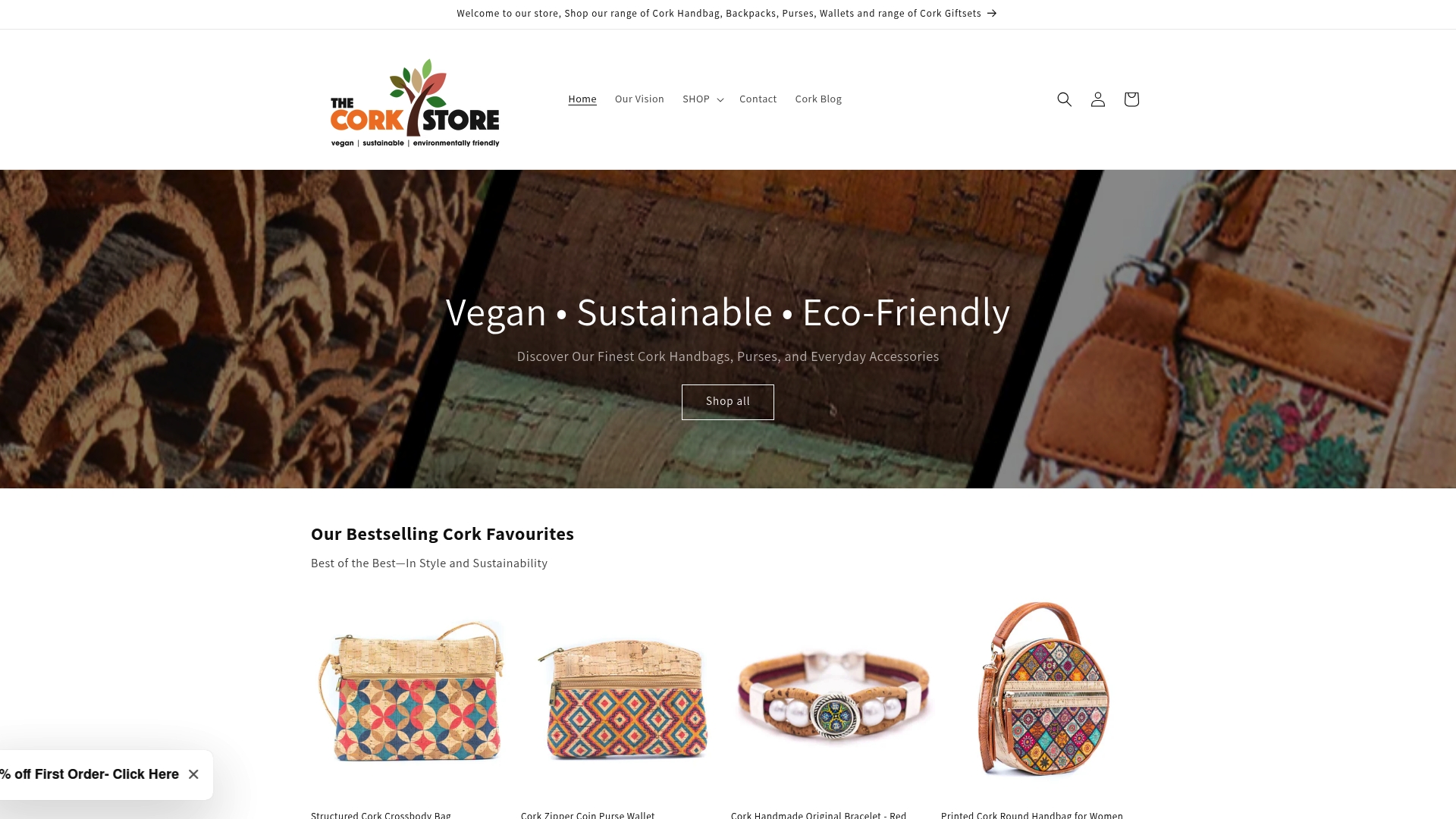
Thecorkstore specialises in vegan cork accessories crafted from natural cork oak bark, a material that is biodegradable, cruelty-free, and harvested without harming the tree. The All-Natural Cork Wallet Gift Set is a strong starting point for anyone looking to replace conventional leather items with a verified, plant-based alternative. For a broader selection of planet-friendly gifts, the vegan cork gift collection covers bags, purses, and accessories that meet the circular design principles outlined throughout this article.
FAQ
What percentage of emissions does the accessories industry produce?
The global apparel and accessories industry contributes 8–10% of global greenhouse gas emissions annually. That makes it one of the most carbon-intensive consumer industries in the world.
Are recycled materials always better for the environment?
Not always. Recycled polyester uses less energy to produce than virgin polyester, but it releases roughly 1,900 microplastic fibres per wash, which contaminate waterways and marine ecosystems. Full lifecycle transparency is needed to assess any material fairly.
What certifications should I look for in sustainable accessories?
Look for independently verified standards such as GOTS (Global Organic Textile Standard), OEKO-TEX Standard 100, and the Leather Working Group certification. These require third-party auditing and set verifiable environmental and chemical safety benchmarks.
How does consumer behaviour affect the environmental impact of accessories?
Buying fewer items, repairing existing ones, and choosing secondhand are the highest-impact actions available to consumers. The “value-action gap” shows that sustainable intentions rarely translate into purchasing behaviour without better product transparency and education.
Why is cork considered an eco-friendly accessory material?
Cork is harvested by stripping bark from living cork oak trees, which regenerate fully and continue absorbing CO₂. It is biodegradable, vegan, and requires no harmful chemical processing, making it one of the most genuinely sustainable materials available for accessories.