
Why choose reusable products for stylish vegan living
TL;DR:
- Reusable products typically have a lower environmental impact, reduce chemical exposure, and provide better long-term value. They consume less energy and generate less global warming potential once used enough times to reach the break-even point. Choosing durable, natural materials like cork is especially beneficial for style-conscious, vegan shoppers in the UK.
Reusable products typically deliver lower lifetime environmental impact, reduced chemical exposure, and better long-term value than their disposable counterparts. A peer-reviewed life cycle analysis found that reusables generally use less energy and produce lower global warming potential (GWP) than single-use alternatives, with improvement ratios varying depending on the product and how often it is used. For style-conscious, vegan shoppers in the UK, that evidence points clearly toward durable, natural materials. Thecorkstore supplies cork accessories that fit this brief exactly.
Three quick reasons to choose reusables:
- Environment: lower energy use and GWP across the product’s lifetime, confirmed by LCA research
- Health: reduced exposure to chemicals such as phthalates, which appear in some disposable plastics
- Cost: higher upfront price, but a lower cost per use once the break-even point is passed
Pro Tip: Start with one item you use every single day — a wallet, a bag, a water bottle. Daily use is what makes the environmental and financial case work fastest.
Table of Contents
- What does the evidence actually show about environmental impact?
- Are reusable materials actually safer for your health?
- Does switching to reusables actually save you money?
- How do you choose reusable accessories that are stylish, vegan, and durable?
- Simple care steps that make your reusables last
- How do you turn good intentions into lasting reuse habits?
- Why is cork such a good material for vegan accessories?
- Key takeaways
- Cork accessories and the case for buying less, better
- Thecorkstore: vegan cork accessories for UK shoppers
- Further reading and sources
What does the evidence actually show about environmental impact?
The core finding from cradle-to-gate LCA research is straightforward: reusables generally consume less energy and generate lower GWP than disposables, once enough uses have accumulated. The ratio of improvement spans a wide range depending on material, manufacturing energy, and how frequently the item is used.
Statistic: A peer-reviewed review of life cycle analyses found reusable products can outperform disposables on global warming potential by ratios of up to 46:1, with reuse cycles studied ranging from roughly 12.6 to 400 uses.
The concept of a break-even point matters here. Every reusable carries a higher production footprint upfront. It only becomes environmentally superior once it has been used enough times to offset that initial cost. The break-even threshold shifts based on material weight, manufacturing energy, and washing frequency. A lightweight cork wallet needs far fewer uses to break even than a heavy-duty industrial container.
In the UK context, this matters because reuse sits above recycling in the waste hierarchy. Local recycling infrastructure handles only a fraction of materials reliably, so keeping a product in use longer is almost always the better option.
| Dimension | Reusable | Single-use |
|---|---|---|
| GWP (global warming potential) | Lower after break-even uses | Higher per unit |
| Energy use (cradle-to-gate) | Higher initially, lower long-term | Lower per unit, higher cumulatively |
| Typical reuse cycles studied | a broad range of multiple uses | 1 use |
| UK waste-management fit | Keeps product in use; avoids recycling limits | Depends on local collection |
Are reusable materials actually safer for your health?
Reusables can meaningfully reduce your exposure to harmful chemicals. Some disposable plastics contain phthalates, a class of plasticiser linked to hormone disruption. Switching to natural materials such as cork, glass, or stainless steel cuts that exposure at source.
Hygiene is the other side of the coin. Proper cleaning keeps reusables safe; shared reuse systems (think café cup-lending schemes) raise valid contamination concerns, which is why behavioural research identifies contamination worry as one of the main barriers to adoption. For personal accessories like wallets and bags, the concern is minimal — you control the cleaning.
Safe material choices and quick checks:
- Cork: naturally antimicrobial surface, no synthetic coatings required, no phthalates
- Glass: inert, non-leaching, easy to sterilise
- Stainless steel: BPA-free, durable, dishwasher-safe
- Organic cotton: no pesticide residues when certified (look for GOTS certification)
- Red flags to avoid: “PVC lining,” unlisted synthetic coatings, no materials disclosure
For reusable accessories specifically, ask the retailer for a full materials list before buying. Transparent sourcing is a basic trust signal.
Does switching to reusables actually save you money?
Yes, but the timing matters. Reusables cost more upfront; the savings arrive over time as replacement purchases disappear. Practical household analyses show that reusables can deliver substantial annual savings once the break-even point is passed, particularly for items used daily or weekly.
| Scenario | Disposable cost (annual est.) | Reusable upfront cost | Break-even (approx. uses) |
|---|---|---|---|
| Cork wallet (daily carry) | — | — | 1–2 years |
Factors that move the break-even point include material durability, washing energy requirements, and whether the item can be repaired. A repairable product extends its useful life and pushes the cost-per-use down further. Items you use rarely may never reach break-even financially or environmentally, and simply add clutter.
Pro Tip: To estimate break-even for any item, divide its purchase price by the cost of the disposable equivalent. That number is how many uses you need before you’re ahead. For a daily-use item, you’ll usually be there within weeks.
How do you choose reusable accessories that are stylish, vegan, and durable?
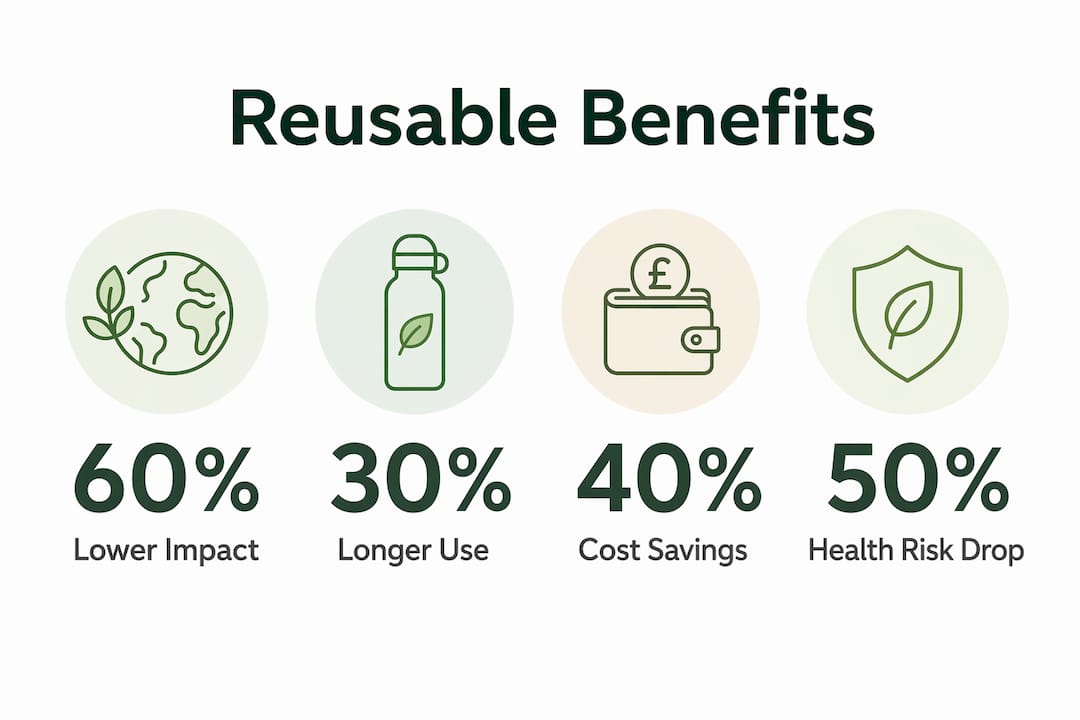
Match the material and construction to how you actually use the item. A bag carried daily needs a different build quality than one used occasionally. For vegan shoppers, the material choice also carries an ethical dimension: no leather, no animal-derived finishes.
Use this checklist when evaluating any sustainable accessory:
| Criterion | What to look for |
|---|---|
| Environmental impact | Natural or recycled materials; LCA or carbon data from the brand |
| Health/material safety | No PVC, no phthalates; full materials disclosure |
| Lifetime cost | Price relative to expected lifespan; repair options available |
| Durability/lifespan | Reinforced stitching; quality backing on cork or fabric |
| Style/vegan credentials | Verified cruelty-free; no animal-derived components or glues |
| Careability/repairability | Brand offers care guides; spare parts or repair service available |
Red flags:
- No information on where materials are sourced
- Glued-only construction with no stitching at stress points
- No care instructions provided
- Vague “eco-friendly” claims with no certification or materials list
The trade-off between lighter and more durable is real. A thinner cork finish looks sleek but may wear faster under daily use. A thicker cork backing with fabric lining lasts longer and is worth the slightly heavier feel for a bag you carry every day. Thecorkstore’s guide to identifying eco-friendly accessories walks through these checks in practical detail.
Simple care steps that make your reusables last
Regular maintenance is the single biggest factor in reaching the environmental and financial break-even thresholds. A cork accessory that lasts five years instead of two delivers roughly twice the environmental benefit per use.
- Daily wipe-down: Use a slightly damp cloth to remove surface dust or marks. Avoid soaking cork.
- Weekly clean: A mild soap solution on a soft cloth handles most stains. Rinse with a clean damp cloth and air-dry flat, away from direct heat.
- Avoid: Bleach, alcohol-based cleaners, and prolonged exposure to direct sunlight, which can dry and crack the cork surface.
- Storage: Keep cork accessories in a dust bag or breathable pouch when not in use. Avoid compression under heavy items.
- Minor repairs: Small surface scuffs on cork can often be buffed lightly with a fine cloth. Loose stitching caught early is a five-minute fix with a needle and thread; left too long, it becomes a structural problem.
- When to seek repair: If the backing separates from the cork layer, contact the retailer. Thecorkstore provides care guidance for its products.
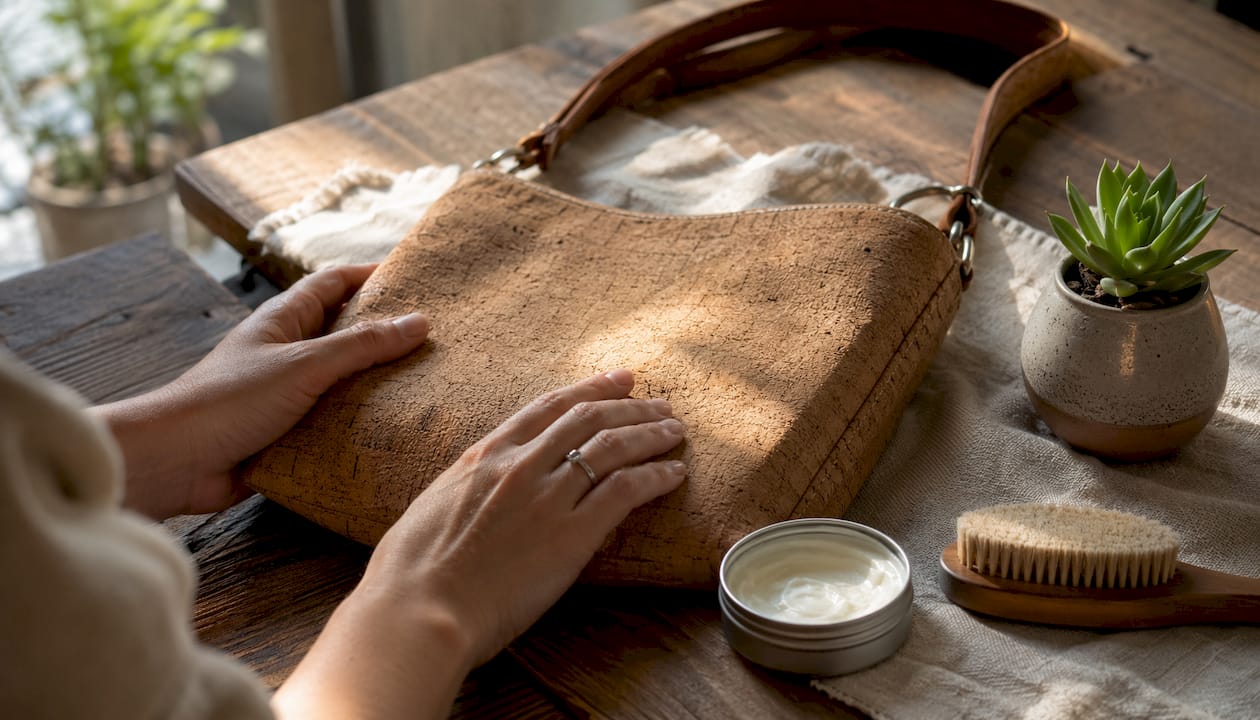
Pro Tip: A tiny drop of natural beeswax or cork conditioner rubbed into the surface every few months keeps cork supple and significantly extends its life. It takes about two minutes.
How do you turn good intentions into lasting reuse habits?
The gap between wanting to use reusables and actually doing it consistently is well-documented. Research published in ScienceDirect identifies the main barriers as inconvenience, contamination concerns, and simple habit inertia. The fix is reducing friction, not increasing willpower.
Practical enablers from the same research include pre-purchase cues (having the item visible and ready), product availability, and pricing incentives. Designers and retailers who remove friction at the point of use see significantly higher adoption rates.
Habit tactics that work:
- Start with one high-frequency item (daily bag, wallet, coffee cup) rather than overhauling everything at once
- Keep your reusable in a fixed, visible spot so it becomes part of your existing routine
- Pair reuse with a habit you already have (bag by the door, cup next to the kettle)
- Use refill and repair services when available to reduce the effort of maintenance
Pro Tip: Pick your starter item based on frequency, not ambition. The item you reach for every day will build the habit; the one you use twice a month probably won’t.
Why is cork such a good material for vegan accessories?
Cork is naturally vegan, lightweight, water-resistant, and has a distinctive texture that suits sustainable fashion without looking like a compromise. No tree is felled to harvest it — bark is stripped from living cork oak trees on a roughly nine-year cycle, allowing full regeneration.
Material advantages at a glance:
- Renewable: harvested without felling the tree; cork oaks live for over 200 years
- Naturally water-resistant: no synthetic coating required for everyday use
- Low chemical treatment: unlike many leathers and synthetic fabrics, cork requires minimal processing
- Repairable surface: minor scuffs can be buffed out; the material does not crack or peel under normal use
- Biodegradable: at end of life, natural cork breaks down without leaving persistent microplastics
Statistic: Cork oak forests support one of the highest levels of biodiversity of any forest ecosystem in Europe, making responsible cork harvesting a net positive for habitat as well as carbon sequestration.
When buying cork accessories, check the backing material (fabric-backed cork lasts longer than paper-backed), the stitching quality at seams, and whether the brand discloses its cork source. Thecorkstore stocks a range of cork accessories designed for daily use, with full materials transparency.
Key takeaways
Reusable products outperform disposables on lifetime environmental impact, health safety, and long-term cost — provided you choose durable materials and use them frequently enough to pass the break-even point.
| Point | Details |
|---|---|
| LCA evidence is clear | Reusables show significant GWP improvement over disposables across studied reuse cycles. |
| Health benefits are real | Natural materials like cork avoid phthalates and synthetic coatings found in some disposable plastics. |
| Cost savings require frequency | Daily or weekly use items typically reach financial break-even within weeks to months. |
| Habit formation is the key variable | Reducing friction and starting with one high-frequency item converts intention into lasting behaviour. |
| Thecorkstore for UK buyers | Thecorkstore supplies vegan, repairable cork accessories with full materials transparency for UK shoppers. |
Cork accessories and the case for buying less, better
The conventional framing around sustainable shopping focuses almost entirely on what you buy. The more useful question is how long you keep it. A beautifully made cork wallet used daily for five years has a fraction of the environmental footprint of three cheap synthetic wallets replaced over the same period. That arithmetic holds whether you care about climate, animal welfare, or simply your bank balance.
What often gets missed in sustainability conversations is that style and durability are not in tension. Cork ages well. It develops a patina rather than cracking or peeling, and it carries a distinctly modern aesthetic that does not signal “eco compromise” to anyone looking at it. For vegan shoppers especially, the usual trade-off between ethics and aesthetics simply does not apply here.
The behavioural research is also worth sitting with. Most people who say they want to live more sustainably are not failing because of weak values. They are failing because the friction is too high. The right product, stored in the right place, used for the right task, removes that friction entirely. That is what a well-chosen reusable accessory actually does.
Thecorkstore: vegan cork accessories for UK shoppers
If you want a ready-made option that ticks every box covered in this article, Thecorkstore is the straightforward answer for UK buyers. Every product is vegan, made from natural cork, and designed to be used daily rather than displayed once and forgotten.
The All-Natural Cork Wallet Gift Set is a strong starting point: it combines durability, a clean aesthetic, and full materials transparency in a format that makes an excellent gift or a considered purchase for yourself. For a broader selection, the vegan cork gift collection covers bags, purses, and accessories across a range of styles and price points. UK shipping is available, and Thecorkstore provides care guidance with every product so your accessories reach their full lifespan. Browse the collection and find the item you will actually reach for every day.
Further reading and sources
- Comparing reusable to disposable products: Life cycle analysis metrics — peer-reviewed LCA review; primary source for GWP and energy-use findings
- Switching to reuse? Consumers’ perceptions and behaviour towards reusable packaging systems — ScienceDirect; behavioural barriers and enablers research
- Unlocking sustainability with reusable items: Benefits and impact — The Eco Shift; chemical exposure and phthalate reduction
- Before you recycle, choose to reuse — NC State Extension; reuse hierarchy and resource conservation
- Reuse vs single-use: environmental break-even considerations — Upstream Solutions; break-even point variables
- Financial & environmental benefits of going reusable — Reuseable.info; household cost savings analysis
- Reusable systems: initial cost vs long-term benefits — Simple Mondays; durability, repairability and clutter risk
- Should you switch to reusable products? A break-even test — Monee; practical break-even methodology