

Cork fashion guide for eco-conscious UK consumers in 2026
Think cork is just for wine stoppers? Cork fashion is revolutionising sustainable style with durable, vegan accessories that rival traditional leather. This guide explores why cork accessories are gaining momentum among eco-conscious UK consumers, covering everything from environmental credentials to care tips. You’ll discover how cork’s unique properties make it perfect for stylish, cruelty-free fashion that doesn’t compromise on quality or aesthetics.
Table of Contents
- Introduction To Cork Fashion And Its Growing Popularity
- Why Cork Is A Sustainable Choice
- Ethical And Vegan Advantages Of Cork Accessories
- Durability And Practicality Of Cork In Fashion Accessories
- Style Possibilities And Trends With Cork Fashion
- Common Misconceptions About Cork Fashion
- How To Choose And Care For Your Cork Accessories
- Conclusion: Embracing Cork Fashion For A Sustainable Wardrobe
- Explore Sustainable Cork Fashion Collections Today
Key takeaways
| Point | Details |
|---|---|
| Cork is renewable and vegan | Harvested from bark without harming trees, fully biodegradable and animal-free |
| Ecosystems benefit from harvesting | Cork oak forests support biodiversity and prevent desertification |
| Exceptional durability | Water-resistant, flexible, and outperforms synthetic materials in abrasion tests |
| Versatile fashion appeal | Available in various textures and colours for casual to formal UK styles |
| Simple maintenance extends lifespan | Gentle cleaning and proper storage keep cork accessories looking fresh for years |
Introduction to cork fashion and its growing popularity
Cork comes from the bark of the cork oak tree, harvested every nine years without cutting the tree down. This renewable process creates a material that’s naturally lightweight, water-resistant, and surprisingly flexible.
UK consumers are increasingly seeking alternatives to leather and synthetic materials. Cork fashion addresses this demand by offering accessories that align with environmental values whilst maintaining contemporary style. The material’s natural texture and warm tones appeal to those wanting unique pieces that stand out from mass-produced items.
What makes cork particularly attractive for ethical fashion?
- Completely plant-based with no animal products involved
- Harvesting actually benefits the tree, encouraging regrowth
- Naturally antimicrobial and hypoallergenic
- Biodegrades at end of life, unlike plastic-based alternatives
- Provides income for rural communities in Mediterranean regions
Cork oak forests serve as habitats for diverse flora and fauna whilst playing a crucial role in preventing desertification. The role of cork in eco fashion extends beyond individual products to support entire ecosystems. Understanding the environmental impact of cork reveals why discerning consumers are making the switch.
Why cork is a sustainable choice
Cork harvesting represents one of the most environmentally responsible material sourcing methods available. Workers carefully strip bark from mature trees, leaving the trunk intact to regenerate new bark over the following years. This sustainable practice has continued for centuries across Portugal, Spain, and other Mediterranean countries.
Cork oak forests act as carbon sinks, with harvested trees absorbing up to five times more CO₂ than unharvested ones. These forests prevent soil erosion, maintain water cycles, and provide habitat for endangered species like the Iberian lynx.
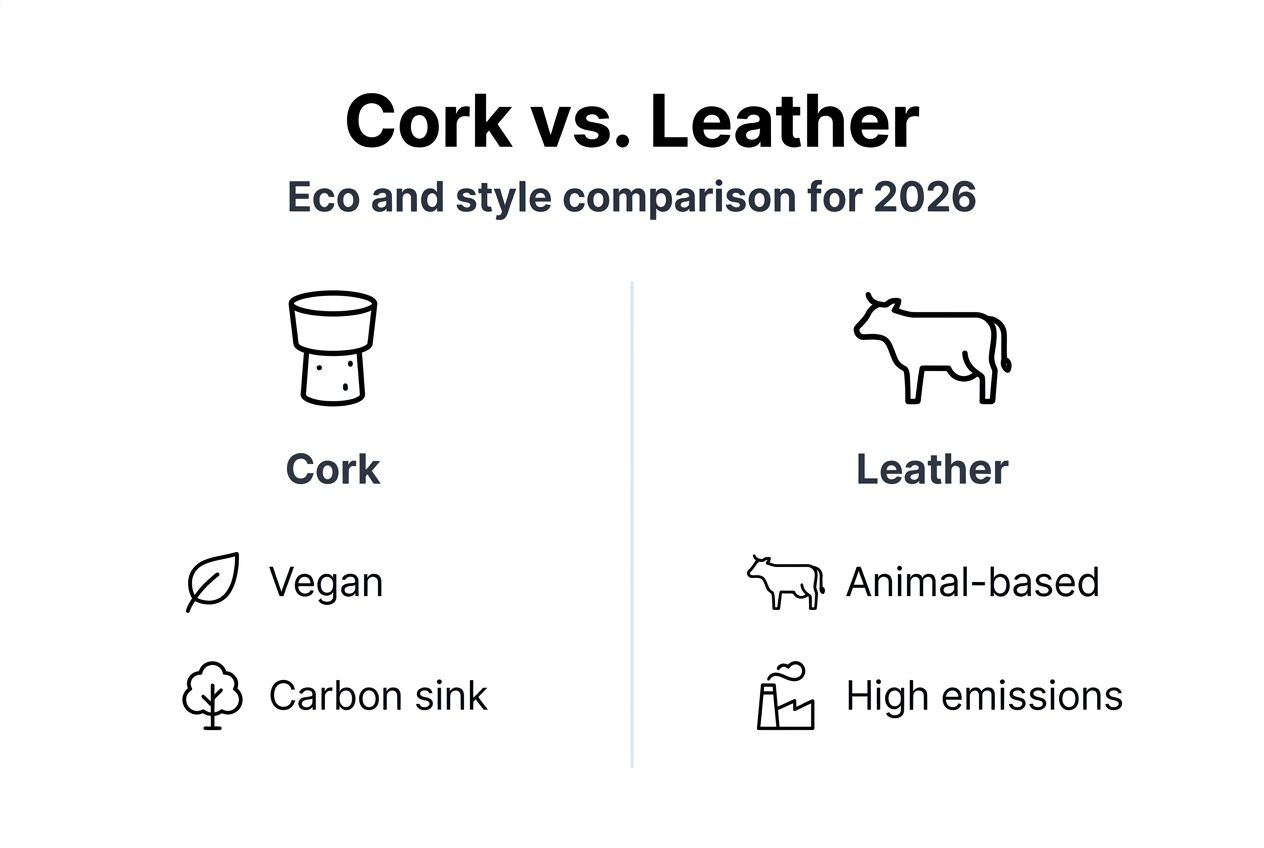
Comparing cork to traditional leather reveals stark differences:
| Factor | Cork | Leather |
|---|---|---|
| Carbon footprint | Low, carbon-negative production | High, livestock farming intensive |
| Water usage | Minimal processing water | Extensive tanning chemicals and water |
| Biodegradability | Fully biodegradable | Chemical treatment prevents natural breakdown |
| Renewable timeline | 9 years between harvests | Animal lifecycle required |
The lifecycle benefits of cork include:
- No toxic chemicals required in processing
- Minimal water consumption during production
- By-products used for insulation and other applications
- Natural decomposition returns nutrients to soil
- Zero waste manufacturing possible
Pro Tip: When comparing materials, consider the entire lifecycle from sourcing through to disposal, not just the final product’s appearance.
Exploring how cork promotes sustainability provides deeper insight into production processes. The comprehensive environmental impact of cork demonstrates measurable ecological benefits.
Ethical and vegan advantages of cork accessories
Cork production involves zero animal exploitation, making it genuinely vegan. Unlike leather, which requires animal slaughter, cork harvesting actually extends tree life and supports forest health.
Leather production raises serious ethical concerns beyond animal welfare. The tanning process releases chromium and other toxic substances into waterways, affecting communities near processing facilities. Workers face health risks from chemical exposure during treatment.
Many consumers choose synthetic alternatives believing they’re more ethical, but these materials present their own problems. PU leather and similar products:
- Release microplastics during wear and washing
- Require petroleum-based production
- Don’t biodegrade, persisting in landfills indefinitely
- Can off-gas volatile organic compounds
Cork sidesteps these issues entirely. Its natural composition means no microplastic pollution, no petroleum dependence, and complete biodegradability when the product reaches end of life. The material naturally resists mould and bacteria without chemical treatments.
For consumers following vegan principles, cork represents an ideal choice that doesn’t compromise environmental responsibility for animal welfare, or vice versa. The role of cork in fashion demonstrates how ethics and style successfully merge.
Durability and practicality of cork in fashion accessories
Cork’s cellular structure creates remarkable resilience. Each cubic centimetre contains approximately 40 million cells filled with air, creating a cushioning effect that absorbs impact whilst maintaining flexibility.
Water resistance comes naturally to cork through suberin, a waxy substance in cell walls. This property made cork the obvious choice for wine stoppers and now benefits fashion accessories facing daily wear. Light rain or spills bead on the surface rather than soaking through.
Durability tests show cork outperforms PU leather by 25% in abrasion resistance. The material’s elasticity allows it to withstand repeated folding and stretching without cracking, something synthetic alternatives struggle to match.
Care requirements remain straightforward:
- Wipe surface with slightly damp cloth for routine cleaning
- Use mild soap for stubborn marks, rinse thoroughly
- Allow to air dry naturally, never use direct heat
- Store away from prolonged sunlight to prevent fading
- Avoid harsh chemicals, bleach, or abrasive cleaners
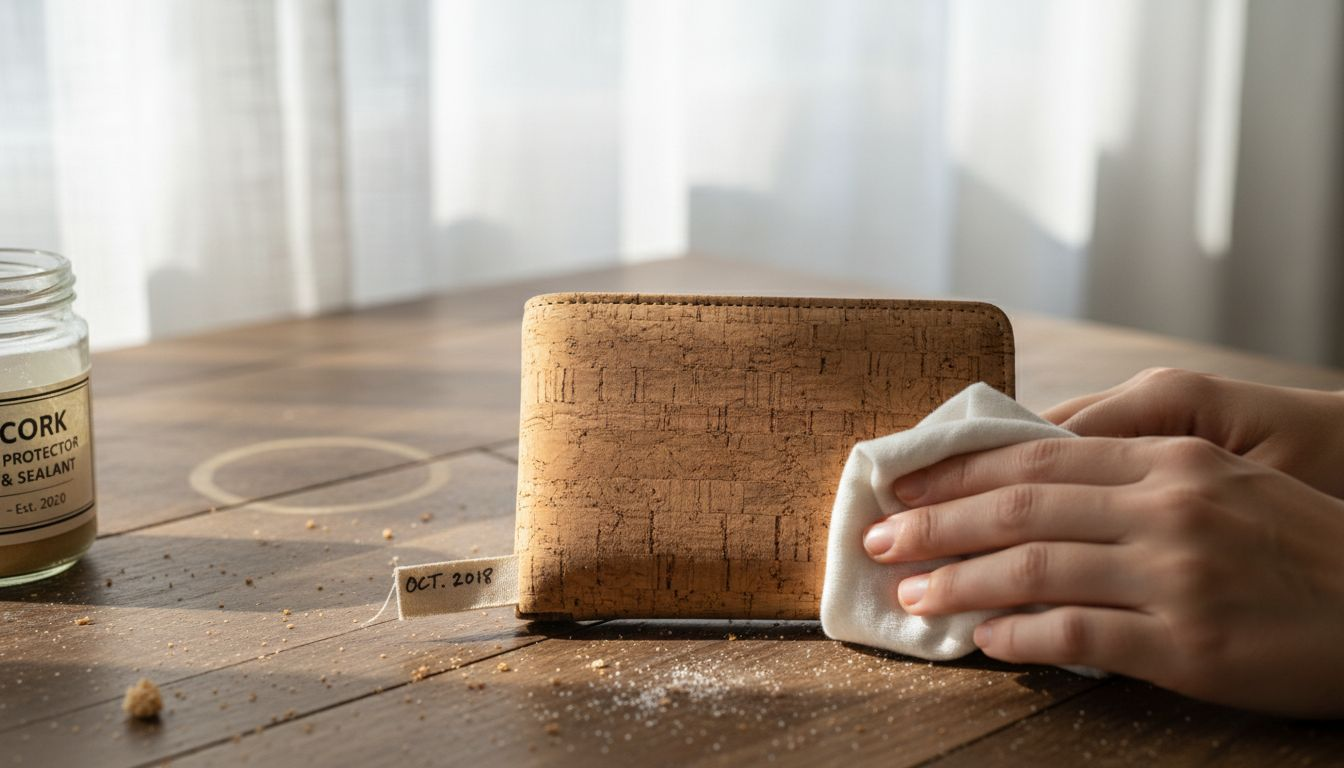
Pro Tip: Apply a thin layer of cork-specific sealant annually to enhance water resistance and maintain appearance, especially for frequently used items.
With proper maintenance, cork accessories easily last five years or longer. The material actually improves with age, developing a subtle patina that adds character. The benefits of handmade cork products include superior construction that maximises this natural durability.
Style possibilities and trends with cork fashion
Cork’s versatility in fashion continues to surprise newcomers. Natural cork offers warm, honeyed tones with distinctive grain patterns that make each piece unique. Dyed cork provides vibrant colours whilst maintaining the material’s texture and properties.
Finish options expand creative possibilities:
- Smooth, polished surfaces for contemporary minimalist looks
- Textured cork with pronounced grain for rustic appeal
- Laser-etched patterns adding decorative detail
- Mixed materials combining cork with contrasting fabrics
- Metallic-treated cork for evening wear glamour
Fashion applications span the entire accessory spectrum. Cork handbags range from structured totes to casual crossbody styles. Wallets, cardholders, and phone cases offer everyday functionality. Belts, jewellery, and even shoes demonstrate the material’s adaptability.
UK market data shows growing interest, with sustainable accessories sales increasing year-on-year. Cork products appeal particularly to consumers aged 25 to 45 who prioritise environmental responsibility without sacrificing style.
| Material | Sustainability | Style versatility | Durability | Maintenance |
|---|---|---|---|---|
| Cork | Excellent | High | Very good | Low |
| Leather | Poor | High | Excellent | Moderate |
| PU synthetic | Very poor | Moderate | Poor | Low |
| Canvas | Good | Moderate | Good | Moderate |
Discover 7 reasons why cork handbags are reshaping sustainable fashion expectations. The combination of ecological responsibility and contemporary design proves you needn’t choose between principles and aesthetics.
Common misconceptions about cork fashion
Several persistent myths discourage potential cork fashion adopters. Let’s address the most common misunderstandings with evidence.
Myth: Cork is fragile and unsuitable for daily use. Reality: Cork’s cellular structure provides exceptional resilience. The material flexes rather than cracks, handling daily wear better than many assume. Professional testing confirms superior abrasion resistance compared to synthetic alternatives.
Myth: All vegan leather alternatives offer similar environmental benefits. Reality: Most synthetic leathers rely on plastic polymers that shed microplastics and persist in landfills indefinitely. These materials often have larger carbon footprints than advertised when full production cycles are considered.
Myth: Harvesting cork damages forests and harms trees. Reality: Cork harvesting is sustainable, doesn’t require cutting trees, and supports biodiversity conservation. Harvested trees live longer than unharvested ones and sequester more carbon. The practice maintains forest ecosystems that would otherwise face conversion to agriculture.
Myth: Cork products lack authenticity or quality control. Reality: Reputable suppliers source from certified sustainable forests with strict quality standards. Cork’s natural variations in grain and colour indicate authenticity rather than defects.
Myth: Cork fashion looks too casual for formal occasions. Reality: Modern cork finishing techniques create elegant products suitable for any setting. Polished cork accessories rival traditional luxury materials in sophistication whilst offering superior ecological credentials.
How to choose and care for your cork accessories
Selecting quality cork products requires attention to several factors. Authentic cork displays natural grain variations and slight colour differences that confirm organic origin. Uniformly perfect surfaces might indicate synthetic materials or heavy processing.
Look for these quality indicators:
- Clear product information about cork source and processing
- Environmental certifications from recognised bodies
- Detailed care instructions included with purchase
- Reinforced stitching at stress points
- Smooth, sealed edges preventing fraying
Cleaning cork accessories follows a simple routine:
- Remove surface dust with soft, dry cloth
- Dampen cloth slightly with water for routine cleaning
- Add mild soap for tougher stains, test small area first
- Wipe away soap residue with clean, damp cloth
- Air dry completely before storage or use
- Apply cork conditioner every few months for optimal condition
Storage considerations protect your investment:
- Keep in breathable fabric bags, not sealed plastic
- Store flat or hanging to maintain shape
- Avoid damp environments that could encourage mould
- Keep away from direct heat sources
- Stuff bags with tissue to preserve structure
Pro Tip: Rotate cork accessories regularly rather than using the same piece daily, allowing materials to rest and extending overall lifespan.
Common mistakes include using harsh chemicals, machine washing, or exposing cork to extreme temperatures. These actions damage the material’s natural properties and shorten product life. Learning how to spot sustainable materials helps ensure you invest in genuine, responsibly sourced cork products.
Conclusion: embracing cork fashion for a sustainable wardrobe
Cork fashion delivers on multiple fronts: environmental sustainability, ethical production, practical durability, and contemporary style. The material addresses modern consumers’ desire for products that reflect their values without compromising functionality or aesthetics.
Your choices matter. Supporting cork accessories contributes to forest conservation, rural economies, and reduced fashion industry environmental impact. Each purchase signals market demand for genuinely sustainable alternatives, encouraging broader industry shifts.
Integrating cork pieces into your wardrobe becomes increasingly straightforward as product ranges expand. Start with versatile items like wallets or small bags, experiencing cork’s benefits firsthand before expanding your collection.
Explore sustainable cork fashion collections today
Ready to experience cork fashion’s unique appeal? Browse carefully curated collections featuring handcrafted cork accessories that combine sustainability with style.
Discover eco-friendly cork gift ideas perfect for environmentally conscious friends and family. Explore women’s gift sets combining complementary pieces for complete sustainable style solutions. The natural cork wallet gift set offers an ideal introduction to cork accessories’ quality and versatility. Each product supports sustainable forestry practices whilst delivering the durability and aesthetic appeal today’s consumers demand.
FAQ
What makes cork different from leather in fashion?
Cork is completely vegan, renewable every nine years, and carries up to 70% lower carbon footprint than leather production. No animals are harmed in cork harvesting, and the process actually benefits tree health and forest ecosystems.
How durable are cork fashion accessories for everyday use?
Cork outperforms many synthetic leathers in standardised durability testing, showing superior abrasion and moisture resistance. With proper cleaning and storage, quality cork accessories easily last five years or longer, developing attractive patina over time.
Are all cork products fully sustainable and vegan?
Genuine cork products are inherently sustainable and vegan, but always verify authenticity through certifications and supplier information. Some products marketed as cork-like may include plastic components or synthetic blends that reduce environmental benefits and aren’t truly vegan.
How should I care for my cork accessories?
Gently wipe cork surfaces with a damp cloth for routine cleaning, avoiding harsh chemicals or abrasive materials. Store accessories in cool, dry places away from direct sunlight, and use breathable fabric bags rather than sealed plastic containers to maintain material integrity.
Recommended
- 7 Key Sustainable Fashion Trends 2025 for Eco Shoppers – The Cork Store
- Cork Accessories: The Ultimate Guide to Vegan Fashion Alternatives – The Cork Store
- Sustainable Fashion 2025: Why Cork Leads the Eco Revolution – The Cork Store
- Fashion sustainability guide: 70% less water with cork – The Cork Store