
Sustainable gifts: stylish, ethical choices for mindful giving
TL;DR:
- Thoughtfully selected sustainable gifts can be more beautiful, meaningful, and impactful than conventional options. They should be made from responsibly sourced materials, produced ethically, and bear recognized certifications to avoid greenwashing. The most valuable gifts are those the recipient will genuinely use and cherish, contributing to genuine environmental and ethical betterment.
Sustainable gifts have a reputation problem. Many people assume eco-friendly options are plain, preachy, or impractical, which couldn’t be further from the truth. The reality is that thoughtfully chosen sustainable gifts can be more beautiful, more meaningful, and more impactful than anything wrapped in conventional packaging. In fact, branded sustainable merchandise delivers up to 8x less carbon impact per impression than digital advertising, which tells you a great deal about how physical, lasting gifts shape behaviour and values over time. This guide will walk you through everything you need to choose sustainable gifts with genuine confidence.
Table of Contents
- What makes a gift sustainable?
- The environmental impact of gift choices
- Ethical gifts: Animal-friendly and socially responsible options
- Choosing between reusability and biodegradability
- The real value of sustainable gifts: Beyond the green label
- Explore sustainable gifts at The Cork Store
- Frequently asked questions
Key Takeaways
| Point | Details |
|---|---|
| Certifications stop greenwashing | Recognised certifications guarantee genuine sustainability, not just marketing claims. |
| Sustainable packaging matters | Choosing eco packaging helps reduce gift-related waste in every celebration. |
| Ethical and animal-friendly gifting | Sustainable gifts support fair labour and animal welfare—know where your gifts come from. |
| Reusable vs biodegradable | Reusable gifts excel when used for years; biodegradable options suit single-use needs. |
| Higher willingness to pay | Eco-minded buyers pay more for gifts that align with their values and make a positive impact. |
What makes a gift sustainable?
Building on the introduction, let’s define exactly what sustainable gifts are and how to spot them. The word “sustainable” gets used loosely, so it’s worth being precise. At its core, a sustainable gift minimises environmental harm across its entire lifecycle, from the extraction of raw materials to the moment it reaches the recipient’s hands, and long after.
A gift is genuinely sustainable when it meets several criteria simultaneously. It should be made from responsibly sourced or natural materials, produced under fair labour conditions, free from animal cruelty, and packaged without unnecessary waste. One pillar alone isn’t enough. A beautifully made bag from a small ethical workshop still falls short if it arrives triple-wrapped in virgin plastic.
Certifications are your sharpest tool here. Sustainable shopping experts consistently highlight that certifications such as GOTS (Global Organic Textile Standard), Fair Trade, and B-Corp are essential to avoid greenwashing. Greenwashing means a brand makes vague or misleading claims about environmental benefits without third-party verification to back them up. A label saying “natural” or “eco” on packaging means nothing without an independent certification attached.
When you’re identifying eco-friendly accessories, use this checklist:
- Materials: Natural, recycled, or upcycled with transparent sourcing
- Production: Fair wages, safe working conditions, minimal chemical use
- Cruelty-free: No animal-derived ingredients or testing
- Packaging: Recycled, recyclable, compostable, or minimal
- Certifications: GOTS, Fair Trade, B-Corp, Leaping Bunny, or equivalent
- Durability: Designed to last, not to be discarded within a season
Understanding why eco gifts matter goes beyond personal values. Each purchase you make sends a market signal, telling brands what consumers prioritise and encouraging the entire industry to shift.
Pro Tip: When checking certifications, go directly to the certifying body’s website and search for the brand by name. Logos can be copied and misused, but official certification databases don’t lie.
The environmental impact of gift choices
Having defined what makes a gift sustainable, let’s examine the environmental impact of our choices. The numbers are sobering. Holiday packaging and gifts contribute millions of tons of waste annually, and a significant proportion of that never gets recycled or composted. It simply lands in landfill, where synthetic materials may persist for centuries.
“Millions of tons of waste are generated by gift-giving each year. The packaging surrounding a gift often outlasts the memory of receiving it.”
The table below breaks down the environmental footprint of common gift types, making it easier to weigh your options:
| Gift category | Carbon footprint | Packaging waste risk | Durability |
|---|---|---|---|
| Fast-fashion accessories | High | High | Low |
| Cork or natural fibre accessories | Low | Low (with eco packaging) | High |
| Synthetic fragrance sets | Medium | High | Medium |
| Experiences (classes, events) | Very low | Minimal | N/A |
| Organic food hampers | Low to medium | Medium | Consumed |
| Recycled stationery sets | Low | Low | Medium |
The role of eco packaging is frequently underestimated. Packaging is often heavier and more energy-intensive than the product itself, particularly for cosmetics and electronics. Switching to recycled paper, seed-embedded wrapping, or fabric gift wraps can dramatically reduce the environmental cost of any gift.
For a practical look at cork’s sustainability credentials, cork harvesting requires no tree felling, uses 70% less water than conventional leather tanning, and the bark regenerates naturally every nine years. That’s a genuinely impressive lifecycle story that most gift materials simply cannot match.
Here are some immediate, actionable ways to reduce your gift-giving footprint:
- Choose reusable fabric wraps (furoshiki style) instead of single-use paper
- Opt for gifts with minimal or plastic-free packaging
- Select creative sustainable packaging ideas that can be repurposed
- Buy from brands with a documented carbon-reduction strategy
- Consolidate orders to reduce delivery emissions
Ethical gifts: Animal-friendly and socially responsible options
Beyond environmental concerns, sustainable gifts also offer strong ethical benefits. An ethical gift, in the truest sense, avoids harm at every step of its creation. This means no exploitation of animals for materials like leather, wool, or down, and no exploitation of workers through poverty wages or unsafe conditions.

The distinction matters enormously for eco-conscious shoppers. You might choose a bag made from organic cotton, but if that cotton was harvested by underpaid workers in dangerous conditions, it doesn’t fully qualify as an ethical choice. Circular fashion, which means products designed to be returned, repaired, or remade rather than discarded, takes this thinking even further by closing the loop on waste entirely.
Research confirms that pro-environmental values drive a measurably higher willingness to pay (WTP) for sustainable and circular fashion items. Consumers aren’t just making choices based on cost. They’re making choices based on alignment with personal ethics, and they’re willing to invest more when the product genuinely reflects those ethics.
Follow these steps to verify animal-friendly and ethical credentials before you buy:
- Check the brand’s materials policy: Look for explicit statements about leather alternatives, vegan materials, and no animal testing
- Search for third-party verification: Leaping Bunny, PETA-approved vegan, and similar certifications confirm cruelty-free production
- Investigate supply chain transparency: Ethical brands publish supplier lists or audit reports
- Read independent reviews: Platforms that focus on ethical fashion often provide detailed brand breakdowns
- Contact the brand directly: Genuinely ethical companies welcome questions about their sourcing
When exploring ethical gift choices, some of the strongest categories include:
- Vegan accessories made from cork, apple leather, or recycled materials
- Organic skincare and beauty products with Leaping Bunny certification
- Fair Trade coffee, tea, or chocolate gift sets
- Handcrafted goods from artisan cooperatives with verified fair wages
- Plant-based candles in recyclable or reusable containers
- Bamboo or recycled stationery sets
Keeping up with sustainable fashion trends also helps you discover new materials and producers who are genuinely pushing the boundaries of ethical design rather than simply riding the marketing wave. There are also excellent tips for sustainable gifts that go beyond the obvious, including gifting skills, time, and experiences alongside or instead of physical objects.
Choosing between reusability and biodegradability
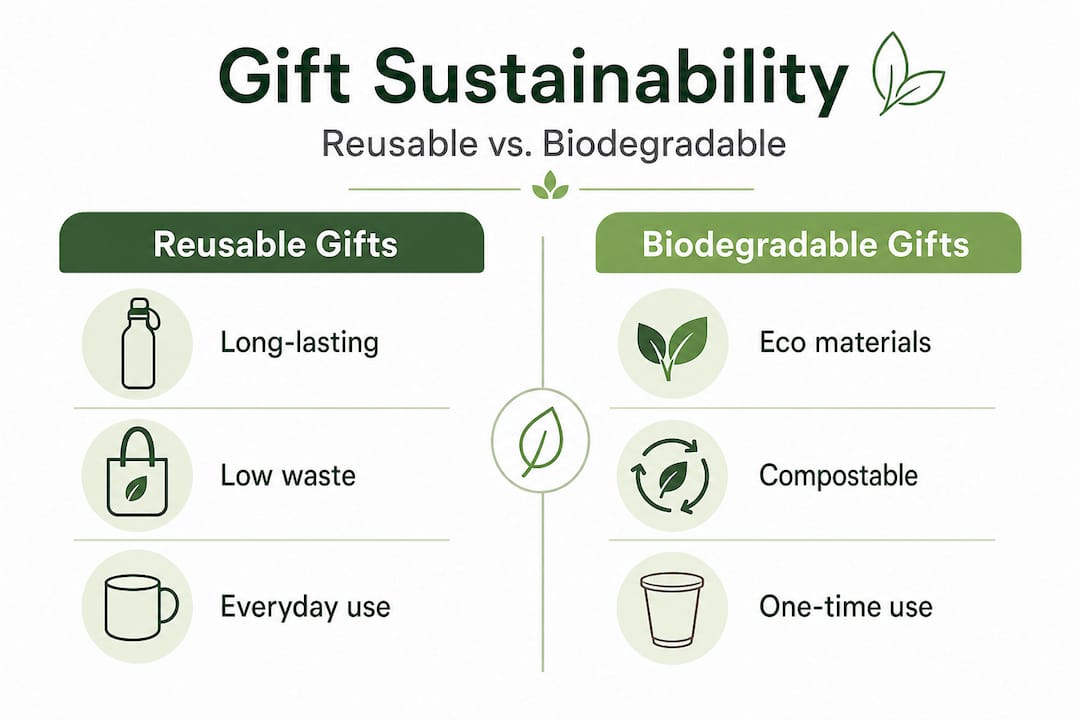
Once you’ve chosen ethical, animal-friendly gifts, the next consideration is reusability versus biodegradability. Both approaches have genuine environmental value, but they suit different contexts and different gift types. Understanding the distinction helps you make smarter choices rather than defaulting to whatever sounds most sustainable.
| Factor | Reusable gifts | Biodegradable gifts |
|---|---|---|
| Environmental benefit | Grows over time with use | Immediate at end of life |
| Best for | Accessories, bags, bottles, tools | Single-use items, packaging |
| Risk | Abandoned after short use | May not degrade properly in landfill |
| Carbon payoff period | Requires consistent use | Faster carbon payoff |
| Example | Cork wallet used for 10 years | Compostable gift wrap |
The real vs fake Christmas tree debate is a useful illustration: a plastic artificial tree needs to be used for 10 to 20 years before its footprint matches that of a cut real tree. The same logic applies to many gifts. A reusable bag only beats a biodegradable one environmentally if the recipient actually uses it consistently for years rather than abandoning it in a cupboard.
There’s also a more uncomfortable truth worth acknowledging. Research on secondhand sustainable purchases found a correlation of r=0.58 between secondhand buying and new buying, meaning that purchasing secondhand can sometimes supplement overconsumption rather than replace it. This is called the rebound effect, and it’s a reminder that mindset matters as much as method. Buying sustainably only helps if it genuinely replaces less sustainable behaviour.
Pro Tip: Before gifting something reusable, honestly consider the recipient’s lifestyle. A durable cork backpack is a brilliant gift for someone who travels or commutes daily, but if it sits unused, a biodegradable or consumable gift may leave a lighter footprint overall.
When exploring 2026 eco-friendly fashion trends, natural materials like cork are gaining real momentum precisely because they bridge the gap: cork products are durable enough to be used for years, yet the material itself is biodegradable at the end of its life. It’s a compelling answer to the reusable vs biodegradable question. For a deeper look at how materials are evaluated, the cork fashion guide for UK consumers offers clear, practical context. Considering sustainable accessory design as a whole reveals how well-engineered products can genuinely outperform their conventional counterparts across both environmental and aesthetic measures.
For inspiration on pairing the right gift to the right person, the individual sustainable gift ideas resource is well worth exploring.
The real value of sustainable gifts: Beyond the green label
Now that you have a practical roadmap, let’s share a candid perspective to help you make authentic choices.
Here’s the uncomfortable truth: the sustainable gifting market is full of noise. Brands know that eco-conscious consumers are growing in number and purchasing power, so they’ve flooded packaging with leaves, earthy tones, and feel-good language that often means very little. A bamboo toothbrush in a plastic clamshell, a “natural” candle in non-recyclable packaging, or a “sustainable” tote bag made by underpaid workers are all real examples of gifts that look good on the surface but fail on closer inspection.
We believe the single most effective filter is third-party certification. Certifications like GOTS, Fair Trade, and B-Corp exist precisely because consumer trust cannot rely on brand self-reporting alone. When a brand earns these credentials, it has submitted to external auditing that covers materials, labour, environmental management, and governance. That’s a very different standard from printing “eco-friendly” on a box.
But there’s a subtler point worth making. The most sustainable gift isn’t always the one with the most impressive credentials. It’s the one the recipient will actually use, love, and keep. A well-chosen cork wallet from an ethical brand, given to someone who needs a wallet, will do more good than a certified-organic product the person never wanted. Thoughtful giving is itself a sustainability practice. It reduces the likelihood of gifts being discarded, regifted, or left unused.
Performative gifting, buying something “green” primarily to signal your own values, misses the point entirely. We’d encourage you to ask: does this person need this? Will they use it? Does it reflect something genuine about what you know of them? When the answers are yes, a sustainable gift becomes something richer than a gesture. It becomes a small, lasting contribution to a better way of consuming. That’s what eco-friendly fashion at its best is always been about: real quality, real values, real impact.
Explore sustainable gifts at The Cork Store
With this background in mind, here’s where you can find sustainable gifts that match your values.
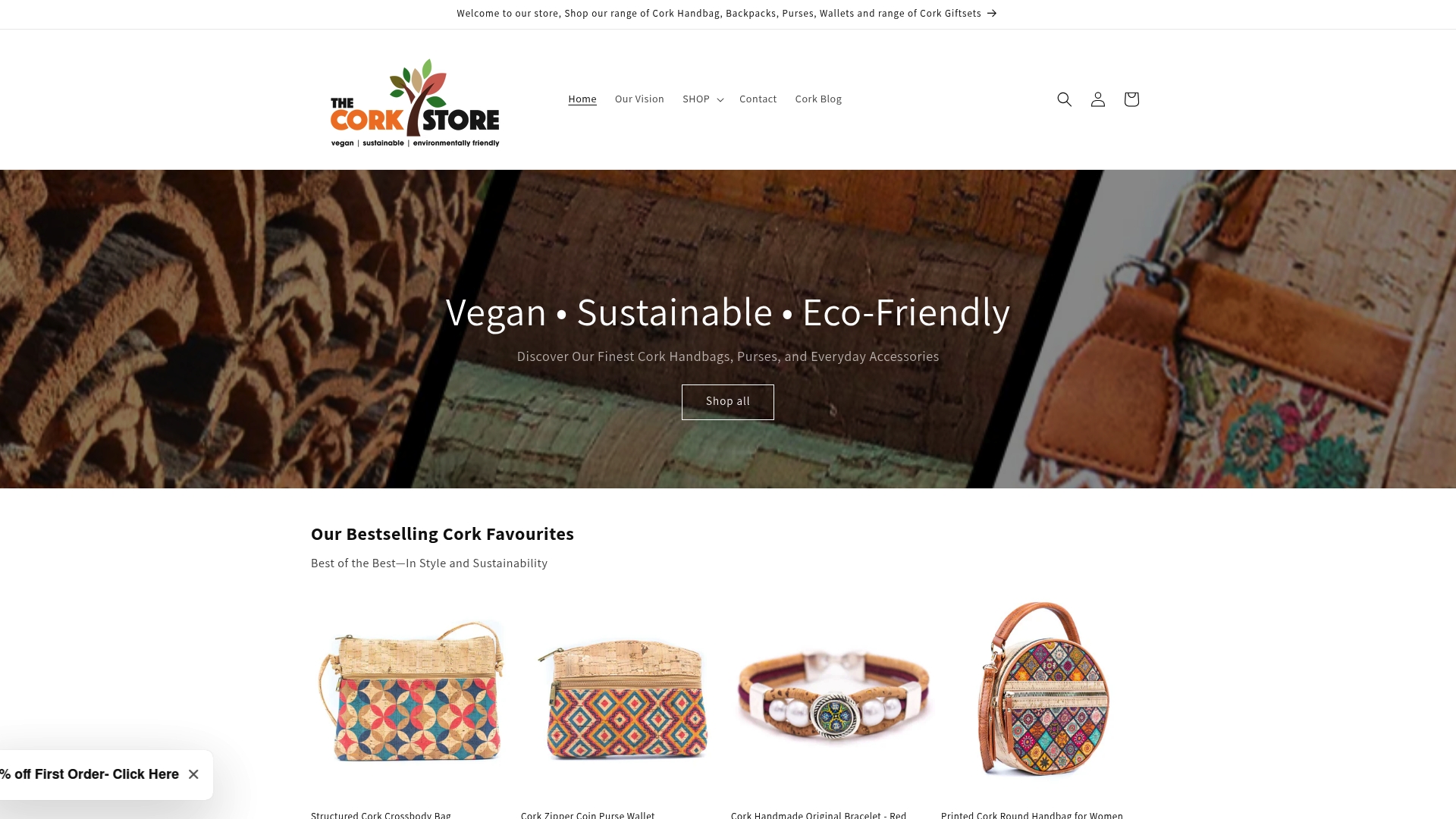
At The Cork Store, every product in our collection is crafted from natural cork, a material that is vegan, cruelty-free, water-resistant, and biodegradable at the end of a long life. Our gift sets, handbags, wallets, and backpacks are designed for people who want style without compromise. Whether you’re shopping for a friend who cares about animal welfare, a family member who’s passionate about reducing waste, or treating yourself to something genuinely ethical, our collection offers a curated range of accessories that stand up to scrutiny. Browse our bestsellers and new arrivals to discover sustainable gifts that are as beautiful as they are responsible.
Frequently asked questions
How do I verify a gift is truly sustainable?
Look for recognised certifications like GOTS, Fair Trade, or B-Corp, and check for traceable sourcing directly on the brand’s website or through the certifying body’s own database.
Are biodegradable gifts always better than reusable ones?
Not always. Biodegradable gifts suit single-use items well, but reusable gifts outperform biodegradable ones environmentally when the recipient uses them consistently over many years.
Does sustainable packaging really make a difference?
Yes, significantly. Holiday packaging contributes millions of tons of annual waste, so switching to recycled, compostable, or minimal packaging is one of the most direct ways to reduce your gift’s environmental harm.
Why do some people pay extra for sustainable gifts?
Research shows that pro-environmental values directly increase a shopper’s willingness to pay a premium, because they’re investing in ethical production and environmental benefit alongside the product itself.