
Why buy sustainable gifts: Real choices that matter
TL;DR:
- Buying sustainable gifts can be emotionally rewarding but may be misleading without verifying labels and certifications. Genuine sustainability involves lifecycle considerations, verified third-party standards, and choosing durable, repairable, and biodegradable materials like cork instead of conventional leather. The most impactful gift is one that the recipient will use long-term, highlighting the importance of longevity over trendy eco-labels.
Buying a sustainable gift feels good. There’s a sense of doing right by the planet, supporting ethical brands, and showing care for both the recipient and the environment. But research suggests this warm glow of eco-conscious shopping can be misleading — unless you verify what’s behind the label. Marketing and greenwashing can create a feel-good effect without meaningful environmental benefits, leaving well-meaning shoppers none the wiser. This article cuts through the noise, separating verified sustainable choices from clever marketing, and gives you the tools to make gift decisions that genuinely count.
Table of Contents
- What makes a gift sustainable: Beyond the label
- Cruelty-free alternatives to leather: Why it matters
- Secondhand, repair, and repeat use: Sustainability beyond shopping
- Policy, certifications, and practical tips: Shopping consciously in 2026
- The uncomfortable truth about sustainable gift shopping
- Take the next step: Explore thoughtful sustainable gifts
- Frequently asked questions
Key Takeaways
| Point | Details |
|---|---|
| Verify sustainability claims | Check for third-party certifications to avoid greenwashing and ensure genuine eco impact. |
| Choose cruelty-free options | Opt for accessories made from cruelty-free, durable materials for lower environmental footprint. |
| Prioritise longevity and repairability | Select gifts that last and can be repaired, reducing net consumption over time. |
| Understand policy shifts | Be aware of new regulations driving brands to more circular, sustainable practices in 2026. |
| Avoid behavioural pitfalls | Buying secondhand alone isn’t enough—focus on reducing overall consumption and repeat use. |
What makes a gift sustainable: Beyond the label
Building from the misconception that all sustainable gifts are truly beneficial, let’s clarify what actually counts as sustainable in practice. The word “sustainable” gets applied to almost everything these days — from mass-produced plastic trinkets in recycled packaging to fast-fashion items dressed up in earthy branding. Real sustainability is far more specific, and understanding the difference protects both your money and the planet.
Genuine sustainability starts with lifecycle thinking. A product’s impact isn’t just about what it’s made from. It’s about how long it lasts, whether it can be repaired, how it’s produced, and what happens at the end of its life. A beautifully crafted bag made from a natural material that lasts fifteen years is far more sustainable than a “recycled” item that falls apart in two seasons and ends up in landfill.
Certifications are your first line of defence against greenwashing. Claims like “eco-friendly,” “natural,” or “conscious collection” are unregulated marketing terms. In contrast, certifications such as GOTS (Global Organic Textile Standard), FSC (Forest Stewardship Council), or PETA-Approved Vegan are issued by independent bodies that audit processes and materials. When selecting eco-friendly products, checking for these marks of accountability is essential.
“Marketing and greenwashing can create a ‘warm glow’ without meaningful environmental benefits unless claims are verified.” — CNN Underscored
The core criteria for a truly sustainable gift include:
- Material origin: Is the material plant-based, recycled, or naturally harvested with low impact?
- Durability: Will the product last years, or is it designed for a short lifespan?
- Certifications: Are sustainability claims backed by recognised third-party bodies?
- Repairability: Can the product be fixed rather than replaced?
- End-of-life: Is it biodegradable, recyclable, or part of a take-back scheme?
Pro Tip: Before buying, search the brand name alongside “greenwashing” or “sustainability report.” Transparent brands publish verifiable data on their supply chains and environmental commitments. Our guide to eco-friendly accessory identification explains how to quickly spot the real thing. It also helps to know what materials to look for — our piece on spotting sustainable materials breaks this down step by step.
Cruelty-free alternatives to leather: Why it matters
Once you understand genuine sustainability, looking at specific materials — such as leather alternatives — shows how ethical and eco choices intersect. Conventional leather remains one of the most popular materials for accessories like handbags, wallets, and purses. Yet its environmental and ethical footprint is significant and often underestimated by shoppers.
Conventional leather’s environmental footprint is strongly influenced by upstream animal farming and by chemicals and waste in processing stages. Cattle farming contributes to deforestation, methane emissions, and enormous water use. Tannery processes rely on chromium and other chemicals that pollute waterways when poorly managed. A leather handbag carries all of these impacts before it even reaches the shop floor.
Cruelty-free alternatives tell a very different story. Materials like cork, Piñatex (pineapple leaf fibre), Mylo (mycelium leather), and recycled textiles offer stylish, durable options without the ethical baggage. Cork in particular deserves attention: it’s harvested by stripping bark from living cork oak trees, which then regenerate, absorbing more carbon in the process. No animals are harmed. No tree is felled. It’s one of the most genuinely sustainable materials available for accessories today.
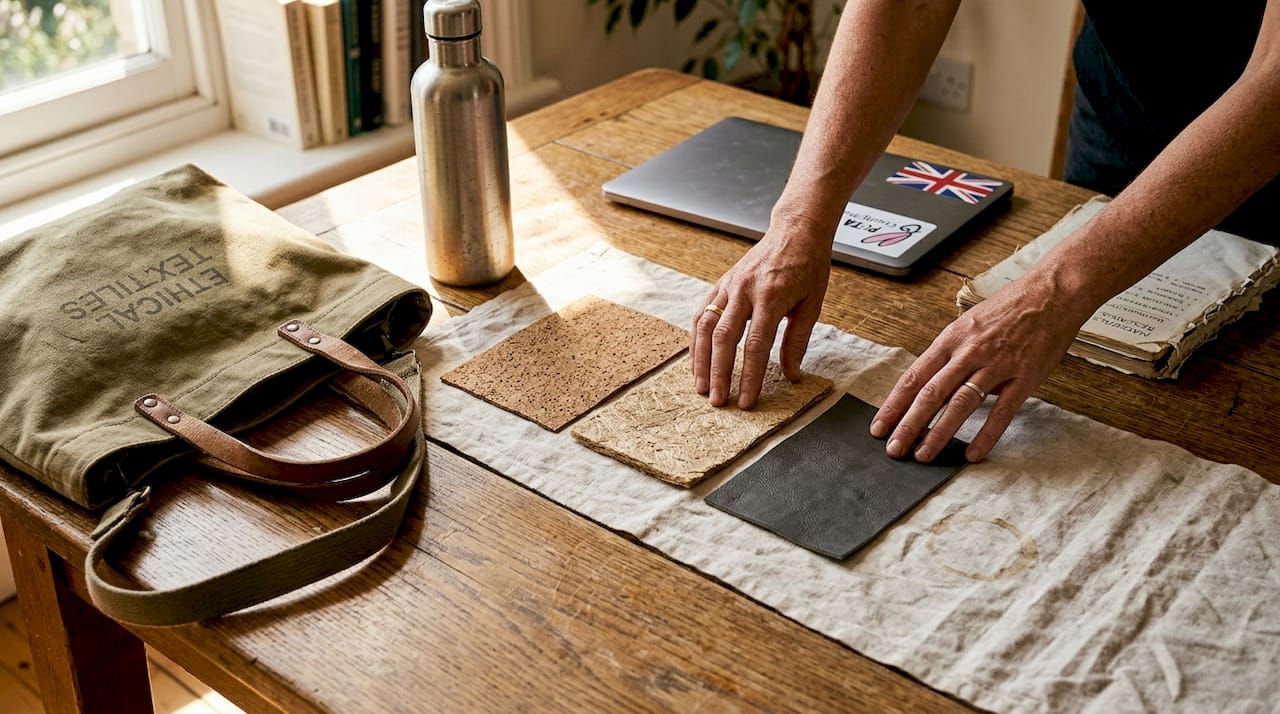
| Feature | Conventional leather | Cork accessories |
|---|---|---|
| Animal welfare | Involves animal slaughter | 100% cruelty-free |
| Carbon footprint | High (livestock farming) | Low (tree regeneration) |
| Chemical processing | Chromium tanning | Minimal processing |
| Durability | High | High |
| Biodegradability | Slow, chemical-treated | Naturally biodegradable |
| Water use | Very high | Very low |
Key benefits of choosing cruelty-free materials for accessories:
- No animal harm: Cruelty-free accessories respect animal welfare without sacrificing style or quality.
- Lower carbon impact: Plant-based materials like cork regenerate ecosystems rather than deplete them.
- Chemical reduction: Natural materials avoid the toxic processing common in conventional leather production.
- Longevity: Quality cork and plant-based accessories can outlast cheaper synthetic alternatives.
For a detailed look at what defines these choices, our cruelty-free accessories guide lays out the criteria clearly. If you’re specifically thinking about bags, the cruelty-free handbag guide is worth reading before you shop. You might also find our overview of cruelty-free fashion useful for understanding the broader movement.
Pro Tip: When considering plant-based alternatives, look at how the material performs over time. A well-made cork wallet or bag will develop a natural patina and maintain its structure for years, making it a gift that genuinely stands the test of time. Refer to this sustainable fabrics guide for a thorough comparison of leading eco materials.
Secondhand, repair, and repeat use: Sustainability beyond shopping
Beyond choosing materials, your gift’s real impact comes from how it’s used and whether it reduces new consumption or simply shifts it. The secondhand market has boomed in recent years, with platforms dedicated to pre-loved fashion growing rapidly. Many eco-conscious shoppers now default to secondhand as their preferred sustainable option. But the picture is more complex than it first appears.
Empirical evidence suggests that even when people buy secondhand with sustainability motives, it may not always displace new consumption. In other words, buying a secondhand jacket doesn’t always stop someone from also buying a new one later. This is known as the rebound effect: the money saved or the moral satisfaction gained from one sustainable purchase funds or justifies another purchase elsewhere. Researchers note that secondhand consumption is often positively correlated with new clothing purchases rather than replacing them.
| Behaviour | Potential benefit | Rebound risk |
|---|---|---|
| Buying secondhand | Extends product life | May not replace new purchases |
| Repairing items | Reduces waste significantly | Low, if repaired instead of replaced |
| Gifting experiences | Zero material impact | Low, context-dependent |
| Buying durable gifts | Long lifespan, lower replacement | Low if used fully |
This doesn’t mean secondhand shopping is wrong. It means behavioural awareness matters. A secondhand gift that truly replaces a new purchase is meaningful. A secondhand purchase that simply adds to an already full wardrobe misses the point entirely.
How to make gifting genuinely impactful:
- Choose longevity first. A high-quality, durable item gifted once is nearly always more sustainable than multiple replacements over the same period.
- Consider repairability. Gifts that can be repaired extend their lifespan significantly. Items that can’t be repaired when worn contribute to landfill faster.
- Reduce total volume. Fewer, more meaningful gifts outperform a pile of small, trendy items environmentally speaking.
- Avoid moral licensing. Don’t let one sustainable purchase justify several less considered ones. Sustainability is a practice, not a single transaction.
Sustainability isn’t a shopping style. It’s a reduction in total consumption, achieved through intentional choices over time.
Our look at sustainable accessory style explores how durable, well-designed accessories fit into this thinking. For the design side of the story, the piece on accessory design sustainability is genuinely illuminating. And if you’re not sure where to start, our guide to spotting sustainable fashion offers practical, jargon-free advice. It’s also worth reading about how handcrafted versus mass-produced products compare in real sustainability terms.
Policy, certifications, and practical tips: Shopping consciously in 2026
Now, with an understanding of real impact and behavioural traps, it’s time to apply policy insights and practical techniques for conscious shopping. The regulatory landscape is shifting meaningfully in 2026, and understanding these changes helps you identify which brands are genuinely keeping pace with higher standards.
The European Parliament has made landmark moves on textile sustainability. Policy and industry benchmarks are moving toward durability, repairability, reuse, and restrictions on destruction of unsold textiles. The EU’s ban on destroying unsold clothes, shoes, and accessories came into effect for larger brands in 2024 and is expanding in 2026, pushing the entire sector toward circularity rather than waste. This is a meaningful structural shift: brands can no longer simply incinerate excess stock, and are instead required to resell, donate, or recycle unsold goods.
Key things to look for when shopping for sustainable gifts in 2026:
- Recognised certifications: GOTS, FSC, PETA-Approved Vegan, Cradle to Cradle, and B Corp are among the most credible marks.
- Transparency reports: Genuine brands publish annual sustainability or impact reports accessible on their websites.
- Repair policies: Brands committed to longevity often offer repair services or guides to extend product life.
- Circular credentials: Look for take-back schemes, recyclable packaging, and products designed for end-of-life recovery.
- Country of manufacture: Locally or regionally produced goods often have a lower transport footprint and more accountable supply chains.
- Material traceability: Can the brand tell you where the material came from and how it was processed?
Statistic to note: As of 2024, the EU’s regulation requires major retailers to transition to circular product design principles, a move expected to reduce the 92 million tonnes of textile waste generated globally each year. For shoppers, this means the pressure on brands to be genuinely sustainable is growing — and the tools to verify claims are becoming more widely available.
Pro Tip: When in doubt, prioritise products made from naturally derived materials with publicly available certifications over products that lead with aesthetic sustainability (earthy tones, nature imagery) without substantive backing.
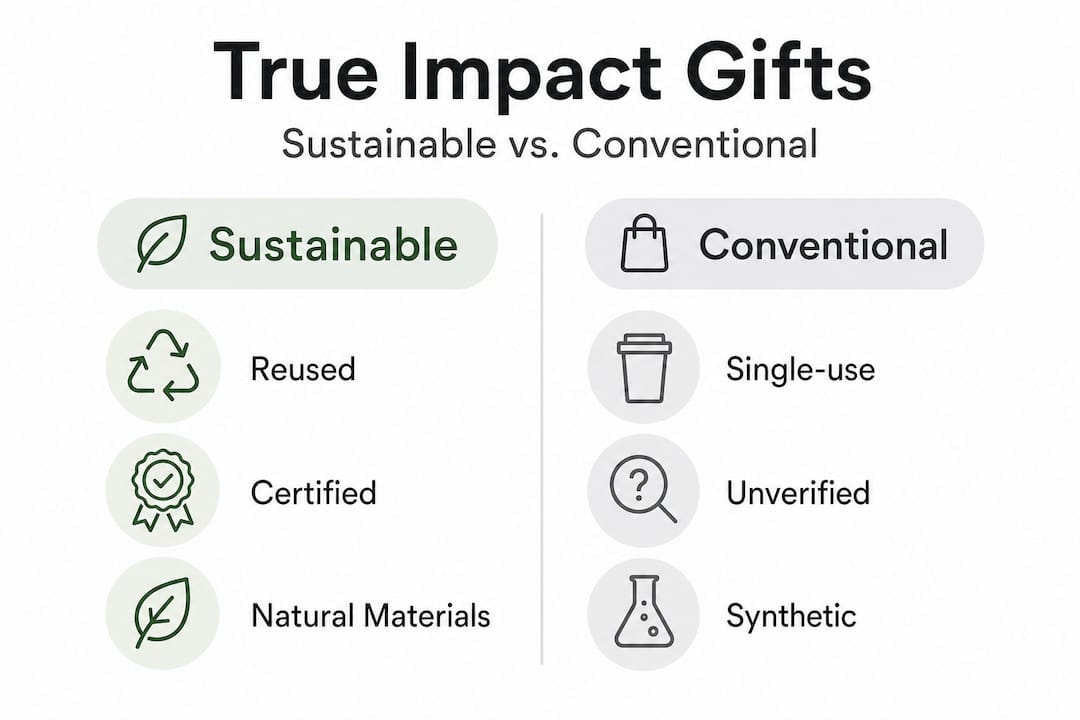
Our article on ethical gift choices explores why these distinctions matter beyond just the environmental case. If you’re looking specifically at cork-based gifts, choosing cork gifts explains why cork ticks so many of the boxes outlined above. For broader context on choosing products that break down naturally at end of life, this overview of biodegradable products is a worthwhile read. The bamboo lifecycle analysis also provides useful context for comparing plant-based materials.
The uncomfortable truth about sustainable gift shopping
Most sustainable shopping guides tell you to “buy better.” Choose organic, pick certified brands, opt for natural materials. All solid advice. But there’s something most guides carefully avoid saying: the most sustainable gift is often the one that goes unbought.
That’s uncomfortable when you’re running a gift-focused business. We know. But it’s also honest, and honesty is exactly what sustainable shoppers deserve.
The lifecycle thinking and verified claims approach tells us that impact is cumulative. Every product carries a footprint, even beautifully made, certified, cruelty-free ones. The question isn’t just “is this sustainable?” but “does this purchase genuinely replace something less sustainable, or does it simply add to the pile?” When the answer is the latter, no amount of certification changes the outcome.
This is especially relevant when it comes to the secondhand narrative. We’ve seen brands and platforms market pre-loved goods as unambiguously virtuous. But as research on secondhand consumption shows, the rebound effect is real. People who buy secondhand clothing tend to also buy more new clothing overall. The psychological satisfaction of one ethical purchase can lower the mental threshold for the next less-considered one. This is moral licensing, and it’s a genuine trap for eco-conscious shoppers.
What does this mean practically? It means the most powerful sustainable gift isn’t the trendiest eco option. It’s the one that the recipient will use every single day for years. A wallet they carry everywhere. A bag they reach for without thinking. An accessory that becomes part of their life rather than a passing gesture. Longevity and meaningful use create more genuine impact than any label. Our thinking on long-lasting ethical choices expands on this idea further.
The real act of sustainable gifting isn’t just about selecting a certified product. It’s about asking: will this truly matter, for a long time, to the person receiving it?
Take the next step: Explore thoughtful sustainable gifts
If you’ve read this far, you already think differently about sustainable shopping than most people do. You understand the rebound effect, the limitations of greenwashing, and the importance of material transparency. Now it’s time to put that knowledge to work.
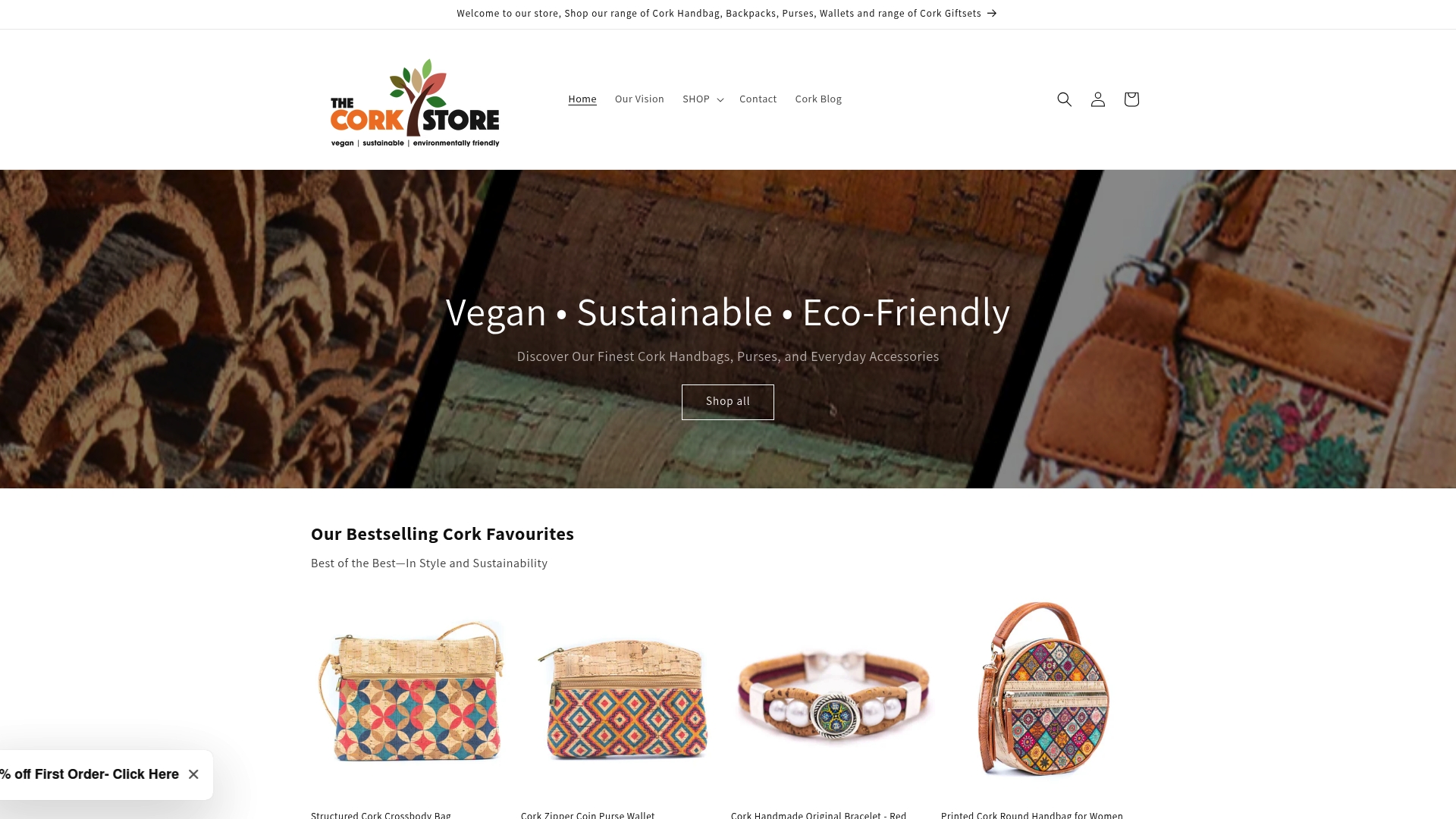
At The Cork Store, every product is designed with exactly these principles in mind. Cork accessories are cruelty-free, made from a naturally harvested and regenerative material, durable enough to last for years, and produced without the toxic processing associated with conventional leather. Whether you’re looking for a gift for someone who cares deeply about the planet, or simply searching for something genuinely well-made, our collection of handbags, wallets, purses, and gift sets reflects the values this article is built on. Browse the range and find a gift that means something — not just in the moment, but for years to come.
Frequently asked questions
What are third-party certifications for sustainable gifts?
Third-party certifications like GOTS, PETA-Approved, and FSC ensure that brands meet specific sustainability and ethical standards verified independently. Experts recommend looking for these marks over unregulated terms like “eco-friendly” or “natural.”
Does buying secondhand always reduce environmental impact?
No, buying secondhand often doesn’t fully replace new purchases and may trigger rebound effects leading to more overall consumption. Empirical evidence shows that secondhand consumption is positively correlated with new clothing purchases rather than replacing them.
Why is cruelty-free leather better for sustainable gifts?
Cruelty-free leather avoids the environmental impacts of animal farming and toxic processing chemicals found in traditional leather. Conventional leather’s footprint is significantly driven by upstream livestock farming and harmful tannery chemicals.
What policy changes have impacted sustainable gift shopping in 2026?
By 2026, the EU has expanded its ban on destroying unsold clothes and accessories, pushing brands towards circular and repairable products. EU legislation now requires major brands to resell, donate, or recycle unsold goods rather than incinerate or landfill them.