
Eco-friendly fashion: a beginner's guide to cork accessories
TL;DR:
- Cork accessories are environmentally beneficial, as they are renewable, biodegradable, and carbon positive.
- Cork is a sustainable alternative to leather and synthetic materials, supporting forests and local communities.
- Checking certifications and brand transparency ensures truthful claims of eco-friendliness in fashion.
Grabbing a wallet that looks great, harms no animals, and actively helps the planet sounds almost too good to be true. Yet cork accessories do exactly that. Cork production can sequester up to 73kg of CO2 per kilogram of cork harvested, meaning that one small purchase carries a genuinely measurable environmental benefit. This guide walks you through what eco-friendly fashion actually means, why cork stands apart from other materials, and how to choose your first sustainable accessory with complete confidence. No jargon, no greenwashing, just practical steps.
Table of Contents
- What makes a fashion accessory eco-friendly?
- Why cork leads the way in beginner eco fashion
- Beginner steps: how to choose sustainable accessories
- Cork’s wider impact: fashion with purpose
- Why cork is the practical eco choice for beginners
- Explore stylish cork accessories for your eco journey
- Frequently asked questions
Key Takeaways
| Point | Details |
|---|---|
| Choose certified accessories | Trusted eco certifications like GOTS and OEKO-TEX provide assurance of genuine sustainability. |
| Cork outperforms alternatives | Cork is biodegradable, animal-friendly, and absorbs carbon, unlike most vegan leathers. |
| Support eco-friendly brands | Selecting brands rated ‘Good’ or ‘Great’ leads to more transparent and impactful shopping. |
| Small changes, big impact | Investing in a cork accessory is a simple step with real environmental benefits. |
What makes a fashion accessory eco-friendly?
The term “eco-friendly” gets thrown around a great deal in the fashion industry, but it has a specific meaning that every beginner should understand before spending a penny. An eco-friendly accessory is one that causes minimal harm across its entire life cycle: from the sourcing of raw materials, through manufacturing, all the way to end-of-life disposal. It is not simply about one green claim on a label.
When evaluating any accessory, consider three core pillars:
- Material origin: Where does the raw material come from? Is it renewable, recycled, or extracted through destructive processes?
- Production process: Are workers paid fairly? Are harmful chemicals used in tanning, dyeing, or finishing?
- End of life: Can the product biodegrade, be recycled, or does it sit in landfill for centuries?
Certifications are your most reliable shortcut as a beginner. The OEKO-TEX certification tests products for harmful substances and ensures they are safe for you and the environment. GOTS (Global Organic Textile Standard) verifies organic fibres and ethical production. PETA-Approved Vegan guarantees no animal products or by-products were used. Fair Trade certification checks that workers received fair wages and safe conditions. No single certification covers everything, so looking for a combination is always wise.
“Greenwashing is rampant in fashion. A brown paper tag and an earthy logo do not make something sustainable. Certifications, material transparency, and supply chain honesty do.”
Exploring a biodegradable materials guide is a brilliant next step when you want to understand which materials naturally return to the earth without leaving toxic residues behind. Biodegradability is often overlooked, yet it is one of the most important factors when calculating long-term environmental impact.
Pro Tip: Before purchasing, search the brand’s website for a dedicated sustainability page. Brands with nothing to hide publish specific material sourcing details, factory information, and certification logos prominently.
A genuinely eco-friendly accessory does not ask you to sacrifice style or quality. It simply requires a little more knowledge upfront, which is exactly what this guide is here to provide.
Why cork leads the way in beginner eco fashion
Once you understand what makes an accessory truly sustainable, one material rises well above the rest for beginners: cork. It is not a trendy newcomer either. Cork has been harvested responsibly for centuries, and its properties make it a compelling choice across every sustainability criterion.
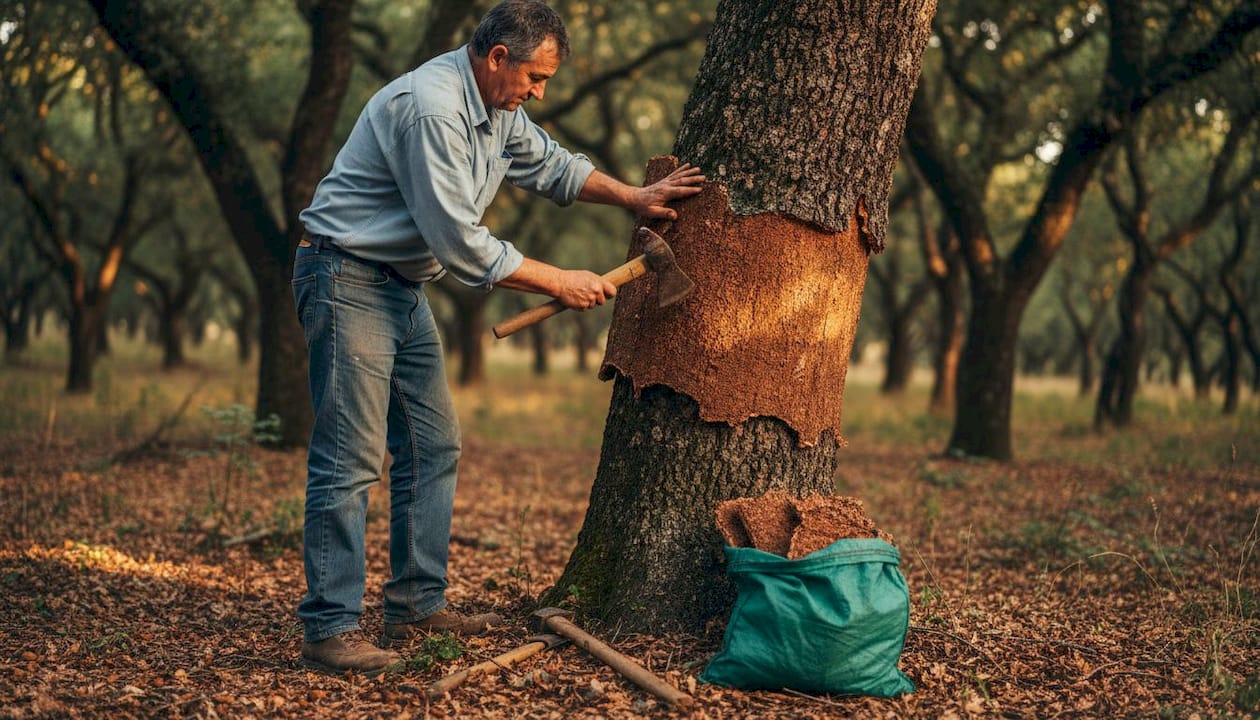
Cork is harvested by hand from the bark of cork oak trees, without felling the tree. The bark regenerates naturally over approximately nine years, making it one of the most renewable materials on earth. No animals are harmed, no forests are cleared, and no petroleum-based chemicals are required in its production. Compare that to traditional leather, which involves lower environmental impact than leather and carries none of the associated water consumption, methane emissions from cattle, or chemical-heavy tanning processes.
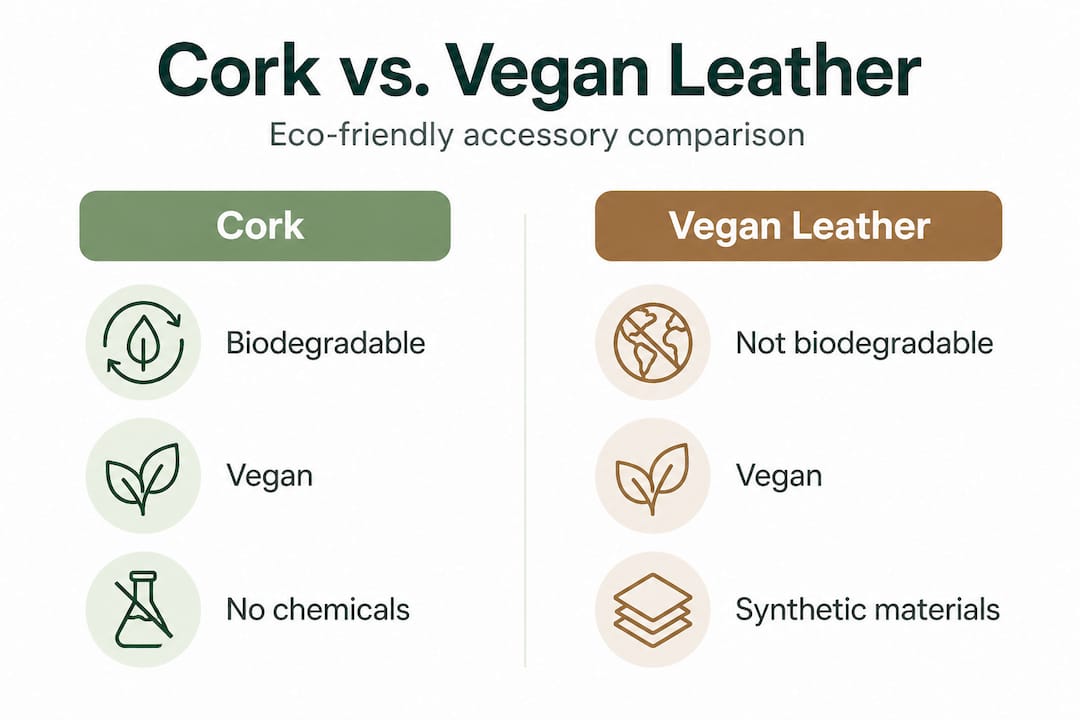
Many beginners assume that choosing vegan leather is automatically the ethical alternative to animal leather. This is a reasonable first instinct, but it misses an important detail. Most vegan leathers, particularly polyurethane (PU) leather, are petroleum-based and non-biodegradable, meaning they shed microplastics, cannot break down naturally, and rely on fossil fuel extraction. Swapping animal leather for PU leather is a step forward on animal welfare, but it does not resolve the environmental problem.
Cork sits in a category of its own. It is vegan, biodegradable, water-resistant, lightweight, and durable. Many people are surprised to learn that cork fabric feels soft and supple, much like leather, making it visually indistinguishable to most observers. You can find out more about everyday cork wallet benefits and why vegan cork accessories have become the preferred choice for shoppers who want both ethics and elegance.
| Feature | Cork | Traditional leather | PU vegan leather |
|---|---|---|---|
| Animal-friendly | Yes | No | Yes |
| Biodegradable | Yes | Partially | No |
| Renewable source | Yes | No | No |
| Carbon positive | Yes | No | No |
| Microplastic risk | None | Low | High |
| Durability | High | High | Moderate |
| Chemical processing | Minimal | Heavy | Moderate |
The table above makes it visually clear why cork occupies a unique position. No other widely available accessory material scores well across all seven criteria. Leather wins on durability but fails on every ethical and environmental measure. PU vegan leather solves the animal welfare issue but creates new environmental ones. Cork resolves both problems simultaneously.
Key fact: A harvested cork oak tree absorbs five times more CO2 after harvesting than before, because the bark regeneration process accelerates the tree’s carbon absorption. This turns your accessory purchase into an active environmental contribution rather than a neutral one.
Pro Tip: If you are buying your first cork accessory, start with a wallet or card holder. They are typically the most affordable entry point, easy to carry, and a great way to experience cork’s texture, weight, and durability before committing to a larger bag or backpack.
Beginner steps: how to choose sustainable accessories
Knowing why cork is superior is one thing. Knowing how to actually find trustworthy brands and make your first purchase with confidence is another. Here is a straightforward process that any beginner can follow.
-
Research the material first. Before looking at any specific product, understand what the accessory is made from. Cork, organic cotton, Piñatex (pineapple fibre), and recycled materials all have strong sustainability credentials. Avoid products that list “faux leather” without specifying the base material.
-
Check for certifications. Look for OEKO-TEX, GOTS, PETA-Approved Vegan, or Fair Trade logos. If a brand carries none of these but claims to be sustainable, ask them directly via email or social media. Authentic brands respond transparently.
-
Use brand rating tools. Good On You is an independent platform that rates fashion brands on their impact on people, the planet, and animals. Brands rated highly include those using cork, pineapple leather, and recycled materials. Prioritise brands with a “Good” or “Great” rating when browsing.
-
Look for supply chain transparency. Trustworthy brands share where their materials come from, who makes their products, and what their environmental commitments are. Vague statements like “we care about the planet” without specifics are a red flag.
-
Compare price and longevity. Sustainable accessories often cost a little more upfront, but their durability means you replace them less frequently. A cork handbag that lasts five years is far more economical and environmentally sound than a cheap synthetic bag replaced annually.
-
Read reviews from other eco-conscious shoppers. Communities on platforms like Reddit’s r/ZeroWaste or dedicated sustainable fashion forums often share first-hand experiences with brands and products that you will not find in mainstream reviews.
Several brands have earned genuine recognition for sustainable cork and alternative material accessories. According to sustainable accessories ratings, NAE uses cork and pineapple leather with strong ethical credentials, Svala combines cork with Piñatex for stylish cruelty-free bags, and Matt & Nat incorporates cork alongside recycled materials in their popular collections. Each of these brands demonstrates that accessible, beginner-friendly eco fashion is absolutely achievable at a range of price points.
| Brand | Key materials | Notable for | Good On You rating |
|---|---|---|---|
| NAE | Cork, pineapple | Vegan trainers and bags | Good |
| Svala | Cork, Piñatex | Luxury handbags | Good |
| Matt & Nat | Cork, recycled nylon | Everyday bags and wallets | Good |
For a deeper look at what to expect from cork accessories and how they compare to traditional options, the cork accessories guide covers the subject in thorough detail. You can also stay ahead of what is coming with the eco trends 2026 guide, which highlights the directions that conscious fashion is moving this year.
Pro Tip: Set up a Google Alert for “cork accessories” or “sustainable fashion certifications” to stay informed about new brands, products, and industry developments without having to actively search each week.
Cork’s wider impact: fashion with purpose
Choosing a cork accessory is not just a personal lifestyle decision. It connects you to a much larger story about forests, communities, and climate action. Understanding this wider impact transforms the way you think about every purchase.
Cork oak forests, known as montado in Portugal and dehesa in Spain, are among the most biodiverse ecosystems in Europe. They shelter over 170 bird species, rare Iberian lynxes, and thousands of plant varieties. Cork production supports forests rather than threatening them, because harvesters have every economic incentive to keep the trees alive and healthy for repeated harvests over decades.
The carbon numbers are striking. Cork oak forests absorb significant CO2, with production generating up to 73kg of carbon absorption per kilogram of cork produced. This is not carbon neutral. It is carbon positive, meaning the process actively removes more carbon from the atmosphere than it produces. Few other material production processes can make that claim.
“Every cork accessory you carry represents a living forest kept standing, a local harvester employed, and a measurable quantity of carbon removed from the atmosphere.”
Beyond carbon, the social impact of cork production is equally significant. Traditional cork harvesting is skilled, well-paid seasonal labour that has supported rural Portuguese and Spanish communities for generations. Choosing cork supports these livelihoods directly, creating an ethical supply chain that stretches from forest to finished product.
Key environmental benefits of choosing cork accessories include:
- Actively supporting biodiversity in cork oak forest ecosystems
- Contributing to measurable CO2 removal from the atmosphere
- Eliminating demand for leather, which reduces cattle farming emissions
- Avoiding petroleum-based synthetic alternatives that shed microplastics
- Supporting traditional craftsmanship and rural economies
Fashion choices rarely feel this consequential, but cork is one of those unusual cases where the numbers genuinely add up. Understanding cork’s fashion role more broadly shows that this material is not simply a niche novelty. It is a credible, scalable solution to some of fashion’s most pressing environmental challenges.
Why cork is the practical eco choice for beginners
Here is something many eco fashion guides will not tell you directly: the vegan option is not always the sustainable option. This distinction trips up a lot of newcomers who equate animal-free with environmentally sound. It is a forgivable mistake, but it matters.
When beginners first explore sustainable fashion, PU vegan leather often appears as the obvious answer. It is widely available, affordable, and carries the reassuring “vegan” label. But petroleum-based synthetics are, at their core, plastic. They shed microplastics when they wear, they do not biodegrade, and their production relies on fossil fuel extraction. Choosing PU over leather solves one problem while creating another.
Cork sidesteps this entirely. Its production process involves no synthetic chemicals, no petroleum derivatives, and no animal exploitation. The bark is stripped by hand using traditional techniques that have remained largely unchanged for centuries. There is something quietly radical about the idea that one of the most technologically sound sustainable materials available today is produced using ancient hand tools in Mediterranean forests.
We have seen customers come to cork sceptically, assuming it must feel rough or look outdated. The reality surprises almost everyone. Modern cork fabric is soft, tactile, and remarkably similar in appearance to fine leather. It is water-resistant without any chemical treatment, naturally antimicrobial, and extraordinarily light for its durability. These are not compromises. They are genuine advantages.
What we believe strongly, based on both the evidence and the experience of working with cork accessories, is that buying cork is not a symbolic gesture. It is a tangible act. The role cork plays in fashion is growing precisely because consumers are discovering that sustainability and beauty do not cancel each other out. They reinforce each other. For anyone just starting their eco fashion journey, cork is not the safe choice or the compromise choice. It is simply the best choice.
Explore stylish cork accessories for your eco journey
You now have a solid understanding of what makes fashion genuinely sustainable, why cork outperforms the alternatives, and how to choose brands and products you can trust. The next step is putting that knowledge into practice.
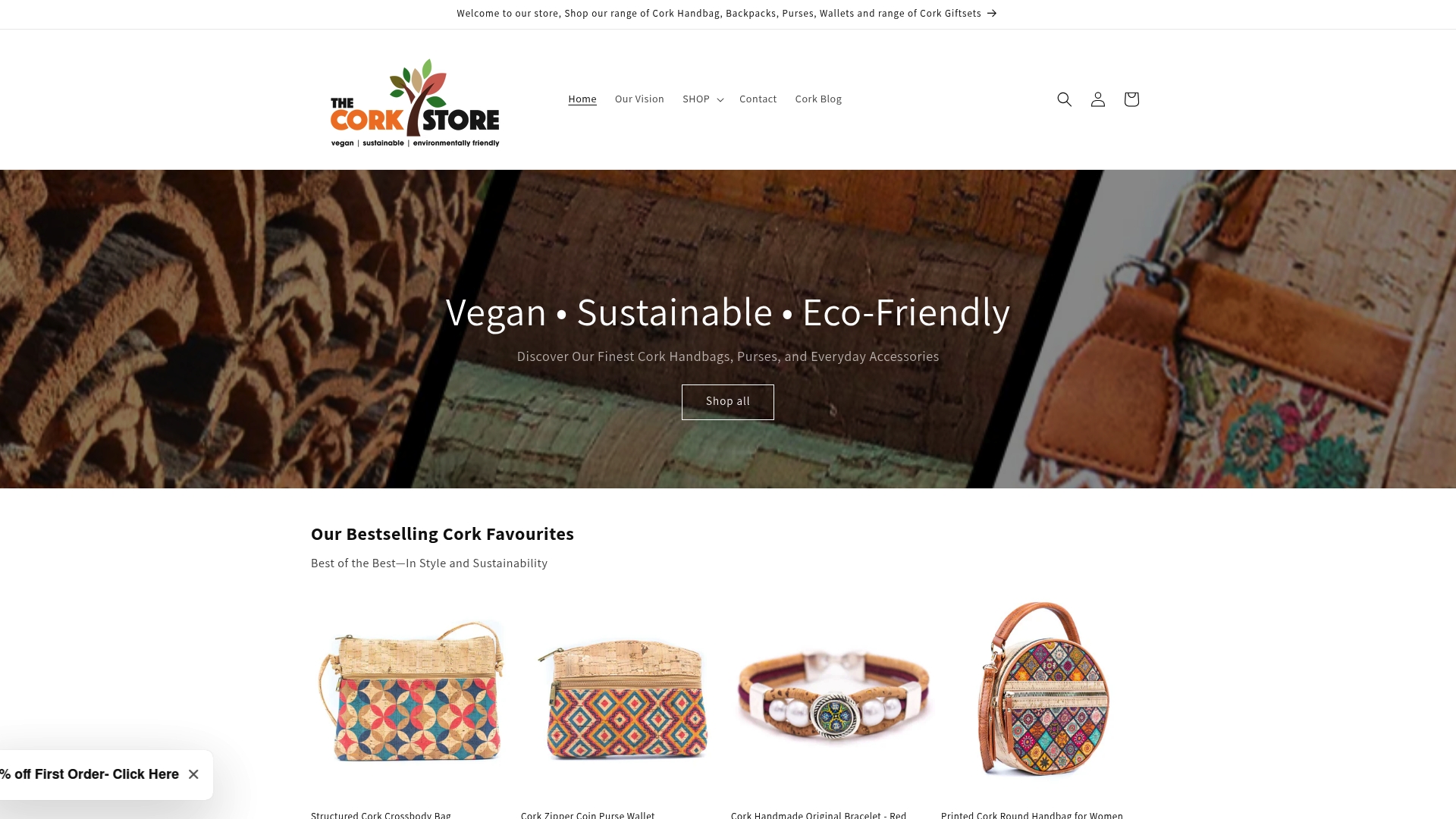
At The Cork Store, we have curated a range of cork accessories designed specifically for beginners and seasoned eco shoppers alike. From sleek cork wallets and card holders to elegant handbags and practical backpacks, every product is vegan, sustainably sourced, and crafted to last. Whether you are buying your very first eco accessory or looking to expand a collection you are already proud of, our range makes the decision straightforward and genuinely exciting. Explore the full collection and find your perfect starting point today.
Frequently asked questions
Is cork truly biodegradable compared to vegan leather?
Yes, cork biodegrades naturally at the end of its life, while most vegan leathers use a petroleum base that makes them non-biodegradable and likely to persist in landfill for centuries.
How can beginners verify if an accessory is genuinely eco-friendly?
Look for trusted certifications such as GOTS, OEKO-TEX, Fair Trade, or PETA-Approved Vegan, as these independently verify the environmental and ethical claims brands make.
Which brands offer beginner-friendly cork accessories?
Brands like NAE, Svala, and Matt & Nat are well regarded for accessible, stylish cork and sustainable accessories that are independently rated by Good On You.
Does cork production help the environment?
Absolutely. Cork oak forests absorb CO2 at an impressive rate, with harvested cork generating up to 73kg of carbon absorption per kilogram produced, while also supporting rich biodiversity across Mediterranean ecosystems.
Recommended
- Cork Accessories: The Ultimate Guide to Vegan Fashion Alternatives – The Cork Store
- Cork fashion guide for eco-conscious UK consumers in 2026 – The Cork Store
- Role of Cork in Fashion – Transforming Eco Accessories – The Cork Store
- Role of design in eco-fashion: sustainable cork alternatives – The Cork Store
- Milieuvriendelijke cadeauverpakking: duurzaam en stijlvol inpakken – Kadopapier.net
- Zöld Dekorációk: Fenntartható Megoldások ünnepekre