

Buy Ice Cork Right: 5 Checks for Ethical Vegan Accessories
In this article, “ice cork” means sustainably sourced cork accessories: handbags, wallets, backpacks and gift sets made from a vegan, biodegradable alternative to leather. Cork’s natural water resistance and light weight make it suitable for most everyday bags and wallets, and when the material is responsibly harvested, it carries a far lighter environmental footprint than animal leather or plastic substitutes, as seen in innovative designs like the Keter Go Bar - Portable Drinks Cooler.
TL;DR:
- Cork sourced from Portugal benefits from well-established harvesting practices that ensure forest regeneration and long-term sustainability.
- Choosing sealed seams and avoiding PVC coatings enhances the durability, breathability, and environmental benefits of cork accessories.
- Regular inspection of stress points and gentle cleaning extend the lifespan of cork goods, with professional repair recommended for significant damage.
- Cork’s insulating qualities make it ideal for everyday use in bags, wallets, and drinkware, especially in moisture-prone or temperature-sensitive scenarios.
- Certifications like ISO/TS 24972 and FSC help verify the sustainability and traceability of cork materials used in accessories.
Table of Contents
- What ice cork is and how cork becomes accessories
- Material properties and performance shoppers should know
- Sustainability, sourcing and stewardship: certifications and risks
- How to choose ice cork accessories: a practical buying checklist
- Care, repair and extending the life of cork accessories
- Common types of ice cork products available
- Benefits of cork over other materials for ice-related and everyday accessories
- Typical use cases and practical applications of ice cork products
- Why we take curation seriously at The Cork Store
- Shop the collection: browse our range of vegan cork accessories
- FAQ
- Sources
What ice cork is and how cork becomes accessories
Cork comes from the bark of Quercus suber, the cork oak, stripped by hand on a harvest cycle that commonly repeats every nine years without felling the tree. That slow, periodic harvest is why cork is often described as one of the more renewable materials available for fashion goods, and our cork harvesting explained guide walks through how the stripping process works in practice.
Once harvested, cork reaches accessory makers in a few distinct forms:
- Natural cork sheet, thin slices of raw bark laminated onto a fabric backing, giving the most visible grain and texture.
- Cork-coated textiles, where a cork veneer is bonded to cotton or another woven base, often used for softer, more pliable bags.
- Agglomerated or bonded cork, made from granules pressed together, which tends to be denser and more rigid.
Each format changes how a finished piece looks, feels and performs. Sheet cork shows the most natural variation from one bag to the next, while bonded cork gives a firmer structure better suited to boxy totes or backpack panels.
Material properties and performance shoppers should know
Cork’s usefulness as a leather substitute comes down to its chemistry. Suberin, a waxy substance, makes up a significant portion of cork’s composition, according to research on cork-cotton blended textiles, and that proportion is what gives cork its natural water repellency and resistance to staining without needing heavy synthetic coatings.
Underneath that chemistry sits a cellular structure that behaves almost like a natural honeycomb: thousands of tiny, air-filled cells per cubic centimetre, which is why cork feels light in the hand and compresses slightly under pressure rather than cracking.
That same study found that cotton-cork blends can be laundered and dyed using conventional textile methods, and that a 90:10 cotton-to-cork blend performed competitively on cost and mechanical durability compared with cotton alone.
In practice, this means cork accessories tend to:
- Resist light rain and spills better than untreated fabric or suede.
- Bounce back from minor pressure or bending rather than denting permanently.
- Show wear at stress points, such as corners and strap junctions, before the main panels fail.
The limitation worth knowing is that cork is not indestructible. Sharp abrasion or repeated folding along one crease can eventually wear through the surface layer, which is why reinforced seams and protective edge finishing matter more on cork goods than on thicker leather.
Sustainability, sourcing and stewardship: certifications and risks
Roughly half to three-fifths of the world’s raw cork supply is grown and processed in Portugal, a concentration that makes origin labelling unusually meaningful: a supplier who can name a Portuguese source is pointing to a region with long-established harvesting practices and quality control, not just a generic sustainability claim.
Two reference points help shoppers verify those claims rather than take them on faith:
- ISO/TS 24972 sets out guidance for sustainable management of cork oak forests, covering practices that protect forest regeneration and the wider ecosystem services cork oak woodlands provide.
- FSC certification confirms a chain of custody, tracing material from a managed forest through to the finished product, which is a different (and complementary) signal to ISO guidance.
Industry reporting from major cork processors reinforces the basic case: Amorim’s sustainability reporting describes cork as 100% natural, renewable and recyclable, with certified applications across multiple sectors.
That said, cork forests are not immune to pressure. Research on cork oak and climate stress found that drought can reduce the rate of cork growth, though it does not necessarily alter the material’s chemical composition in ways that compromise standard uses. The practical takeaway is that forest governance and harvest intervals matter as much as the material itself, and our guide to how cork production supports forests covers the governance side in more depth.
Pro Tip: Ask a seller whether they state the cork’s country of origin; a specific answer is a stronger signal than a general “eco-friendly” label.

How to choose ice cork accessories: a practical buying checklist
Buying a cork bag or wallet well means checking construction details that are easy to overlook in product photos. A few minutes of research before checkout saves disappointment later.
- Inspect the seams. Sewn edges and taped internal seams hold up far better over time than glued joins, which tend to separate first.
- Ask about coatings. A cork item finished with a PVC layer loses much of the breathability and biodegradability that make cork worth choosing in the first place.
- Confirm vegan verification. A straightforward answer about materials and linings tells you more than a badge alone.
- Match the product to its use. A daily commuter bag needs thicker, reinforced construction; an occasional-use clutch can get away with lighter cork sheet.
- Check the policies. Warranty terms, returns and whether repairs are offered all affect how long a piece stays useful.
| What to check | Why it matters |
|---|---|
| Seam construction | Sewn and taped seams outlast glued joins |
| Coating type | Avoiding PVC preserves breathability and biodegradability |
| Origin statement | Portuguese-sourced cork points to established supply chains |
| Use-case fit | Daily bags need sturdier builds than occasional pieces |
| Aftercare policy | Repair and return options extend a product’s useful life |
Our guide to buying vegan cork accessories covers these categories in more detail, including how product descriptions typically flag construction and finish.
Care, repair and extending the life of cork accessories
Cork accessories reward simple, consistent care more than intensive cleaning. A damp cloth with a little mild soap removes most everyday dirt, and the item should air-dry away from direct heat rather than being submerged or machine washed.
- Wipe spills promptly rather than letting liquid sit on the surface.
- Keep cork out of direct sunlight for long stretches, which can dry and dull the finish.
- Store bags stuffed lightly with paper to hold their shape, in a space with some airflow to prevent mould.
- Touch up small worn edges with a cork-safe sealant rather than ignoring them until they spread.
Pro Tip: Check corners and strap attachment points every few months. These are the first places wear shows, and a small repair there is far cheaper than replacing the whole piece.
When damage goes beyond a surface scuff, such as a torn seam or a cracked panel, it is worth seeking a professional repair rather than attempting a fix with the wrong adhesive. Our guide to storing cork accessories sets out storage habits that meaningfully extend a piece’s working life.
Common types of ice cork products available
Cork’s versatility shows up well beyond handbags. Smaller accessories, often grouped under the same “ice cork” umbrella, include coasters and cup sleeves, both of which lean on cork’s natural insulation and water resistance rather than decorative value alone.
Coasters are among the simplest cork products: a dense, pressed cork base that absorbs condensation from a cold glass without warping, unlike card or thin plastic alternatives. Cup sleeves made from cork wrap around hot or cold drinks and insulate the hand, a function cork performs well thanks to its cellular, air-filled structure.

Beyond drinkware, the same material logic extends into fashion accessories: wallets and card holders benefit from cork’s light weight and water repellence in daily pocket use, while bags and backpacks use thicker or layered cork for structure. Bracelets and other small accessories often use thinner cork sheet, prized more for its texture and visual grain than for insulation.
What unites these product types is the underlying material science: a natural, breathable surface that resists moisture without a plastic coating, and a production process that generates useful by-products rather than waste. Our guide on how wine corks are made touches on how the same raw material supports such a wide range of finished goods, from stoppers to fashion pieces.
Benefits of cork over other materials for ice-related and everyday accessories
Cork’s main advantage for anything that touches cold surfaces or liquids is insulation. Its cellular structure, largely made up of tiny air pockets, slows heat transfer in both directions, which is why a cork coaster stops a cold glass from sweating onto a table and why a cork-lined sleeve keeps a drink colder for longer than a bare hand would manage alone.
Compared with animal leather, cork avoids the tanning chemicals and water-intensive processing that leather production typically requires, and it is fully biodegradable at end of life when free of synthetic coatings. Compared with plastic alternatives, cork is renewable rather than petroleum-based, and the harvest itself does not require cutting down the tree, so the same cork oak can be stripped again roughly every nine years.
Cotton-cork blended fabric research found that a cork-blended textile showed higher insulating capacity than cotton alone, while retaining acceptable mechanical strength for apparel use. That combination, insulating and durable, is precisely why cork performs well both in drinkware accessories and in bags that need to withstand daily handling.
None of this makes cork a universal replacement for every material. For items that need total waterproofing, such as fully submersible gear, cork alone will not match a dedicated waterproof fabric. Its strength lies in everyday resistance to moisture and temperature rather than extreme or prolonged exposure.
Typical use cases and practical applications of ice cork products
Cork accessories fit naturally into routines where weight, moisture resistance and a plastic-free material matter. A cork tote or crossbody bag suits daily commuting, where light rain and regular handling are a given rather than an exception. A cork wallet or card holder works well for anyone who wants a slim, water-resistant alternative to leather without the production footprint that animal hide carries.
Travel is another strong fit: cork’s light weight keeps luggage allowances in check, and its durability holds up to the knocks of transit better than many fabric alternatives. A cork duffel or travel bag also resists the kind of surface marking that fabric luggage tends to show after a few trips.
Drinkware accessories, such as coasters and cup sleeves, serve a more specific but equally practical role at home or in an office, protecting surfaces and insulating hands without disposable materials. Gift sets that combine a small accessory, such as a wallet or coin purse, with a coaster or sleeve give a coherent, consistent material story for anyone buying an ethical gift.
Across all these applications, the common thread is a material that performs a practical job (resisting water, insulating against temperature, standing up to daily wear) while avoiding the environmental costs associated with leather tanning or petroleum-based plastics.
Why we take curation seriously at The Cork Store
Cork is forgiving to work with but easy to get wrong as a retailer: a poorly finished edge or an unverified “vegan” label undermines the exact reason shoppers choose cork in the first place. That is the gap we built our curation around, checking construction, coatings and sourcing claims before a handbag, wallet or backpack goes on our shelves rather than leaving shoppers to work it out from a product photo.
We back that curation with the kind of detail most retailers leave out: how the cork was harvested, what the lining is made from, and what to expect from the finish over time. Readers who want the sourcing and harvest detail behind a specific product can find it in our cork production process guide, which we treat as part of the purchase, not an afterthought.
— Aaron
Shop the collection: browse our range of vegan cork accessories
We offer a range of accessories such as handbags, wallets, crossbody bags, backpacks, totes, travel bags, bracelets and gift sets, each presented with product descriptions and photography to help you review construction and finish before buying.
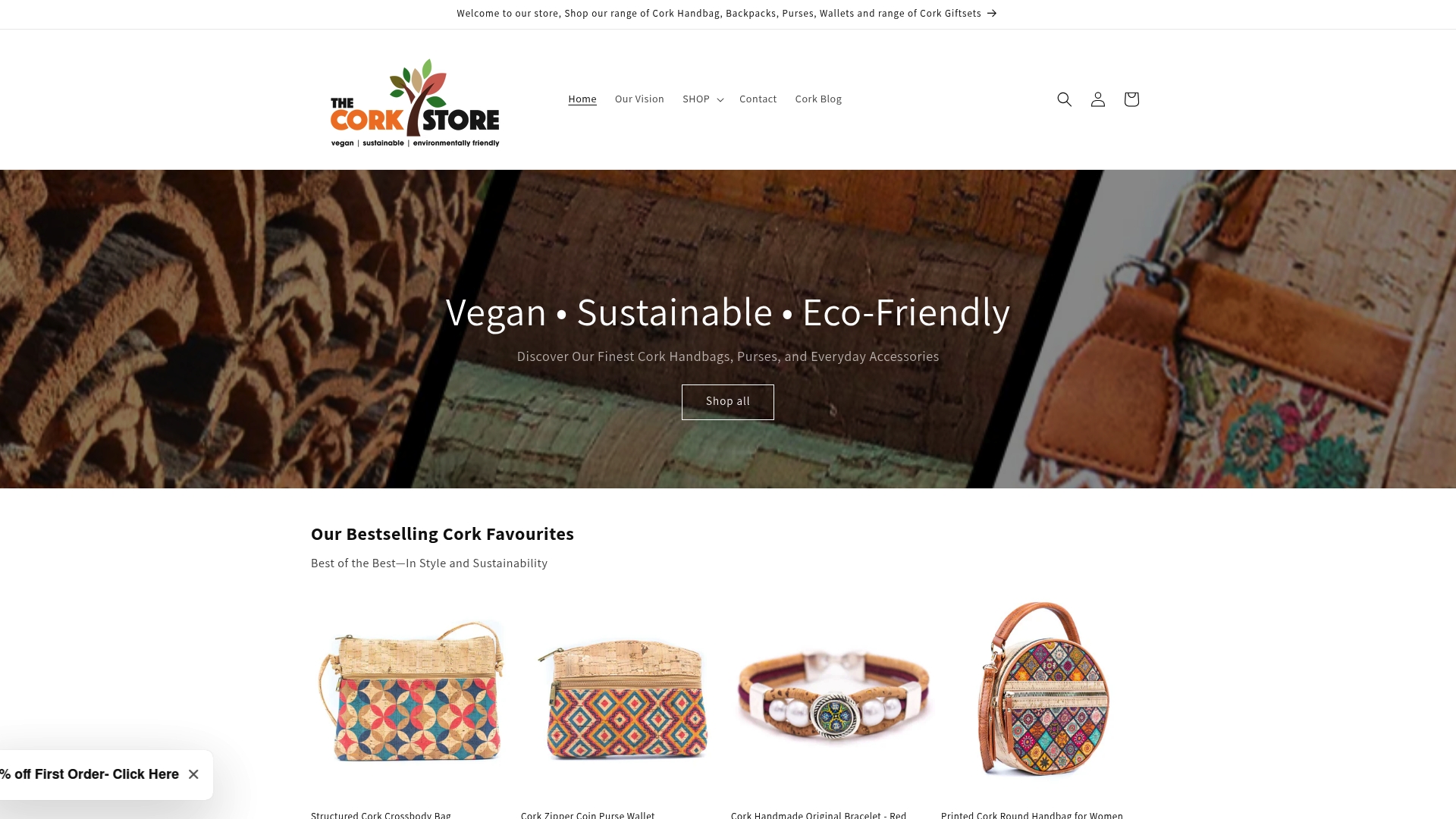
- Browse the full range on our shop landing page, where every category is listed together.
- Look at a specific piece, such as the marine cork wallet or the cork drawstring backpack, to see seam and coating detail up close.
- Check our care guidance and returns information before you buy, so you know what to expect from day one.
If you are weighing cork against a leather or synthetic bag from elsewhere, the difference we offer is not a lower price tag, it is a fully curated, verified-vegan range where sourcing and construction have already been checked for you. Visit The Cork Store to see the current collection.
FAQ
Is ice cork the same as leather in durability?
Cork is durable for everyday use but behaves differently from leather: it resists water and stains well thanks to its natural suberin content, while leather tends to be more resistant to sharp abrasion. For most bags and wallets, well-constructed cork holds up to daily use, particularly when seams are sewn rather than glued.
Are ice cork accessories genuinely vegan and cruelty-free?
Cork accessories made from cork oak bark involve no animal products, making them a genuinely vegan material. The caveat is the lining and coating: checking those details, rather than assuming a cork exterior guarantees a fully vegan product, confirms the whole item meets that standard.
How do I clean and store cork bags to make them last?
A damp cloth with mild soap handles most everyday dirt, and items should air-dry away from direct heat rather than being soaked or machine washed. Storing bags lightly stuffed with paper, away from prolonged sunlight, helps prevent cracking and reduces the risk of mould; our storage guide covers this in more detail.
What should I check before buying a cork handbag online?
Look for sewn or taped seams rather than glued joins, ask whether any coating used is PVC-free, and check for a stated country of origin, since Portuguese cork points to an established, well-regulated supply chain. A clear returns and repair policy is also worth confirming before you buy.
Does cork production harm cork oak trees or forests?
Cork is stripped from the living bark on a multi-year cycle, commonly around nine years, without felling the tree, which is why cork oak forests are often cited as a renewable resource when properly managed. Guidance such as ISO/TS 24972 sets out sustainable management practices, though climate stress can still slow tree growth over time.
Sources
- Cotton–Cork Blended Fabric: An Innovative and Sustainable Apparel Textile for the Fashion Industry
- ISO/TS 24972:2026 - Cork — Sustainable management in cork oak (Quercus suber L.) forests
- Sustainable by nature (Amorim Cork) 2026
- Cork oak and climate change: Disentangling drought effects on cork chemical composition